Business

‘Cooking oil subsidy strategy cushions impact of palm oil price fluctuations’

Plantation minister adds that increase in cooking oil prices slight despite significant rise in CPO prices

Updated 5 years ago · Published on 20 Jan 2021 4:50PM

‘Cooking oil subsidy strategy cushions impact of palm oil price fluctuations’
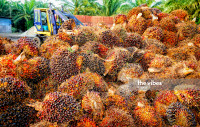
Malaysia exports 24 million tonnes of palm oil and related products worth RM64.8 billion in the January-November 2020 period. – AFP pic, January 20, 2021

KUALA LUMPUR – The government’s cooking oil subsidy has reduced the negative impact of palm oil price fluctuations in the world market on local consumers, said the Plantation Industries and Commodities Ministry.

Minister Datuk Mohd Khairuddin Aman Razali, in a statement today, said the increase in cooking oil prices locally is slight despite crude palm oil (CPO) prices rising significantly from July 2019 to this month.

“Besides that, consumers, especially those in the B40 group, have the option to buy 1kg of subsidised cooking oil at RM2.50.”

In the 2019-2020 period, the average CPO price in the local market fell to its lowest level of RM1,879 per tonne in July 2019 and saw its highest of RM3,620.50 per tonne last month, he said.

He added that the CPO price increased 92.7%, or RM1,741.50, a tonne from the lowest level recorded in 2019.

“The price of palm oil and palm oil-based products is determined by the world market, involving factors such as demand and supply.

“This price increase has also raised the country’s revenue, besides helping about 500,000 oil palm smallholders improve their socio-economic status.”

He expressed hope that global palm oil prices will continue to remain high this year, so that the people will be able to enjoy the benefits in terms of the returns made by the government.

At the same time, said Khairuddin, the ministry is concerned about the issue of rising cooking oil prices in the local market.

“Malaysian Palm Oil Board data shows that about a million tonnes of palm oil are allotted for the use of the local cooking oil market, with a fraction of 0.72 million tonnes for subsidised cooking oil in 1kg plastic packets.

“The remaining 0.28 million tonnes are not subsidised, and can be bought in bottles of 1kg to 5kg, and 17kg containers.”

Malaysia exported 24 million tonnes of palm oil and related products worth RM64.8 billion from January to November last year. – Bernama, January 20, 2021


Related News

World / 6mth

Gas shortages push India’s poor back to wood and coal

Business / 2y

China committed to increasing palm oil imports next year, says Fadillah

Malaysia / 2y

Anwar, Dutch PM Rutte meet in Putrajaya for bilateral talks

Malaysia / 2y

M’sia to rope in foreign scientists, experts to mend palm oil image: Fadillah

Business / 2y

Boost for M'sian palm oil from African buyers with RM182 mil in potential sales

Business / 3y

‘Industry players seeking windfall profit levy price review for Sabah, S’wak’

Spotlight

Malaysia

Immigration busts international scam syndicate operating from unused Kuantan resort

Malaysia

Malaysia prevents RM1.9b in scam transactions as BNM targets real-time fraud alerts

Malaysia

Parental involvement crucial in tackling school bullying, says PM as cases hit nearly 5,700

Malaysia

19-year-old female student strangled to death in Kuantan following quarrel; boyfriend arrested

Malaysia

Loke slams 10 Negeri Exco members for ‘backstabbing’ Tuanku Muhriz

Malaysia

Vandalism at mosque: Blaming the MADANI govt ‘unfounded and ridiculous’ (video)

By Alfian Z.M. Tahir

Malaysia

MOHE: 1.16 million PTPTN borrowers owe RM10.7b in outstanding repayments

Malaysia

Police: Statements recorded after 13-year-old student sustains severe injuries in three-storey fall

You may be interested

Business

Oil supply risks mount as Brent tops US$102 on threat of Middle East shipping routes disruption

Business

Middle East conflict puts Malaysian SMEs under growing financial pressure - BNM

Business

Tabung Haji posts record RM4.64b profit on stronger investment performance

Business

Oil prices ease as Middle East exports recover towards pre-war levels