Business

VW misses EU emissions target despite e-cars boost

Group – which includes the brands Audi, Porsche and Skoda – now risks fine of around €140 million

Updated 5 years ago · Published on 24 Jan 2021 4:55PM

VW misses EU emissions target despite e-cars boost
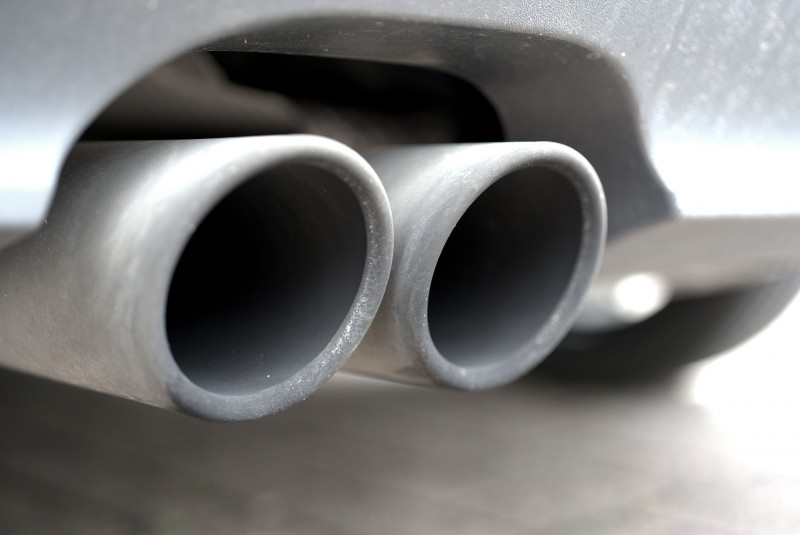
European Union legislation that came into force last year, says carmakers newly sold cars must emit on average less than 95 grammes of CO2 per kilometre, or face hefty fines from 2021 –  Pixabay pic, January 24, 2021

FRANKFURT – German car giant Volkswagen said on Thursday it “narrowly” failed to meet tough new EU emissions targets in 2020 despite a spike in sales of environmentally-friendly electric cars.

The VW group – which includes the brands Audi, Porsche and Skoda – now risks a fine of around €140 million (US$170 million), according to AFP calculations. 

VW said CO2 emissions from its passenger-car fleet decreased “by around 20%” year-on-year, helped by a fourfold increase in the numbers of electric and hybrid vehicles sold in Europe. 

“We narrowly missed the fleet target for 2020, thwarted by the Covid-19 pandemic,” Volkswagen chief executive Herbert Diess said in a statement.

He added that new electric models across several brands would “allow us to achieve our fleet target this year”.

Under European Union legislation that came into force last year, manufacturers' fleets of newly sold cars must emit on average less than 95 grammes of CO2 per kilometre, or face hefty fines from 2021.

The VW group said it missed the emissions target by around 0.5 grammes per kilometre. 

To comply with the new EU pollution limits, auto companies across the industry must massively increase their sales of electric and hybrid cars.

VW had anticipated missing 2020's carbon-emissions target, it said, and set aside provisions to pay for fines to avoid any impact on its fourth-quarter 2020 results.

The VW and Audi brands individually met their carbon emissions targets for 2020, but the group as a whole fell short.

The group sold 315,400 electrified vehicles in 2020 to the EU, UK, Norway and Iceland, up from 72,600 in 2019. 

It is the market leader for battery-powered vehicles in western Europe, with a share of around 25%.

German rival Daimler said earlier this month that it expects to meet the EU emissions targets, while luxury brand BMW has said it has "more than" complied with the new rules. – AFP, January 24, 2021


Related News

Culture & Lifestyle / 1y

Malaysian quartet drive VWs in road trip to Germany

Malaysia / 2y

Car dealer’s final appeal over defective car rejected

Business / 2y

Malaysia secures RM46 billion potential investments from trade and investment mission to Germany, France

Malaysia / 2y

PM Anwar credits public services teamwork for Germany visit's remarkable success

Malaysia / 2y

Anwar touts RM45.4 bil in potential investment during Germany trip

Malaysia / 2y

Malaysia and Germany call for lasting ceasefire in Gaza

Spotlight

Malaysia

Immigration busts international scam syndicate operating from unused Kuantan resort

Malaysia

Malaysia prevents RM1.9b in scam transactions as BNM targets real-time fraud alerts

Malaysia

Parental involvement crucial in tackling school bullying, says PM as cases hit nearly 5,700

Malaysia

19-year-old female student strangled to death in Kuantan following quarrel; boyfriend arrested

Malaysia

Loke slams 10 Negeri Exco members for ‘backstabbing’ Tuanku Muhriz

Malaysia

Vandalism at mosque: Blaming the MADANI govt ‘unfounded and ridiculous’ (video)

By Alfian Z.M. Tahir

Malaysia

MOHE: 1.16 million PTPTN borrowers owe RM10.7b in outstanding repayments

Malaysia

Police: Statements recorded after 13-year-old student sustains severe injuries in three-storey fall

You may be interested

Business

Tabung Haji posts record RM4.64b profit on stronger investment performance

Business

Middle East conflict puts Malaysian SMEs under growing financial pressure - BNM

Business

Oil supply risks mount as Brent tops US$102 on threat of Middle East shipping routes disruption

Business

Oil prices ease as Middle East exports recover towards pre-war levels