KOTA KINABALU – The Sabah government may be caught in a complex legal quandary after an oil and gas company made a decision to discontinue payment of state sales tax (SST).
Chief Minister Datuk Seri Hajiji Mohd Noor told The Vibes the state will provide its feedback on the matter in due time.
“We will be issuing a statement,” he said when asked at a civil service function last night.
Sources close to the state leadership indicated to The Vibes that while the state authority’s resolution on the issue may look simple, the course of action itself would be complicated.
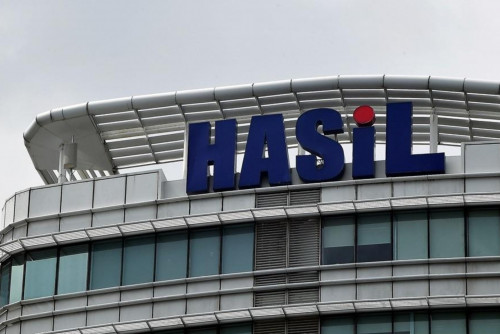
In a bourse filing, Hibiscus Petroleum Bhd announced that its subsidiary Repsol Oil & Gas Malaysia Ltd (RML) has discontinued payment of the SST imposed by Sabah, after its appeal against the tax was met with silence from the Sabah finance minister.
The finance portfolio is held by Hajiji himself.
Hibiscus also acknowledged potential disruptions of its operations following its decision to halt payments to the state. The company had been making payments since 2020 under protest of the SST.
Repsol held a production sharing contract in the Kinabalu oil field, northwest of Labuan island. Labuan is a federal territory.
Another subsidiary of Hibiscus, SEA Hibiscus Sdn Bhd, which is holder and operator of the 2011 North Borneo Sabah Enhanced Oil Recovery production sharing contract, has not been paying SST to the state at all, the firm said.
Repsol did not receive any response to its appeal to the state Finance Ministry for 20 months and the Hibiscus board resolved to discontinue the payment of SST, commencing from the lifting of crude oil undertaken on May 24.
Repsol had raised in September 2020 that it sold its crude oil entitlement from the Kinabalu oil field at the Labuan Crude Oil Terminal (LCOT) facility, which is out of the state jurisdiction and therefore, does not need to pay SST.
This refers to 350,236 barrels of oil produced by RML in the Kinabalu oil field – the first RML cargo sold from LCOT since Hibiscus completed the acquisition of RML’s parent Fortuna International Petroleum Corp in January 2022.
Payment due based on where oil is extracted
An expert told The Vibes that the tax must be paid to the owner of the land where the extraction is carried out, not at the point where the crude oil is sold.
Universiti Malaysia Sabah engineering oil and gas engineering expert associate professor Rosalam Sarbartly said the state must be clear on its territorial waters.
“The payments must be made to the state if the extraction of the crude oil is being carried out within the boundaries,” said Rosalam, adding that the Land and Survey Department should be able to clarify the issue.
In late 2018, Sabah passed a bill to amend the state Land Ordinance, giving the definition of land to include the bed of any river, stream, lake or water course, and the area of Sabah’s Continental Shelf.
The amendment also extends to the seabed and subsoil, which lies beneath the high seas contiguous to the territorial waters of Sabah, as stated in the North Borneo (Alteration of Boundaries) Order in Council 1954.
The amendment paved the way for Sabah to impose a 5% SST on petroleum products in 2020, generating RM1.25 billion for the state in the first year of its implementation.
Efforts to reach the Land and Survey Department met with no response at the point of writing.
Local legal experts are also of the same view that the tax is payable to Sabah regardless of whether the crude oil was sold to a facility located at Labuan. Some argued that taking the matter to court could end up in a lengthy process and be costly.
In 2016, Sarawak imposed a moratorium on new work permits to Petronas workers from outside of the state who intended to work in Sarawak after the national oil company laid off local workers.
Then Sarawak deputy chief minister Datuk Douglas Uggah Embas said the state sought an explanation from Petronas and the firm had responded that the retrenchments were part of its effort to reduce costs.
The state’s think-tank Suarah Petroleum Group claimed only 39% of the management positions and 46% of the mid-management positions in Petronas’ Sarawak operations were filled by Sarawakians. – The Vibes, June 10, 2022