KUALA LUMPUR – The government should continue to give green investment allowance in Budget 2023 for corporates undertaking environmental, social, and governance initiatives, said Top Glove Corporation Bhd.
Additional incentives should also be introduced for companies to install or upgrade manufacturing facilities aimed at safeguarding the environment, such as initiatives to reduce energy consumption, water recycling, and rain harvesting.
“To better support Malaysia’s net zero carbon emissions aspirations, tax incentives should not only focus on solar-related initiatives but should include upgrading of manufacturing processes to reduce carbon emissions or help with energy savings,” said Top Glove.
Under Budget 2022, the government said, companies that invest in green technology will enjoy an expanded scope of tax incentives if their applications are received by the Malaysian Investment Development Authority between January 1, 2022 and December 31, 2023.
Two of the green incentives are the green investment tax allowance (Gita) and green investment tax exemption (Gite).
Gita is a three-year extension of investment tax allowance of up to 100% on capital expenditure for eligible green activities while Gite is a three-year extension of income tax exemption of 70% on statutory income for eligible green services.
Top Glove said to maintain the country’s competitiveness in the region, the government could also look at reducing corporate tax gradually, since the current 24% tax rate is relatively high compared with neighbouring countries like Singapore (17%) and Thailand (20%).
Top Glove is also seeking government assistance to increase the export allowance and to extend the reinvestment allowance expiring in 2024.
“We hope the government will allow the nomination of one representative company (from among a group of related companies) to claim the increased export allowance on a group basis, instead of the current practice of having to compute and claim the allowance by individual entities. It is important to amend this to encourage more exports,” it said.
The incentives are given to Malaysian manufacturing companies and selected companies in the agricultural sector to incentivise them to reinvest and grow their businesses.
“We also hope to see the reintroduction of the goods and services tax (GST) at a reasonable rate in Malaysia and an efficient GST refund system in place to ensure successful implementation,” the company said.
To encourage more locals to meet the 80:20 government ruling to hire more locals by December 2024, tax incentives should be considered, the company said.
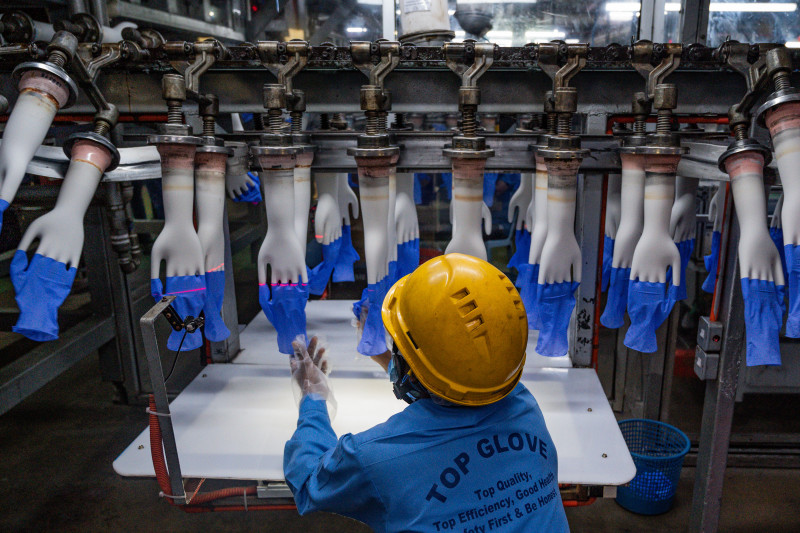
Top Glove foresees the industry to remain challenging going into 2023 with the current endemic scenario indicating a decline in glove demand, which is not an accurate reflection of the true situation, it said.
The present situation is an anomaly, caused by excessive stock due to panic buying during the height of the pandemic, as well as additional supply created over the past two years.
“The industry will need some time to readjust, but we are confident that it will equilibrate and glove demand will return eventually,” the company said.
Malaysian Rubber Glove Manufacturers Association recently revealed that the local glove business will do marginally better than in 2019, with average selling prices expected to reach pre-Covid-19 levels of between US$20 (RM89.84) and US$25 per thousand pieces.
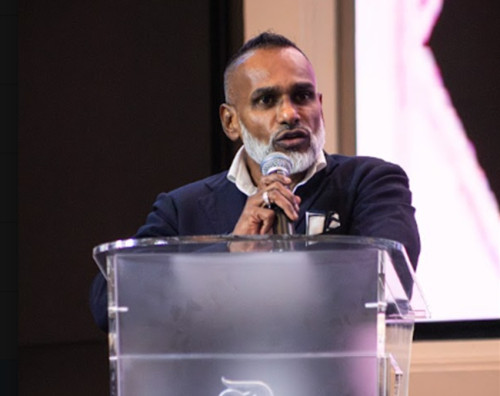
Its president Supramaniam Shanmugan said global demand for rubber gloves is expected to be around 399 billion pieces for 2022, with a 10% to 12% year-on-year growth.
Supramaniam also said that the association hopes the government will expedite foreign workers intake and extend the reinvestment allowance. – Bernama, September 14, 2022