
GEORGE TOWN – The next federal government should convince employers to offer higher salaries as economic data has shown that 72% of revenue goes back to companies, whereas only 28% is spent on wages, said a veteran economist.
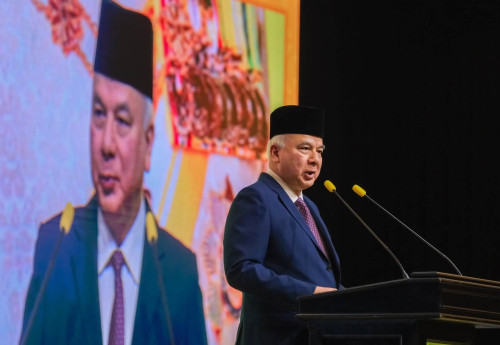
Tan Sri Kamal Salih, who is the founder of the Malaysian Institute for Economic Research (MIER), said the current data shows that there is room for a better wage mechanism for the country’s workers and that the new administration should act on this after winning the 15th general elections (GE15).
He added that higher wages can have positive spillover effects as it can increase domestic consumption to sustain growth in the face of global economic instability, especially with the predictions of a recession next year.
“Our wages are generally low. The minimum wage of RM1,500 is not much in view of the rising living costs brought by global inflation. The average worker is bogged down by loans repayments and living costs,” he told The Vibes.
Kamal the government should provide more attention to wage growth, although the job market is grappling with the lack of skilled and experienced workers.
He said the challenges can be overcome by reforming the education sector and providing proper skills-to-jobs matches, while also attracting the right investors to create jobs for locals instead of foreigners.
“I think there is a need for strong political willpower to correct the deficiencies in the economy. Crucial reforms are also needed, and it needs to be done sooner than later,” he said, adding that many economies such as Malaysia are struggling in a post-pandemic era.
Kamal also suggested reducing the civil service’s 1.2 million workers, as it is not boosting the need to improve the country’s productivity rates.
He added that local workers should also engage in upskilling to address the shortage of skilled workers in the market.
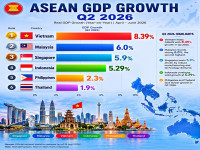
Bank Negara Malaysia’s (BNM) figures released last August showed that the economy registered a stronger growth of 8.9% in the second quarter of 2022 (2Q 2022: 5.0%).
BMN indicated that while the GDP was lifted to some extent by a low base during the full movement control order in June 2021, growth in April and May 2022 was robust.
Kamal said that while the growth rate is laudable, the underlying issues faced by the country are rising costs of living costs and its RM1 trillion in accumulated debt.
Furthermore, he said the household debt to the GDP ratio is among the highest in the region at over 70% of the GDP.
He said this would deter foreign investors, adding that credit pressure will give rise to an underground economy filled with money laundering and online scams.
Kamal also said the new government should reform the taxation system to ensure it is more efficient. – The Vibes, October 25, 2022