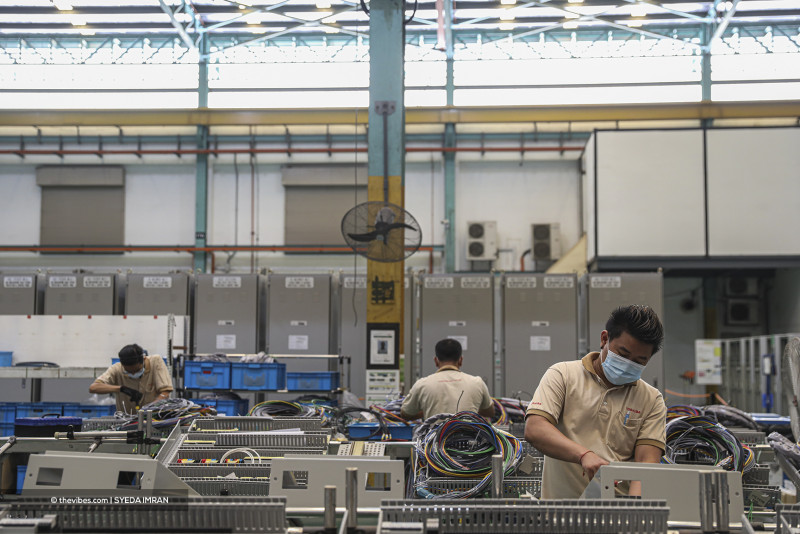

GEORGE TOWN – A veteran trade unionist has called on the labour authorities to do away with the minimum wage structure due to current escalating living costs.
Instead, K. Veeriah urged the government to revamp the National Wages Consultative Council into a National Living Wage Council as the first step towards compelling employers to come up with a salary structure amenable to workers.
The revamped council must find the right formula between core stakeholders in the government, employers, and employees to ensure wages earned are progressive to cope with rising living costs, which may go higher in tandem with a possible global recession, said Veeriah, who is the Penang Malaysian Trades Union Congress secretary.
He shared his views with The Vibes after many quarters began questioning if the minimum wage was relevant in the present living scenario.
Workers are under tremendous economic pressure due to the escalating costs of living. Wages earned, in real terms (real wage), are consistently eroded by a spike in the prices of basic necessities.”
He added that common sense will be sufficient to calculate the impact of the escalating cost of living – a 10% increase in the cost of essential goods and services translates to a corresponding 10% reduction in disposable income.
Conversely, it would mean that the existing minimum wage of RM1,500 is too low considering the existing cost of living, Veeriah said.

Given the dire state of wage earners, the government needs to question whether the existing minimum wage structure is still appropriate, said Veeriah.
Bank Negara Malaysia had published a study four years ago stating that a single adult in Kuala Lumpur requires a living wage of RM2,700 a month.
As for a married couple with no children the living wage was pegged at RM4,500, and RM6,500 for a couple with two children.
“So is the minimum requirement of RM1,500 adequate in realistic terms?” asked Veeriah.
“Employers must have a moral obligation to uplift the wages of their workers.
They have instead been holding successive governments to ransom with threats of closures and disinvestment.”
He also said there is a need for a blueprint to offer progressive wages to mark the economic conditions of the working class.
Meanwhile, Penang Deputy Chief Minister II P. Ramasamy said that he saw no need for any quarters to suppress the demand for higher wages.
“Why the opposition to a minimum wage, when workers are essential to the well-being of companies? The implementation of the minimum wage of RM1,500 that was approved on May 1, 2022, continues to divide the workers and employers in the country.”
The government responsible for this implementation seemed to be taking a cautious approach, Ramasamy said in a statement.
The decision to postpone the implementation of a minimum wage in small and medium enterprises having fewer than five workers has raised questions about the sincerity of the newly minted government towards the welfare of workers, he said. – The Vibes, January 1, 2023