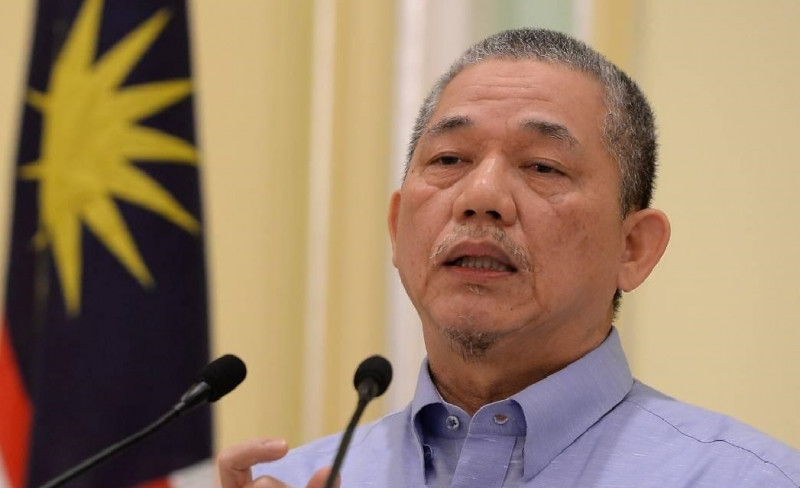
PUTRAJAYA – Deputy Prime Minister and Plantation and Commodities Minister Datuk Seri Fadillah Yusof will leave for Indonesia by February to meet his counterpart and other stakeholders to fight the anti-palm oil lobby.
He will be strategising and strengthening efforts to fight negativity surrounding the commodity.
Fadillah’s impending visit is likely to be seen as a follow-up to Prime Minister Datuk Seri Anwar Ibrahim’s recent meeting with Indonesian President Joko Widodo. During that visit, both had agreed to work together to fight the “discrimination” against the commodity. Malaysia and Indonesia are the largest palm oil producing countries.
“Malaysia and Indonesia are committed to strengthen their cooperation and collaboration on the oil palm (industry) through the Council of Palm Oil Producing Countries (CPOPC) with the entry of four observer countries – namely Colombia, Ghana, Honduras and Papua New Guinea – to become full members,” Fadillah told reporters after officiating at the Malaysian Palm Oil Board’s (MPOB) annual Palm Oil Economic Review and Outlook Seminar (R&O) 2023 here today.
“It is hoped that the alliance of palm oil producing nations will be able to work synergistically in energising CPOPC’s roles as a more dynamic and impactful economic bloc in protecting our industry’s interest,” he said.
Fadillah said palm oil producing countries have to be more coordinated in their efforts in conveying their stand and stance on policy matters that affect their socio-economic wellbeing.
“In this aspect, I am particularly referring to the European Union (EU) and the United States (US), the two economic blocs that are constantly throwing baseless allegations, demonising our sustainable palm oil efforts and initiating embargo on our palm oil products with the aim of crippling our palm oil industry as a whole,” he said.
He said palm oil producers must not act alone in facing these challenges, especially with the latest move by the EU. The bloc has introduced a new legislation EU Deforestation Regulation on the import of selected commodities including palm oil, linking it to deforestation and forest degradation.
The new legislation, he noted, is expected to become a trade barrier. The commodity is subject to due diligence which is anticipated to increase administrative and production costs.
In addition, the “traceability requirement” is also expected to impact smallholders if they are excluded under the legislation. Smallholders en bloc is important in the global supply chain, he said.
Fadillah said Malaysia is undertaking continuous improvements in oil palm cultivation and palm oil processing by adopting (various) initiatives, including introducing the Malaysian Sustainable Palm Oil Certification, made mandatory since January 1, 2020.
The EU may want to protect its own products by imposing various trade barriers as palm oil is a very competitive commodity vis-à-vis the other vegetable oils and the pervasively weaker Malaysian ringgit against the US dollar, he said.
He said palm oil has become “the preferred edible oil”, due to its pricing and versatile uses. Expanding and diversifying the oil palm industry and exploring market-specific uses of palm oil products will raise Malaysia’s global market share for the commodity.
Fadillah said the global demand for palm oil is also rising in tandem with the global economic recovery and this has increased demand for the commodity in both food and non-food sectors.
“The ongoing investment by palm oil players in palm-based oleochemicals and value-added products will provide growth opportunities,” he said.
Despite rising interest rates and recession fears, the overall market for Malaysian palm oil is expected to remain robust supported by improvement in production, competitive prices and strong demand, he added.
As for the anti-palm oil lobby, he said there may be a need to consider engaging experts to counter the EU’s accusations. The other option will be to “stop exports to the EU and focus on other countries”.
“We need to discuss this with Indonesia,” he said. – Bernama, January 13, 2023