SERDANG – The need for sensor technology in addressing global and local needs and challenges plays an important role in various sectors including healthcare, smart city development, water, food, agriculture, and the environment.
Science, Technology and Innovation Ministry secretary-general Datuk Aminuddin Hassim said the value of the smart sensor market worldwide is expected to grow from RM728 billion in 2021 to RM1.16 trillion by 2026 based on the Research and Markets Report in 2022.
“This report has encouraged the ministry to pay attention to the development of technology. The growing demand for sensor technology is driving the advancement of new emerging technologies such as nanotechnology.
“As it drives the development of science, technology, and innovation (STI), the ministry strongly emphasises STI as a socio-economic instrument that can improve the level of knowledge, innovation, wealth generation, inclusion, and community well-being,” he said.
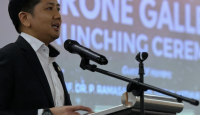
He said this when officiating the 2023 National Sensor Technology Forum at Universiti Putra Malaysia here today. Present was Malaysian Academy of Sciences (ASM) vice-president Datuk A. Bakar Jaafar.
Aminuddin said the importance of sensor technology as a rapid detection tool is becoming more evident in the post-pandemic era which integrates sensors with big data, Industry 4.0, and the Internet of Things to enable pattern detection, prediction of results, and what immediate action to be taken.
In addition, Aminuddin said through the National Technology and Innovation Sandbox initiative under the National Economic Review Plan, sensor technology applications have been identified to accelerate economic growth opportunities through disruptive technologies such as artificial intelligence, robotics, drone technology and others.
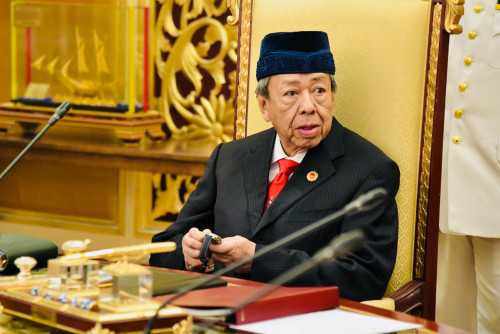
Meanwhile, ASM president Datuk Tengku Mohd Azzman Shariffadeen said the 2023 National Sensor Technology Forum aims for the first time to share knowledge and improve understanding of the ecosystem, as well as sensor technology and its applications across the country's socioeconomic sectors.
“ASM hopes that this forum will be the starter for the next series of technologies. The next series will cover other science and technology drivers of the Malaysian 10-10 Science, Technology, Innovation and Economy Framework.
“This technology series will serve as a platform for all players in the ecosystem from academia, industry, private and public research institutions, and the community to meet and share views for the advancement of STI in Malaysia,” he said in his speech text read by A. Bakar.
Tengku Mohd Azzman said the country needs more researchers active in experimental development of translational research who are not only focused on basic research in university laboratories.
He said the focus on empowering local adaptive talent is also important to develop a knowledge-based economy, in line with the government's intention to create an STI ecosystem to facilitate the development of local technology and produce talent or workforce in various fields including sensors, AI, IoT, and blockchain technology.
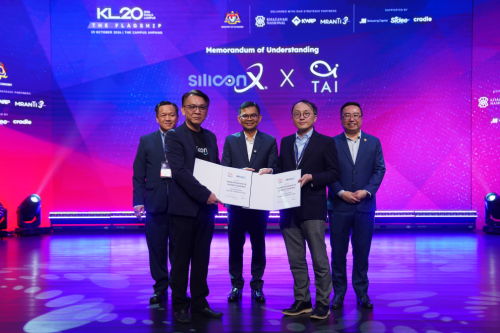
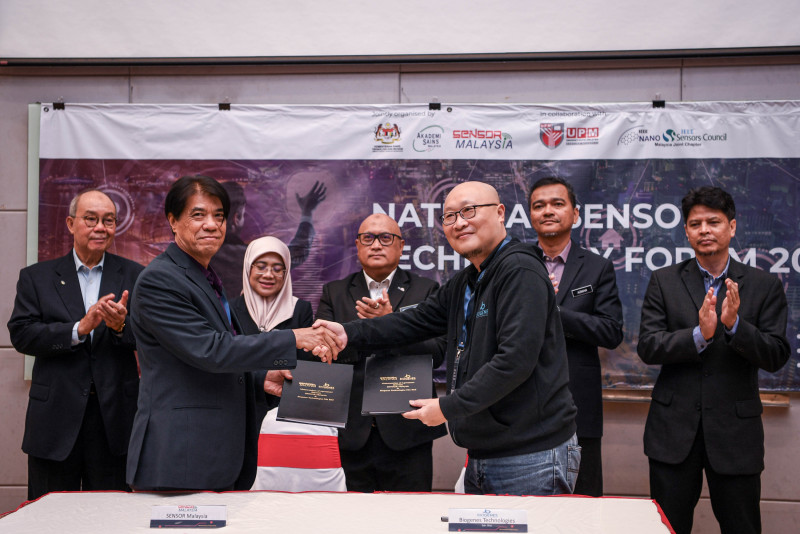
At the event, Aminuddin witnessed the signing of a memorandum of agreement between the Malaysian Society for Sensor Technology Development, represented by its chairman Lee Yook Heng, and Biogenes Technologies Sdn Bhd, represented by its chief executive officer Tang Kok Mun.
The MoA aims to hold a number of programmes that can overcome the challenges in narrowing the gap in biosensor technology between universities and research institutions as well as industry commercialisation needs.
Biogenes Sdn Bhd will provide funds of RM50,000 per year for a period of three years while Sensor Malaysia will implement several programmes involving members of the association by providing funds for the purpose of research, travel, training and attending conferences. – Bernama, July 18, 2023