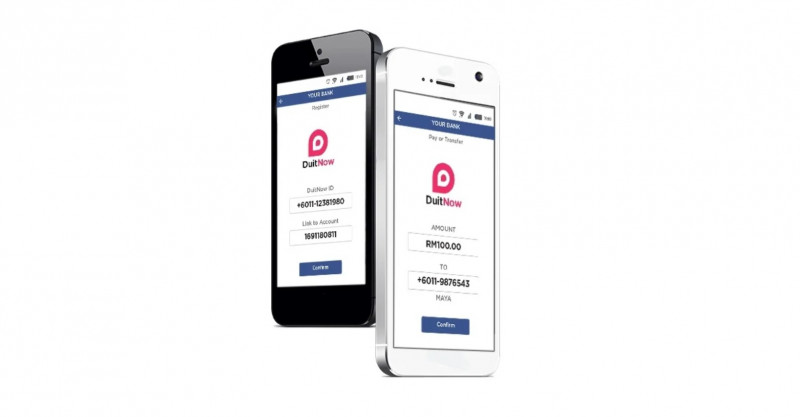
KUALA LUMPUR – Payments Network Malaysia Sdn Bhd (PayNet), the operator of DuitNow QR, today said that there is some confusion over concerns raised on the impact of fees imposed on merchants and prices of goods and services.
It noted that several online and mainstream media covered a story on a local banking institution notifying its customers on the impending imposition of transaction fees for DuitNow QR payments and transfers made with credit cards effective November 1. The story also cited a few banks who were purportedly unaware of this matter.
In a statement, it said that the reports have inaccurately described two different types of e-payments as one and the same.
The first concerns e-payments made by a customer to any merchant. “This normally attracts merchant discount rate (MDR) which is charged based on a percentage of the payment transaction value,” PayNet said in a statement.
“A merchant would receive the payment made by their customers after deducting the MDR. At present debit and credit card payments incur MDRs whereas there is MDR waiver on QR payments.”
It added that this MDR waiver for DuitNow QR payments will be uplifted from October 1.
On the other hand, the 50 sen fee for transactions above RM5,000 mentioned is for peer-to-peer fund transfers from a personal QR to another personal QR, not payments to merchants.
“This is completely unrelated to the first mentioned QR payments to a merchant and under no circumstances will both fees be imposed for the same transaction,” it said.
The statement stressed that for the first mentioned type of payment, the collected MDR will be shared between PayNet and the relevant bank or third-party acquirer.
It is to cover upkeep of our network as well as costs incurred by banks and third-party acquirers for onboarding merchants to enjoy this valuable service.
“To incentivise adoption during the QR payment introductory period in 2019, MDR was waived.
“This waiver was further extended due to the outbreak of Covid-19. It is neither a new nor an additional fee,” it added.
Instead, October 1 marks the end of the MDR waiver that was supposed to have been done over nine months ago.
A reserve fund will be established with the MDR collected by PayNet to incentivise acquirers not to charge the smaller businesses.
“Whilst PayNet is not in a position to dictate what the market charges merchants, several banks and third-party acquirers intend to either continue to defer imposing MDR or absorb it for smaller businesses.
“In this respect, merchants should check with their bank or third-party acquirer to confirm this matter,” the statement said.
It also stressed that the 50 sen fee is for fund transfers above RM5,000 using personal DuitNow QRs.
“It is inaccurate to state that RM0.50 charge applies to payments made to merchants. It is also inaccurate to state that MDRs are charged for funds transfers using personal QRs,” the statement said.
To concerns that MDRs will be passed on to consumers, PayNet clarified that purchases using credit and debit cards are already subject to MDR.
“Products and services purchased with credit or debit cards are priced the same as cash purchases. Likewise, we do not foresee prices of goods and services to be affected by purchases using DuitNow QR after MDR is imposed,” it said.
On allegations that transacting in cash is free, PayNet pointed to a study by Roubini Thoughtlab in 2018 which it said confirmed the belief to be misplaced because the estimated benefit of going cashless to businesses far outweighs the cost.
The 15-year cumulative net benefit (from 2017 to 2032) of US$4.2 billion (RM19.7 billion) can be expected due to the savings from reduced paperwork and benefits of e-payments (namely increased interest earned, no manual reconciliation, no shortfall-related losses, lesser headcount and time saved from handling cash), it said. – The Vibes, September 29, 2023

.jpg)