.jpg)
** Spoiler alert**
WHEN it comes to Korean dramas (K-drama), we are all too familiar with the damsel in distress female lead, who sooner or later develops a sort of Stockholm syndrome towards her tormentor.
So one can only assume that a narrative about a single mother would eventually lead to her finding the love of her life to finally protect her and her children, heavily relying on him to provide for her now ‘perfect’ family.
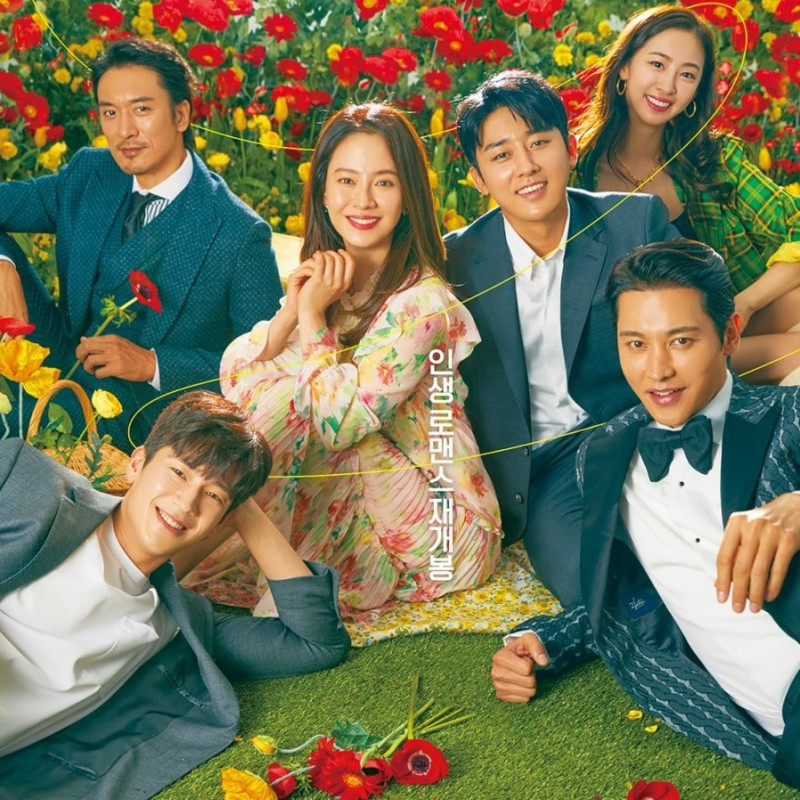
And that’s what most synopses suggest when you look up the 2020 production of ‘Was It Love?’ – by Korean broadcasting company JTBC – about a single mother who hasn’t dated in 14 years and finds herself in a pickle with four men who have entered her life.
More often than not, when it comes to narratives of parents with children born out of wedlock, the media does not shy away from capitalising on the victim narrative, oftentimes focusing on a father who had to give up his dreams to live a mundane life for his family.
A prime example would be the 2020 JTBC production of ‘18 Again’, inspired by the 2009 US film ‘17 Again’ starring Zac Efron.
However, ‘Was It Love?’ has opened the door for a new narrative of parents who have children outside of marriage.
Starring long-tenured member of the Korean variety show, ‘Running Man’ – Song Ji-Hyo – in the role of a single mother (Noh Ae-jung) who had to drop out of college during the last semester of her senior year to care for her daughter, whom she conceived out of wedlock.
After leaving college, Ae-jung spent 14 years getting through life by the skin of her teeth as a single mother; working multiple part-time jobs before getting scammed into taking over a bankrupt film company with the empty promise of achieving her dream of becoming a film producer.

As with every K-drama, tension heightens when the main character is showered with multiple love interests vying for their attention.
And in Ae-jung’s case, we get four different men entering her life for better and worse; all conveniently sharing a past connection with her.
There is also a sub-plot in which Ae-jung’s daughter, Noh Ha-nee, is on the hunt for her biological father, who unsurprisingly is one of the four love interests.
Typically, this is when we hit rewind and go on a nostalgic journey where the parent is magically brought back to their youth to rewrite the story of their past; as per the ‘18 Again’ narrative.
However, ‘Was It Love?’ shows no interest in going down that rabbit hole.
Instead of dwelling in a pool of pity and regret like the father in ‘18 Again’, Ae-jung charges forward fearlessly with every hardship put in front of her.
Contrary to stereotypical narratives, there was never a sense of regret when it came to having her daughter, despite everything crumbling before her eyes.
And more impressively, not once did she embody the damsel-in-distress character type, that we see way too often in K-dramas (or in stories from around the world, for that matter).
But if this sounds way too progressive for an Asian drama, fret not, as the series is generous with the amount of criticism Ae-jung gets for not only being a single mother, but a single mother who conceived out of wedlock while in college and who dropped out as a result.
While we do see a dip in the narrative after the audience finds out which of the four is Ha-nee’s father, and he attempts to take the role of the protector by standing up for his family, Ae-jung stands unshaken in her belief that she does not need a man to to be in charge.
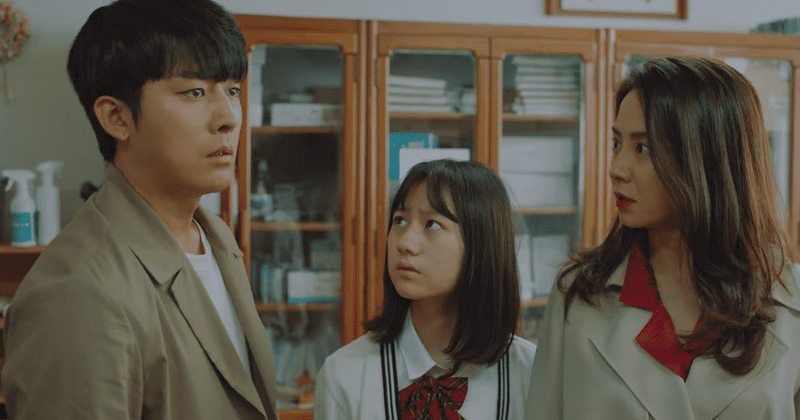
She confronts the baby-daddy, puts her foot down and makes it clear to him that she and her daughter are fine without him; and to further solidify this, Ha-nee stands by her mother’s decision.
Although Ae-jung’s mother did try to convince her to accept a man into her life for Ha-nee’s sake, and she did get back together with him, both Ae-jung and Ha-nee made it clear that he is not in their lives as a protector or a provider.
Ae-jung’s decision to accept him back into her life was not out of necessity or the belief that his presence would help make their lives better, but because of pure interest.
Talk about a K-drama empowering its female lead with choosing a man based on wants and not needs.
And further setting this empowerment in stone is the last scene of the whole series.
We see the silhouette of a bride, and immediately think that it’s Ae-jung.
However, within a few frames, we see Ae-jung next to the bride in a white hanbok – ceremonial Korean clothing – taking her hand and walking her down the aisle.
If you ask me, I think that this scene blew all tradition and stereotypes out the window.
Despite finally finding, meeting and having her father in her life, Ha-nee was walked down the aisle by her mother; proving once again that her father’s presence in her life did not change the relationship between mother and daughter.
Ae-jung, her mother, was all she needed throughout her life.
‘Was It Love?’ has successfully added yet another feminist female character to the growing list of empowered female K-drama characters. – The Vibes, February 7, 2021