.jpg)
THE belief in reincarnation stretches across cultures and religions and has been a topic of interest in the film industry.
As an avid follower of Korean drama, I have come to realise that the narrative surrounding the idea of reincarnation is not only overused but highly problematic.
This became dauntingly clear when I was indulging in the 2020 production 'Tale of the Nine-Tailed Fox' starring Lee Dong-wook and Jo Bo-ah.
Echoing similar narratives as the 2016 production of 'Guardian: The Lonely and Great God', also known as 'Goblin', and the 2017 production of 'A Korean Odyssey' – 'Tale of the Nine-Tailed Fox' is basically about a Gumiho (nine-tailed fox) looking for the reincarnation of his late lover.
Of course, let’s not forget the part where this deity had broken some sort of spiritual world law to be cursed with not knowing when or whom his human lover will be incarnated as. Because then, where would the suspense be?

Now, this concept may have made an incredibly romantic story, or else how would it have gotten an average of 8.2/10 rating on IMDb?
A deity in an immortal human form waits centuries just to have a chance of being reunited with his mortal lover which he met ‘back in the day'.
Yet, when we switch up the lexicon used in describing the narrative, it essentially becomes a narrative of an old man stalking little girls to find his bride. Not so romantic now, is it?
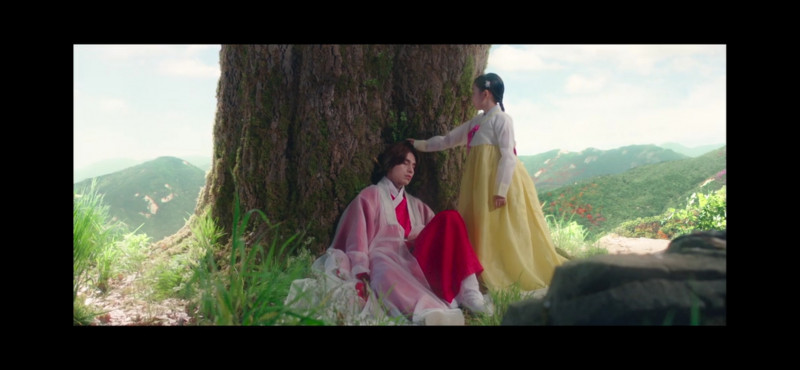
In 'The Tale of the Nine-Tailed Fox', Lee Yeon, our protagonist and Gumiho, first meets his love, Ah-eum, as a young girl in the mountain that he has been tasked to protect.
Their relationship then slowly blossoms into a friendship, and wait for it, a romantic relationship.
In other words, sexual grooming maybe? But that can be easily overlooked if our protagonist is a fictional deity, and a very attractive one if I may add.
All proceeds well with Ah-eum as a young woman until chaos implodes. Without a doubt, she dies tragically. And Lee Yeon goes against the rules and intervenes with death, leading to his centuries-long search for his lover.
Within the rules of reincarnation, a soul will start a new life in a different physical form or body after biological death. And this will only mean that Ah-eum’s soul will begin from birth, as a baby.
At this point, I think we all know where this conversation is going.
With Lee Yeon a "grown man" of at least a thousand years old, in search of the reincarnation of Ah-eum, he lays his male gaze on every little girl he crosses paths with. But of course, he’s looking for his former lover, not to just be creepy.

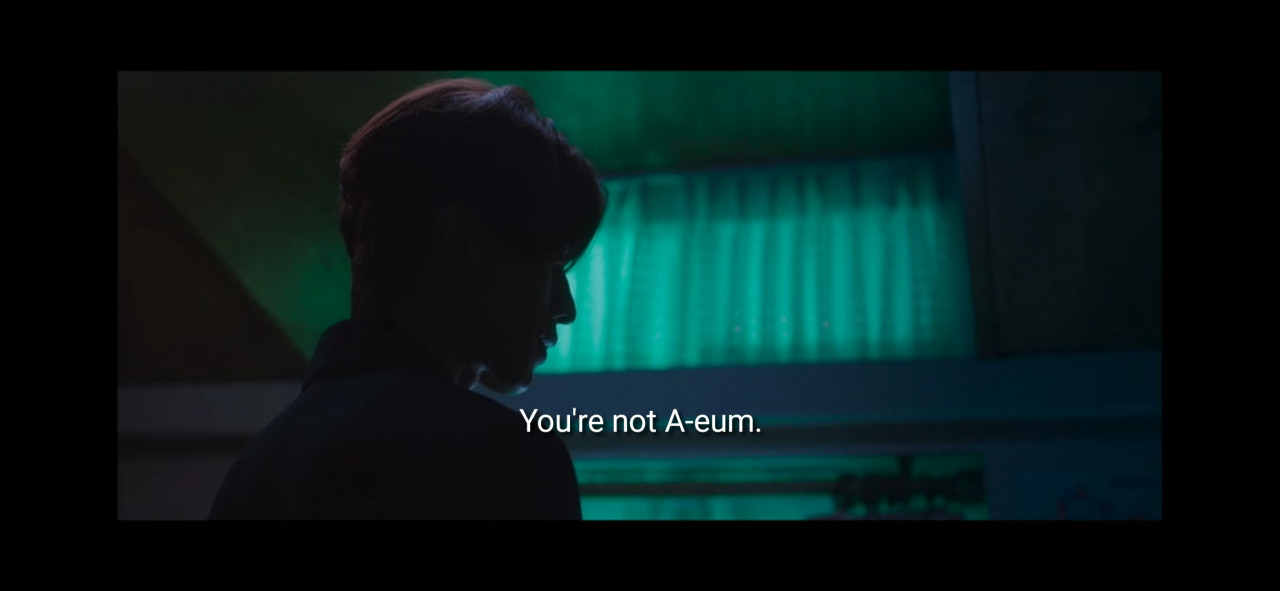
And we get this very early on in the series when Lee Yeon specifically saves nine-year-old Ji-A from harm but realises that she is not whom he was looking for. He focuses his attention on young girls just to check if they are whom he is in search of.
Without the smoke screens of the blatantly romantic plot, the underlying plot is disturbing in its own ways. Especially now with a better understanding and higher awareness of issues such as the male gaze and sexual grooming.
I highly doubt that the underlying issues within the series are what the producers and director set out to portray. Yet, I think we must be very wary of what we romanticise in the world around us.
Criticisms aside, 'The Tale of the Nine-Tailed Fox' is among the very few K-drama series whose supporting characters seem to have better character development. Truth be told, it has a more compelling plot as compared to the main narrative between Lee Yeon and Ji-A (who is, later on, discovered to be the reincarnation of Ah-eum). – The Vibes, May 15, 2021



_(1).jpg)