PATRICIA Dennis is an Orang Ulu, inheriting her father’s patriarchal lineage, while her mother is a Lun Bawang, the tribe that hails from Sarawak’s central-north Borneo. To be exact, her father hails from Pa’Ukat in the picturesque Bario Highlands, while her mother is from Lawas.
However, in the last 14 years Patricia, married to AirAsia pilot and captain Andrew Telesphorus Telasai, a Melanau, has lived in Nilai’s Spring Villa enclave in the vicinity of Seremban with her three sons.
Patricia is among the thousands of Sarawakians and Sabahans who have left their home states on Borneo island to become a part of the ‘Dayak Diaspora’ living in Semenanjung (Peninsular Malaysia).
And wherever they are in their new locations, these East Malaysians are known to be resilient and enterprising – and they surely know how to make themselves “feel at home” despite having relocated way across the South China Sea.
So how does Patricia make herself “feel at home” in Nilai?
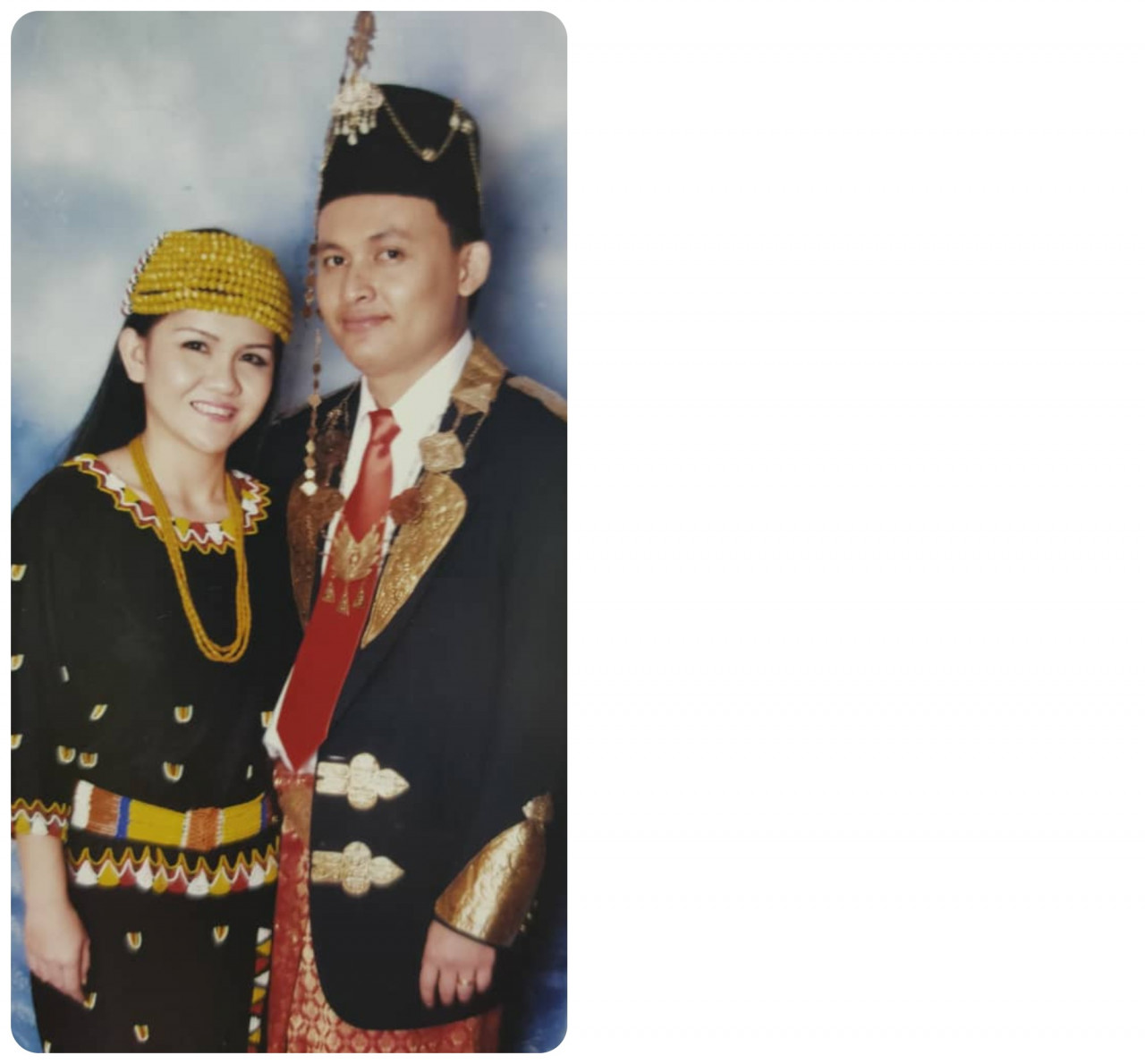
“I take a bit of my ‘Sarawak’ to wherever I go,” she tells The Vibes by telephone.
“I retain my soulful Orang Ulu spirit, while living my mother’s Lun Bawang traits and by finding ways to fulfill my husband’s Melanau expectations from me, an Orang Ulu.
“In this way I am constantly reminded of my ‘Sarawakian-ness’ as an Orang Ulu, as a Lun Bawang and the Melanau bit of my other half,” says the former aircraft engineer, now ‘special edition’ food peddler.
“I love to eat,” says Patricia, giggling unabashedly and adding, “If I love to eat then I must learn to cook. And so I learned to cook from my mother and grandmas. This is another way I retain my ‘Dayak-ness’, through food, which is multifaceted among Sarawak’s indigenous groups.”
Patricia says the Dayak diaspora where she lives used to gather for fellowship from time to time, being “birds of a feather”. And she cooks the special Sarawakian meals on those occasions.
“And there are also Sarawakians and Sabahans who worship at the Agape Community Church in Seremban which I attend.
“It is largely in the church that we come to know each other and socially bond with one another. It is also in the church where I got to showcase my cooking skills during special events,” says Patricia.
Among her church friends is Dr Jean Lim of Seremban, who loves Sarawak food, having spent time working in a clinic in Song district, Kapit and who had fallen in love with the state’s indigenous food.
Jean is one of Patricia’s non-Dayak friends who is a great fan of Sarawakian food. And there are other Negri Sembilan locals and expatriates who also enjoy Sarawakian food like her.
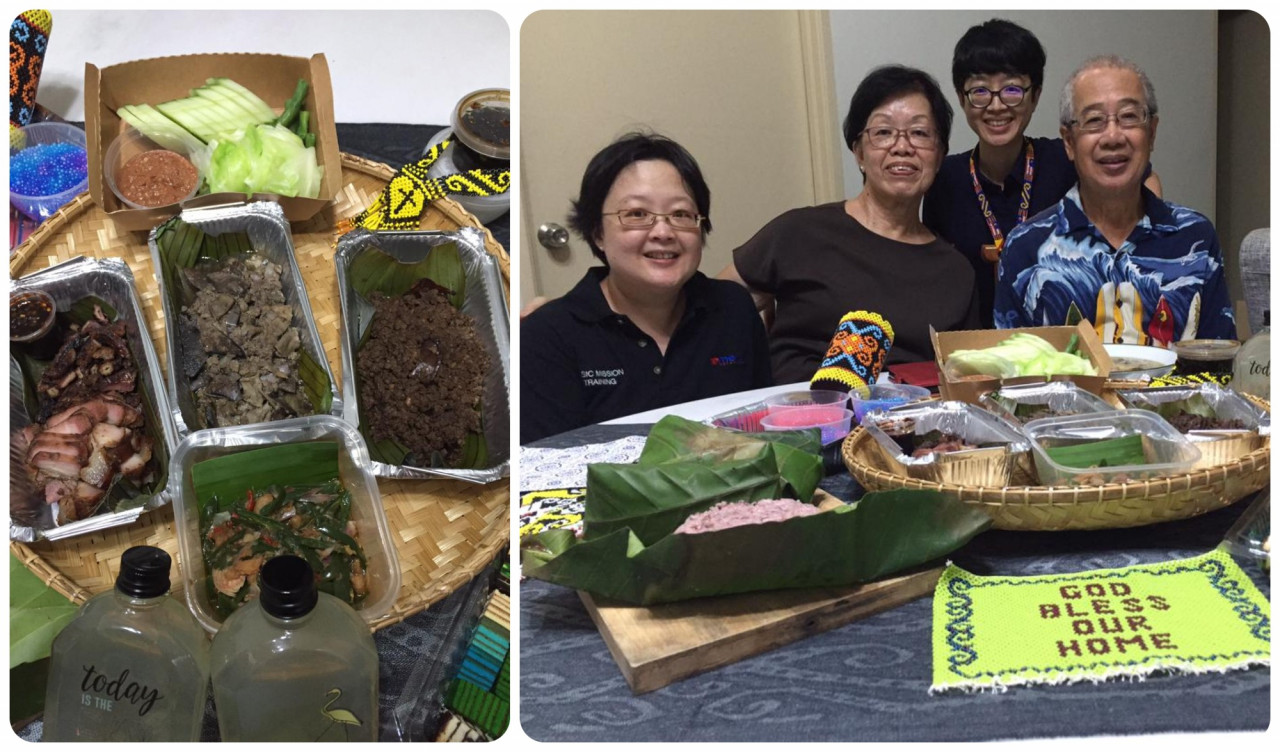
She tells The Vibes: “My time in the hinterlands of Sarawak has been one of the highlights of my career so far. I have been blessed by the many who have ‘adopted’ me as their ‘anak indu’ (adopted daughter) and opened their hearts and homes to me.
“Indeed, our culture and diversity is what makes us unique and adds to the beauty of our ‘tanahair’. To my East Malaysian friends who are away from family, particularly those on the frontlines, but this too shall pass.
Jean’s mother, retired teacher Lim Phek Leng, also extended her Gawai wishes: “We stand with all our East Malaysian brothers and sisters in ‘togetherness’ to celebrate Gawai and the Kaamatan festival.”
From aircraft hangar to kitchen, from spanner to spatula
It did not take long for Patricia to jump on the “food bandwagon” when church friends encouraged her to explore the idea.
“So, here I am,” says Patricia, sounding like a pseudo entrepreneur, “from aircraft hangar to kitchen, from spanner to spatula.”
She calls her initiative the ‘Borneo Food Programme’ but it is not an officially registered business venture, she says, “... hence, the term ‘programme’ to reflect my own love for food and cooking, as well as my sincere wish to satisfy tastebuds craving for Sarawakian homegrown fare among the diaspora and others.
“I got into this initiative during last year’s lockdown and my food packages are priced at a nominal rate only. What’s important for me is to live my ‘own little Sarawak’ wherever I am, as well as to help others including Sabahans to live their ‘own little Borneo’ wherever they are.
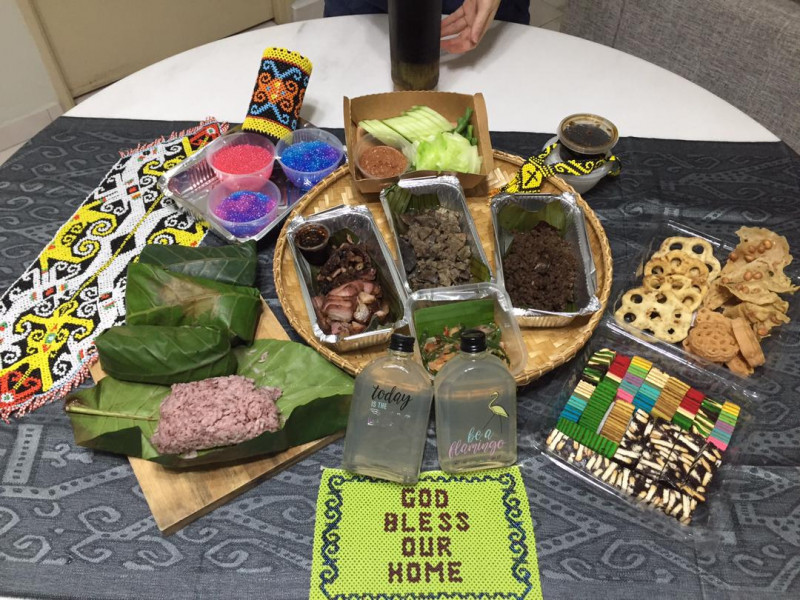
“It is the blessings in return which mean more to me,” says this food hobbyist, who offers various packages to suit her customer’s liking and quantity. And they are all delivered and served in traditional handicraft packages made by the Penan tribe which Patricia specially orders from Sarawak.
For example, the family pack is served in a large bamboo-made dulang of which the Penan are famous for and customers get to retain the dulang as a collector’s item.
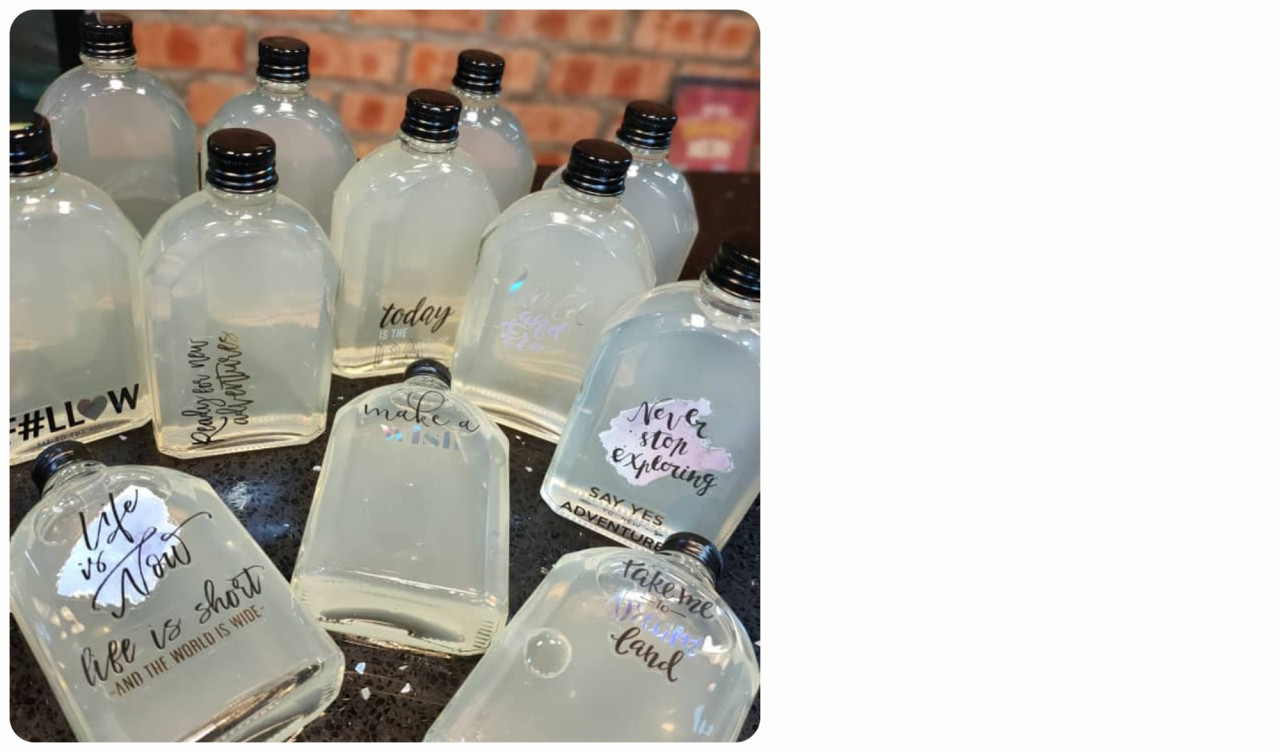
More than just food, what is Gawai without the customary ‘tuak’ or rice wine? Patricia includes this inevitable item in her food packages, all diligently bottled with her personal hand-written messages that lend a bit of motivation to the diaspora.
And of course her food packages include a potpourri of Sarawakian desserts such as the famous ‘kek lapis’ and other sweet savouries made from gula apong – a natural sweetener derived from the sap of Nipah palms that grow abundantly along Sarawak’s coastlines.
“So you can see, in this way I am not just delivering a bit of Sarawak cuisine but also offering felicitations in bottles as well as promoting Sarawak’s handicrafts to a small extent as well,” she said.
Patricia’s food idea is also featured in her FB portal – Puyan Imuk Smokehouse – and she explains ‘puyan’ means kitchen in her husband’s Melanau language and ‘imuk’ is what the Lun Bawang call their daughters endearingly.
So, what’s cooking?
“Plenty, what do you want? I have anything from umai jekan peheing, pork satay with pineapple sauce to senamu berek, umai jeb ikan tenggiri and sambal ikan tahai with petai, wildboar pansoh, manok pansoh to jekan kidieng,” Patricia spells them out.
Patricia’s menu offers close to 20 exotic food items of the Lun Bawang, Orang Ulu, Kelabit, Melanau, Bidayuh and other Dayak fare, as well as some tweaked Sabah and Malay-ish sounding specialties such as paku pakis stir-fried with bunga kantan.
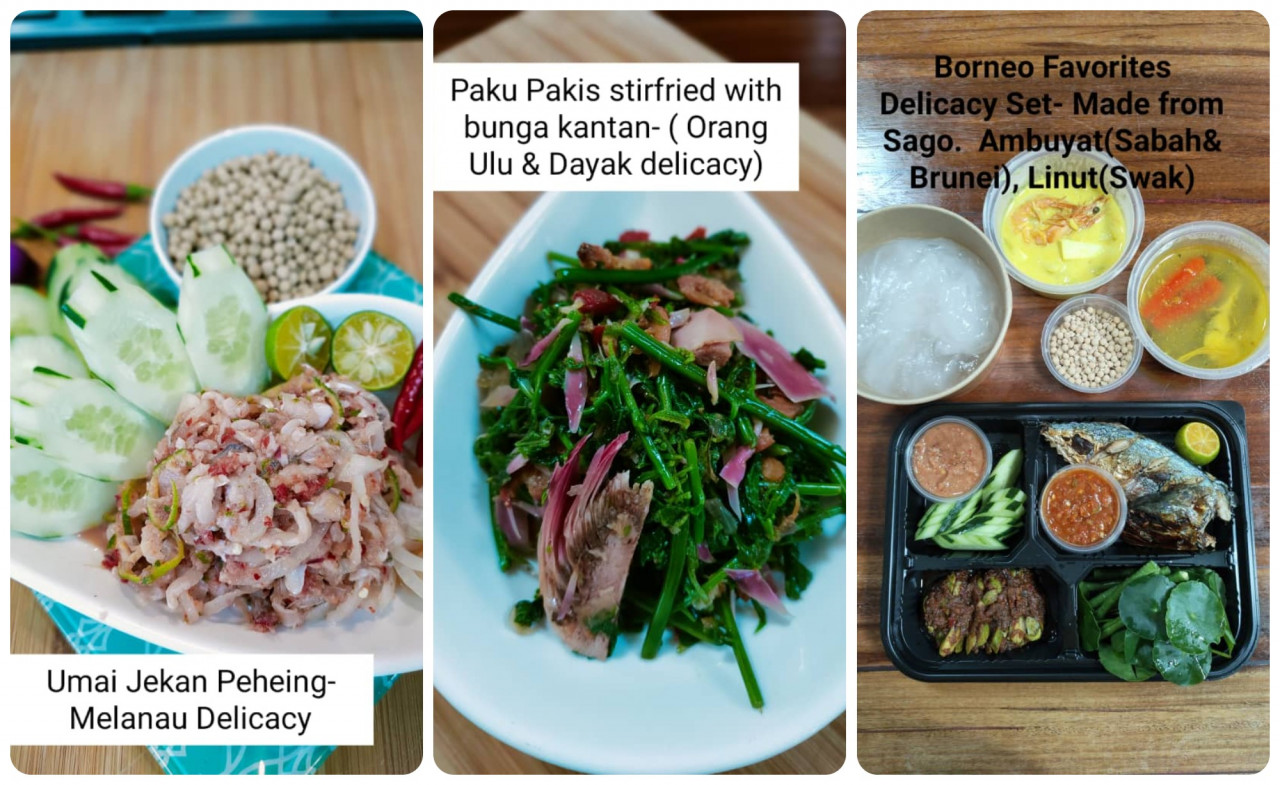
Patricia elaborates on some of the specialties, like sambal ikan tahai (sardinella albella) fried with petai. According to her, this fish is only found in waters off the coasts of Limbang and Lawas.
The people of Limbang and Lawas – as well as those in Brunei Darussalam – are familiar with this fish which is usually roasted (salai) over an open fire and eaten with ulam-ulam (salad) and spicy local sambal on the side.
Recently, Astro Awani featured ikan tahai on one of its documentaries highlighting Kampong Awat-Awat in Lawas where this fish is fished, gathered and processed.
Touching on another specialty dish, umai, Patricia points out that it is Sarawak’s answer to Japan’s sashimi – an extremely popular “raw fishy deal”.
“Umai is a popular indigenous raw fish specialty of the Melanau people too. It was originally eaten by fishermen on their fishing sojourns but later became a very popular preparation of the Melanau on land. It is basically raw fish eaten with a mixture of onions, chillies, vinegar, salt and lime juice,” says Patricia.
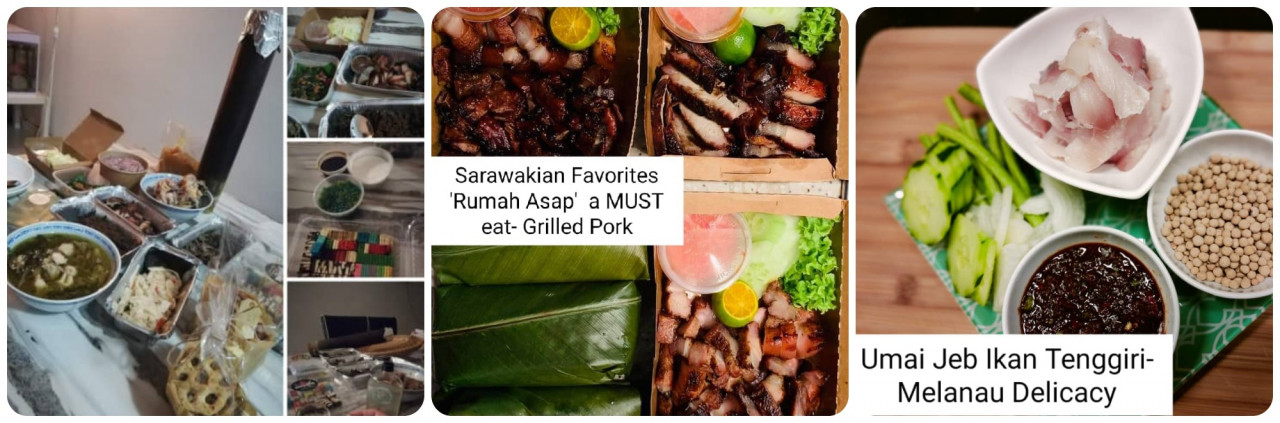
Patricia offers this dish in her menu in varying styles, as ambuyat, styled after Brunei and Sabah recipes and as linut in Sarawak’s Melanau version.
This year as the nationwide lockdown commenced on the first day of Gawai on June 1, Patricia’s customers agreed to celebrate the event on the eve of Gawai and she was able to deliver her orders on May 31.
Gawai today
In his brief Gawai message to The Vibes, Dato Peter Minos extends his greetings to Sarawakians living in the ‘Land of the Hornbills’ and wherever else they have relocated to – more so, to the large diaspora living in Semenanjung.
In his message, the chairman of Sarawak’s Bung Bratak Heritage Association says the millennials today ask ‘what is Gawai?’
“In the past for Dayaks, Gawai was to thank the Almighty for the bountiful padi harvest and the life of plenty that they were blessed with.
“These days Gawai is a time for Dayaks to meet family, other relatives and friends, just to be happy together rekindling friendship and exchanging greetings and just to fellowship.”
He said today, Gawai is also an occasion to showcase Dayak culture, their songs and music, as well as their traditional costumes of many colours and their handcrafts.
“All these initiatives help to portray their history and heritage, their roots and their traditions of old through the ages.”
He said behind it all, Dayaks want Gawai to be a symbol of unity, to create peace and harmony and to want to do more for the state and country.
“Gawai of course, gives a sense of ethnic identity that makes the Dayaks proud in the nation and to be a part of the happy citizenry.
“So Gawai is more than just the joys and merriment. It is an integral part of the Dayaks now. It is like they are being God-sent,” he added.
Peter Minos’s Gawai message aptly describes Patricia’s “food diplomacy” to the Dayak diaspora in her little corner of Negri Sembilan.
To the Sarawak diaspora who have made the ‘Land of the Minangkabau’ their home, Patricia is somewhat “God-sent”. – The Vibes, June 2, 2021