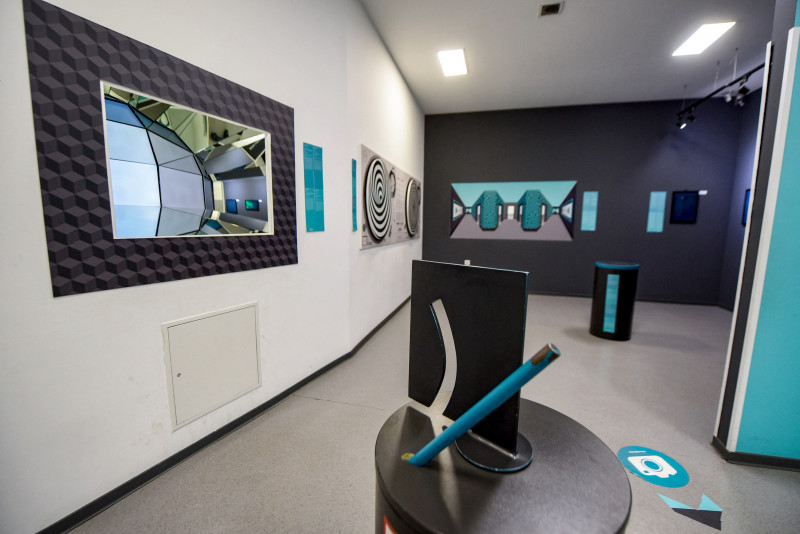
SEEING your own head on a platter or posing for a photo while walking on the ceiling – absurd images served up by a Croatian museum that has gone global.
"It's something different, it makes you use your brain but it's also fun," says Roko Zivkovic, who set up the original Museum of Illusions with one of his friends in Zagreb in 2015.
Inspired by a US science TV show called 'Brain Games', they wanted to create a place where visitors could be entertained while stimulating their grey cells – and now they have licensed franchises from New York to Kuala Lumpur.
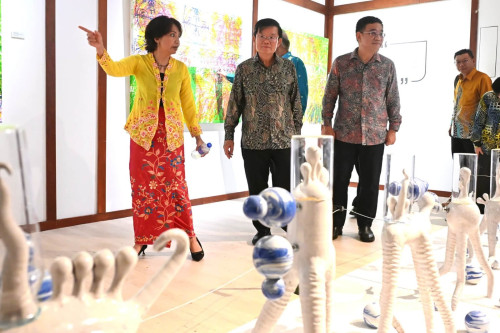
The museum displays dozens of optical illusions, including the visitor favourites "Head on a Platter", the "Ames room", which has an Alice In Wonderland effect on the size of the people in it, and the anti-gravity room.
"I almost fell down, I had to climb all the time," says nine-year-old Dora, exhilarated from her experience of weightlessness.
French student Yousfi Mezyan, 22, touring the museum with his friend, says he appreciated that the exhibits "make you think a bit".
Not a 'classical' museum
Much to the surprise of its creators, the museum was immediately a huge hit – more than 100,000 visitors in its first year made it Zagreb's most popular museum.
Success in Zagreb led to expansion – first around Croatia, then into European capitals including Vienna, Belgrade and Paris.
"We haven't stopped since. Today we have 30 museums around the world," Zivkovic told AFP.
Branches are now open on four continents, and six new franchises, including one in Israel, are to open by the end of the year.
Zivkovic says they did not want to make a "classical museum" where people are expected to be silent and contemplate exhibits, instead visitors are encouraged to have fun.
There is another vital part to their strategy – inspiring visitors to share images online.
"We want the exhibits to entertain and educate, but we also want them to be photogenic so people can put them on social networks," says Zivkovic.
Countless posts attest to the sharable nature of activities such as "Walking on the Ceiling".
And the coronavirus pandemic has not dimmed Zivkovic's desire for expansion.
South America and Australia do not have a Museum of Illusions yet, he says, but they will. – AFP, June 13, 2021


_flanked_by_wong_(right)_and_haryany_(left)_at_the_museum.jpeg)