
KUCHING – A submission to attain the United Nations Educational, Scientific and Cultural Organisation (Unesco) heritage status for Sarawak’s iconic Niah Caves is pending endorsement and approval from the UN agency.
The submission, which was made by the Permanent Delegation of Malaysia to Unesco, is an initiative by the Sarawak state government.
Titled 'The Archaeological Heritage of Niah National Park’s Caves Complex, Sarawak, Malaysia', the submission, if successful – will be the fifth Unesco World Heritage site in the country.
The others are The Archaeological Heritage Site of the Lenggong Valley, The Melaka and George Town (Historic Heritage Cities of the Straits of Malacca), The Gunung Mulu National Park, and The Kinabalu National Park.
The successful endorsement of the Niah Caves as a World Heritage Site by Unesco will also lend Borneo island its third such site after The Kinabalu National Park and The Gunung Mulu National Park.
The Niah Caves, popular for its swiftlet and bat fauna has supported a remarkable bird’s nest industry which is still being actively pursued by several entrepreneurs.
A state committee comprising representatives from the Ministry of Natural Resources and Urban Development, the Ministry of Tourism, Creative Industry and Performing Arts, the Sarawak Forestry Corporation (acting as secretariat), and the Sarawak Museum Department, together with other relevant agencies have been set up to initiate the submission process.
Speaking to The Vibes, Zolkipli Mohamad Aton, Controller of National Parks and Nature Reserves said: “The Niah National Park fulfills two out of the 10 ‘Outstanding Universal Value (OUV)’ criteria required to qualify for the heritage status.
“It has one OUV for its cultural excellence and another for its natural merits. A successful endorsement based on these criteria will mean the Niah Caves will be the second heritage site in the Asean region under the mixed natural-cultural category.”
Gazetted national park
First gazetted as a 'historical monument' in June 1972 and two years later in 1974 gazetted as the Niah National Park, the Niah Caves consists of an area spanning 3,139ha.
It was first discovered by naturalist Alfred Russel Wallace in 1864 and has been recognised as a significant archaeological site after a human skull dating 40,000 years old was discovered there in 1958.
The discovery of the skull is evidence of the existence of prehistoric man from the Pleistocene era in Southeast Asia. Studies also revealed that the Niah Caves which also hosted other important artifacts like earthenware, ornaments, bone tools, and food remains – had been continuously inhabited from 40,000 years ago until the early 19th century.
The skull was found in the West Mouth of the Great Cave. It belonged to an adult female. This makes it the oldest modern human fossil known at that time.
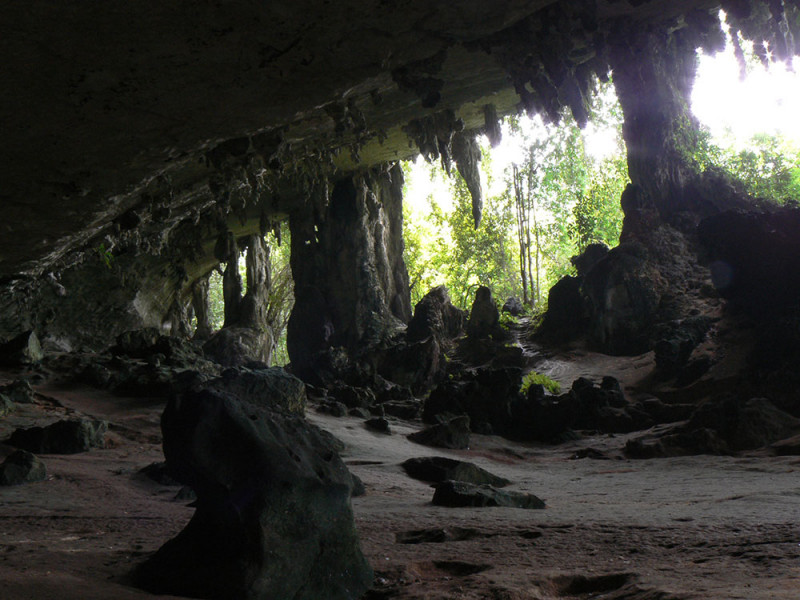
The Niah Caves consist of a range of several cave formations with five openings or mouths. The main cave is called the Great Cave and is located at the West Mouth. It is a significant archaeological site, followed by the Painted Cave which has red hematite paintings on its walls denoting human figures, probably representing warriors and hunters and some of the animals of the surrounding forests.
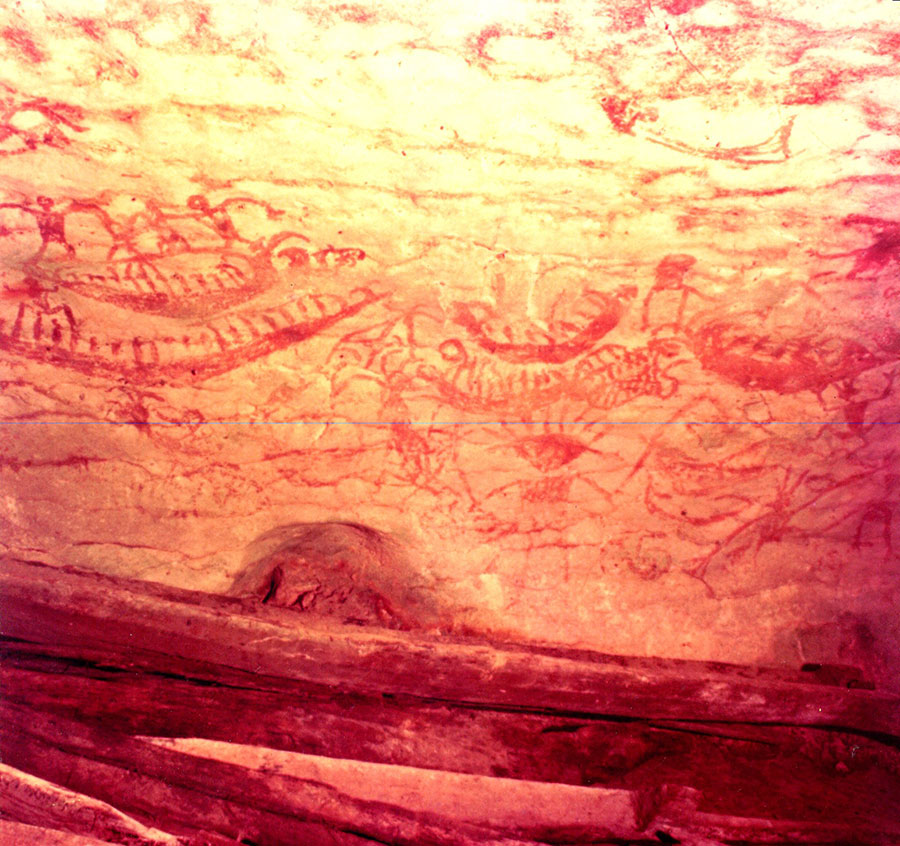
Most importantly, the Painted Caves host artifacts such as 'death boats' or wooden coffins carrying the souls of the deceased on their journey to the land of the dead. This is an indication that the Painted Cave is a site of a previous burial ground of the prehistoric community.
The Niah National Park has recorded 75 species of mammals, six species of primates, 23 species of bats, Malayan pangolin, a common porcupine, Oriental Small-clawed Otter and the leopard cat.
There are also 553 species of plants in the park and 70 are categorised as protected species under the Wild Life Protection Ordinance 1998. Fifty of these species are endemic to Borneo, while 14 are endemic to the Niah National Park, including five species of Begonia, three species of ferns and aroids, and two species of gesnerial, and one orchid specie.
Heritage status
According to Zolkipli, a Unesco heritage status will augur well for Sarawak’s iconic landmark and the state as a whole.
“Such a status will bring international attention to the site and will result in an increased number of tourists coming to visit the state. The state will benefit economically and the communities living in and around the Niah National Park will also gain from the economic spinoff generated by tourism.”
He said there are six villages located near the Niah National Park that consist of Penans, Malays, Melanau, Iban, as well as ethnic Chinese.
“These ethnic communities are largely bird’s nest collectors, fishermen, farmers, entrepreneurs, homestay operators and others like souvenir and handicraft sellers.”
He said if the heritage status is bestowed upon the Niah Caves it will be perceived as a flagship site by both the locals and foreigners and will attract scholars, researchers, travel writers, and entrepreneurs – where collaborative efforts can be put together to initiate funding for the preservation of the Caves.
“A heritage site is eligible to receive funds for its protection and conservation. If the site is declared to be of significance either historically or archaeologically it will have to be protected and preserved. Hence, the site will also have access to global project management resources when needed.” – The Vibes, May 7, 2022