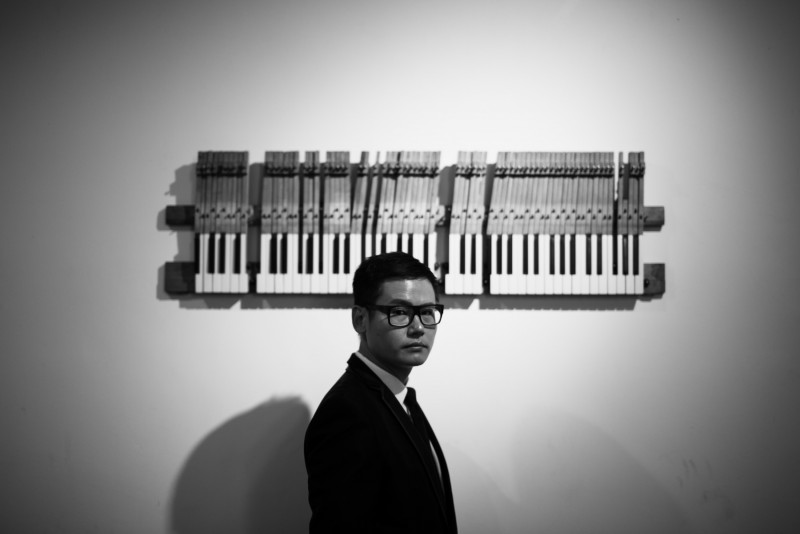

"Even in the worst of times, we come together as a community to give beautiful music to the world."
– Tay Cher Siang
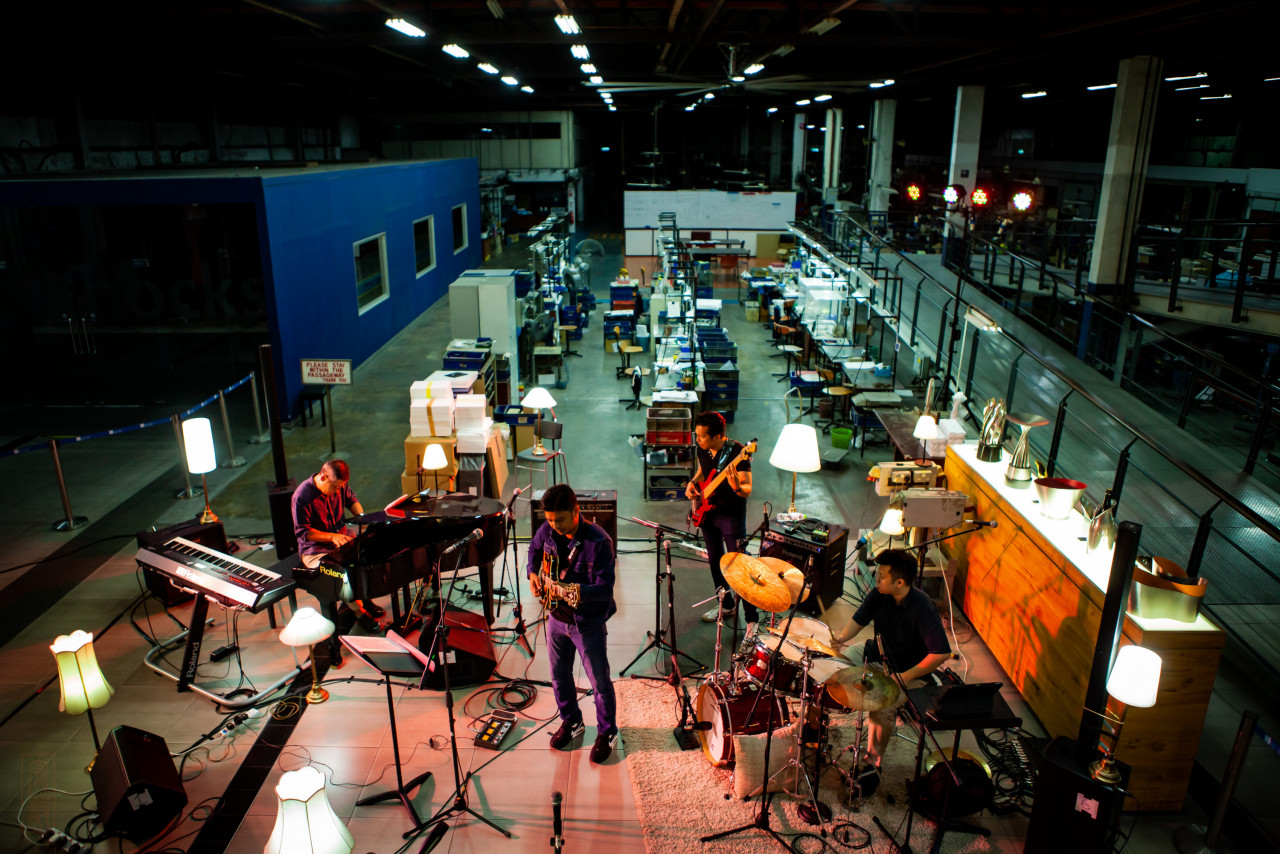
IT is quite the experience watching a live-stream show when you are actually at the premises, taking place in a huge factory. You are turned inside-out, you see things which are “concealed” at a usual live performance. At a live concert, only the performers are visible, the rest are backstage making sure the show is flawless. The Malaysian Jazz Marathon exposed us to the whole arsenal, bringing viewers into a slick world of an intriguing and fascinating show from ‘the belly of the beast’ itself.
The 12-hour Marathon, with the theme ‘Keeping Music Alive’ which took place at the warehouse of the Selangor Pewter headquarters, was fate. Tay met its chief executive officer by sheer luck, at one of his performances, and tentatively enquired on the possibility of a show. The latter was enthusiastic, proferred a vicinity, and was ecstatic in providing any more support that may be needed.
A memorable moment: while the live streaming show took place, some of the Selangor Pewter workers were doing overtime. If one listened carefully, you could hear the clanking and buzzing from these pewter makers plus the music and singing taking place simultaneously. It was sensational, as both parties ended up doing their ‘thing’ in rhythm.
The Jazz Marathon came to be from another project, a much-planned Malaysian Jazz Piano Festival – The Gardens Mall (MGPF-TGT) Charity Festival, a six-day extravaganza over two weekends, featuring 15 bands. It had to be cancelled, due of course to the pandemic and the never ending worry over spikes should a live concert be held.
“It (the concert) had to be axed, I was sad, but it is what it is. We have been conducting online performances during these tough times, it is the only way to march on, and maintain visibility. The Malaysian Jazz Marathon then rose from the “ashes”, and became a phoenix. Technical-wise, the expertise came from Jao Tim, a jazz club in Petaling Street owned by John Teoh, who suggested bringing it online, and do a marathon. My first thought, this is crazy, can we pull it off, having less than a month to prepare?” Tay explained.
The morning before the Marathon began, Tay was all in jitters, wondering if all would go smoothly. Live streaming is like swimming against the tides in a tsunami, anything and everything could decompose in seconds. Over the whole day he was monitoring viewership, running around like a mad March Hare making sure all is in place. One thing goes askew and all has the potential of collapsing. When the marathon concluded at exactly 11.30 p.m. (half an hour before the slated time), the viewership was close to 70,000, and by the time this review was published, it would surpass 100,000. The performance is still available on The Internet, and despite these almost impossible times, one good thing has emerged: performances such as the Malaysian Jazz Marathon become immortal.
Pull it off, they did. 18 bands and 12 performers in half hour sets, which included Michael Veerapan and Dasha Logan, Junji Delfino and David Gomes, Rizal Tony, Janet Lee, Kampung Belacan, Jiwang, Shaun and Jessica, Aaron Teoh, Eddin Khoo and the list goes on, performing to a virtual audience except for camera crews and themselves. One of the highlights of the show was an original composition by Tay, based on the poem Solitude by Malaysian poet Malachi Edwin Vethamani, sung by Aaron Teoh.
… a calmness, a sedateness
No hunger, no desire …

Tay says: “I do miss performing in front of an actual audience. I do (now} feel like playing for a wall, and it is not something easy, not feeling reactions, not communicating directly, not feeling warmth. I do not care about applause, I care for people who attend our performances and speaking with them afterwards; the experience is priceless, and each one different but equally invigorating and humbling.”
The Malaysian Jazz Marathon was an attempt to encapsulate the extraordinary variety and vitality of an impossibly chaotic, yet inventive and immensely challenging ‘event’ in a pandemic world. It is a deep commitment. It is a compendium of moods, instinctive, vulnerable; it is a tornado, a heart-stopping anthology of voices set against the erosion of a “dissipating” world.
Tay adds, “The sense of community is amazing. In one sense, we wanted the world to witness that musicians and singers are one of the best impactors during these times. Instead of complaining and playing victim, we came together, reached out to the world, demonstrated how important and needful music is. The people who make it happen: sound engineers, technicians, experts in live streaming are the heroes. The Malaysian Jazz Marathon says, you cannot come to us, we will come to you.”
Speaking of a sense of community, Tay spoke of The Malaysian Real Book, a collection of original music scores compiled into a book. The Malaysian Real Book is in part, inspired by The Real Book, a Boston, Massachusetts publication started by music students at the Berklee College of Music in 1975. Wearied of undecipherable and orthogonal material available, they began a personal project, to transcribe favourite jazz tunes relevant to the time into a handwritten visual communication.

The title, an improvisation on the much-read Cambridge street paper, The Real Paper, The Real Book was created and took on a life of its own. And now, for more than four decades later, The Real Book is a must-have for jazz musicians. In 2003, Hal Leonard Corporation embarked on purchasing almost all the songs from the original Real Book and gifted the world with the first legitimate versions of these treasured volumes in 2004.
The Malaysian Real Book, slated for a 2021 release is a community-based undertaking by the Malaysian Jazz Piano Festival (MJPF) Committee. Just like the Boston Real Book, The Malaysian Real Book comprise a heady collection of Malaysian music compositions that have molded the unparalleled personality of Malaysian music.
Why a Malaysian Real Book?
Tay enthused: “This labour of love is to inspire and ‘pull in’ more Malaysian musicians to add our country’s vast music history into their own repertoires. It is to ensure that our music heritage is not forgotten, and as it is also being made available in a digital format, would attract the rest of the world’s musicians. Our music lineage is our life-line, musically speaking; the dynamics and immense diversity is completely unique.”
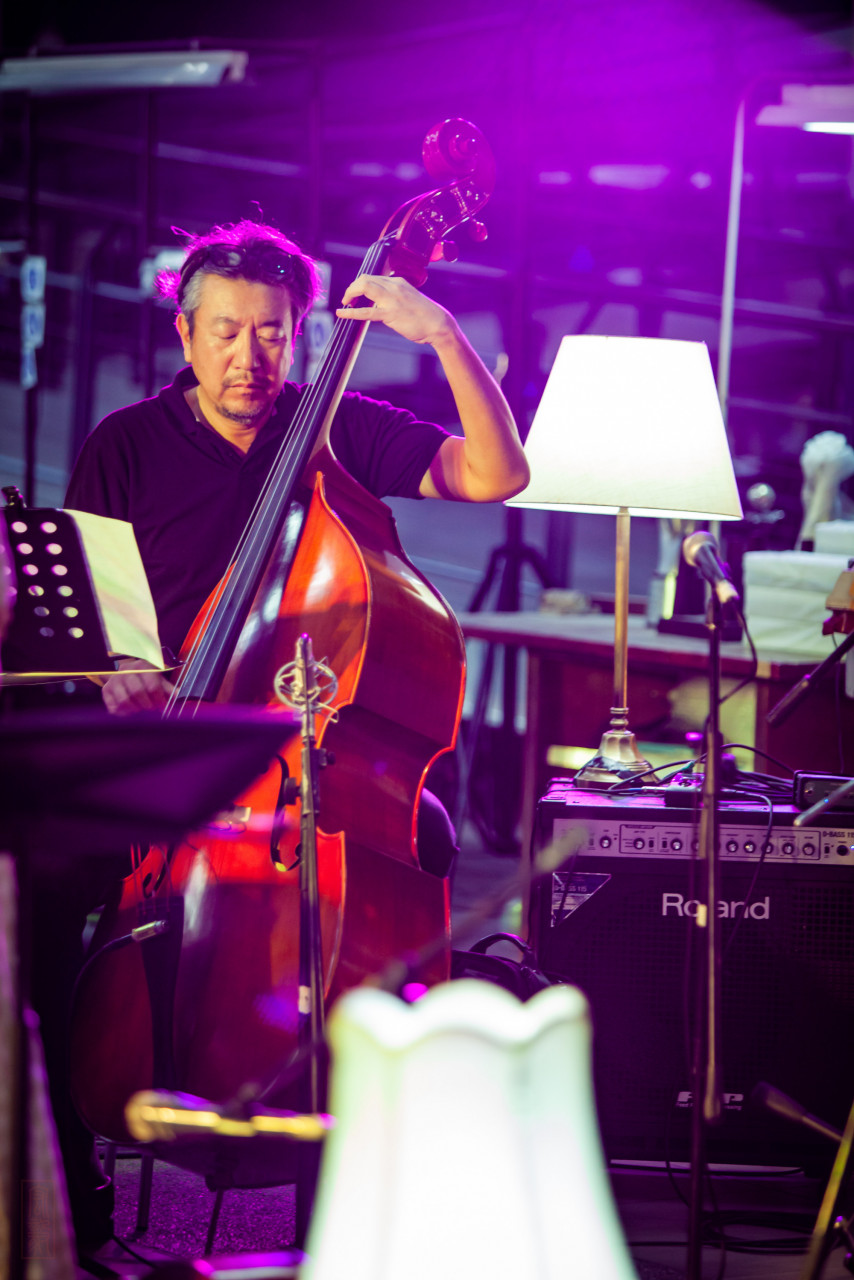
The Malaysian Real Book, of course, cannot be mentioned without talking about the Malaysian Jazz Piano Festival (MJPF) which was the genius idea of music legend Michael Veerapen, who sought the best of local jazz pianists and began performing in various venues in 2012. MJPF was formed to not only perform for the public, but more so to conduct seminars, talks, teach, demonstrations for students, fellow musicians based on real experience. This group aims to strengthen our music community and support budding players who are serious to making music as a career.
Michael Veerapen must be mentioned here. Any one who is a music lover would know who he is. A world-class jazz pianist, this musical genius began a career way before graduating from the prestigious Berklee College of Music in 1982. One of the unforgettable (amongst many), was the 2017 Southeast Asia Games (SEA Games), where he was the music Director, composer and orchestrator. He has composed and directed numerous successful award-winning musicals, two in mind would be Lat’s “Kampung Boy and ‘SuperMokh’
What is the sense of ‘community’ within the local musical sphere of The Malaysian Real Book?
The Malaysian Real Book is undertaken by a specific committee, which at the moment, consists of about twenty musicians. Beginning from very basic beginnings in 2012, MJPF had its first festival at famed club No Black Tie, where musicians got together, shared their expertise and performed to rave reviews. Things began to take shape, and they had a show at the Kuala Lumpur Performance Centre (KLPac). This particular committee is the backbone of Malaysian Real Book.

Tay iterated: “This sense of community, it makes me proud to play my music in this country. There are also ‘these realistic things’, money especially. For MJPF, we always break even at the very least. As for The Malaysian Real Book, it is a collection of music charts for musicians everywhere. This is one wonderful way of communicating with each other, through music. I was in Cairo a few years ago, and stumbled upon a jazz club, and we jammed with Egyptian musicians. When I began performing with Eddin Khoo, he opened up my world, told me about our own music classics, which just blew me away.”
The Malaysian Real book, apart from the original which culminated in Boston is one never done by another country. As a Malaysian, Tay is ashamed of how little his knowledge of local music is, its beautiful heritage, its expansive history. The only ones he is familiar with are Saloma and P. Ramlee. Then came the idea of our own version of Real Book; an intense compilation of songs which would appeal to musicians all over the world.
The next natural question would be: “What is the selection process, how does the committee choose which scores go in the book, how are the compositions transcribed?”
There is a Head Committee and subcommittees to shortlist around 200 songs, which will be narrowed to a final 50. Popularity of the songs selected is pivotal, but what they really look into is the musicality aspect.
Musicians will “use” the scores but they have the advantage of crafting their own arrangements. The book is a foundation, and imagine, musicians getting the opportunity to add salt, pepper, saffron, curry powder and all spices one can think of into these compositions, make it their own but at the same time, keeping the integrity of the scores. As for transcribing, there is a team of music students, each given 50 songs and start drafting the scores.
The process is arduous, brain-shattering but when The Real Malaysian Book makes it to the shelves, the world celebrates.
One of the scores which will be included in the book is a composition called Midnight Kisses, which was composed in the 1950s by Shangguan Liuyun, Tay given the task of putting together a list of Malaysian Chinese tunes which the committees will then ponder over.
“I come from a Chinese background. My mother loved Chinese music of that particular era, and would hum and sing along whilst cooking. Thinking back, this is a way of me connecting with her. As a child, I used to think they were lousy.
“When I attended university in Virginia, I subconsciously ‘made’ these tunes the basis of my own compositions. It is in the blood all along.”
They are seriously looking into music, folk songs and Wayang Kulit music from the East Coast. Traditional music for example, they debate endlessly whether these songs are suitable within a jazz context. But they are professionals and experts to do this, and Tay is anticipating a trip to the East Coast to get a broader idea of the inherently rich music culture there.
We anticipate hearing jazz musicians play Nona Asiah, R. Azmi, Saloma, Momo Latif, Zainal Abidin, Sheila Majid and more, definitely more hidden gems.
Both the Malaysian Jazz Marathon and The Real Malaysian Book, done by real people with a real sense of community, an undulating respect and love for our country’s music heritage is exactly what we need – to ‘triumph’ against a world in crisis. – The Vibes, December 5, 2020
Next week in the weekend edition of The Vibes, Eddin Khoo on Tay Cher Siang.