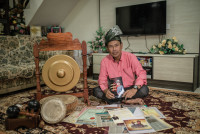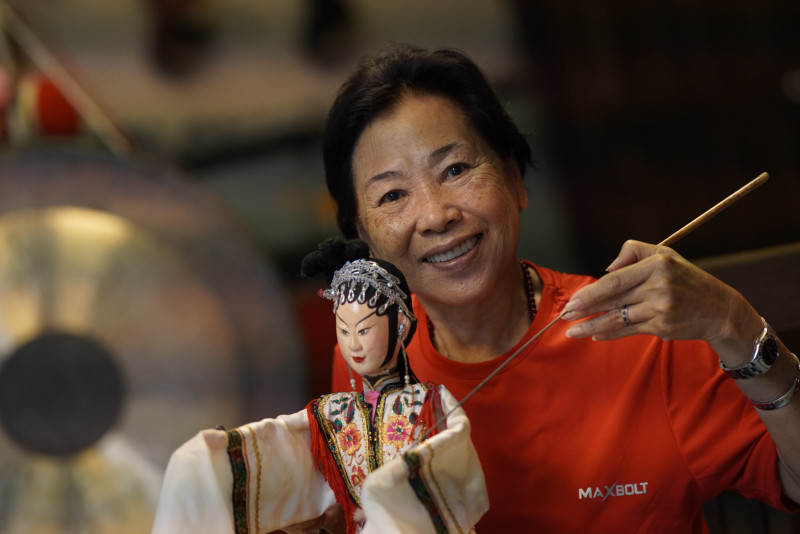
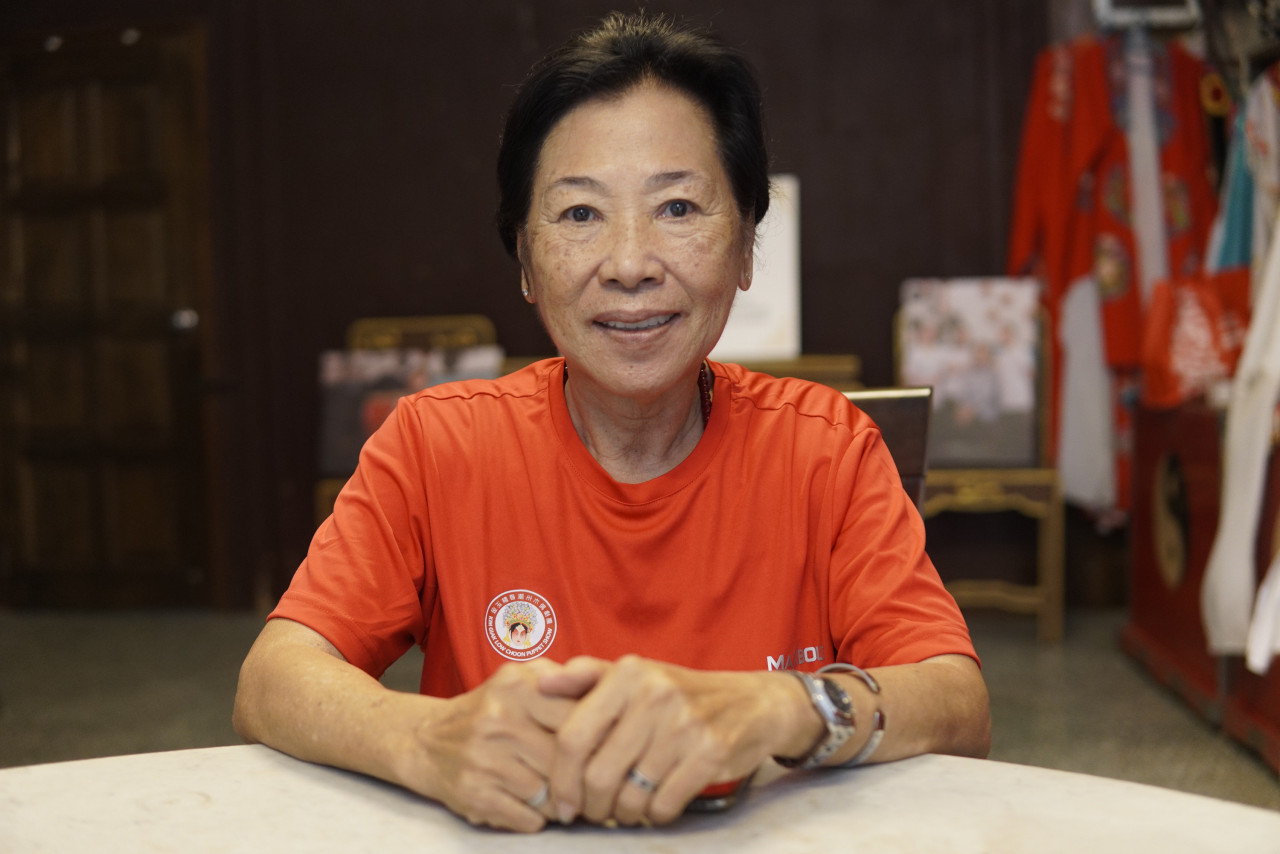
TOH Ai Hwa, 72, started playing Teochew puppetry at the young age of 12 and has been playing since. Her mother was a Teochew opera performer. Toh was born into a poor family with no access to basic education.
Given these circumstances, she grew interested in learning Teochew puppetry with the help of her friends.
In the 1960s and 1970s finding work was exceptionally difficult in Penang as there were few factories then. Learning the art of Teochew puppetry wasn’t easy, as the old masters only taught the fundamental knowledge.
The masters thought that teaching apprentices the complete skills of the art form would make the students competitors who could take over their position.
It took Toh many years to master the stories, rhythms and techniques of Teochew Puppetry through self-learning, equipped with the basic knowledge that her masters taught her.
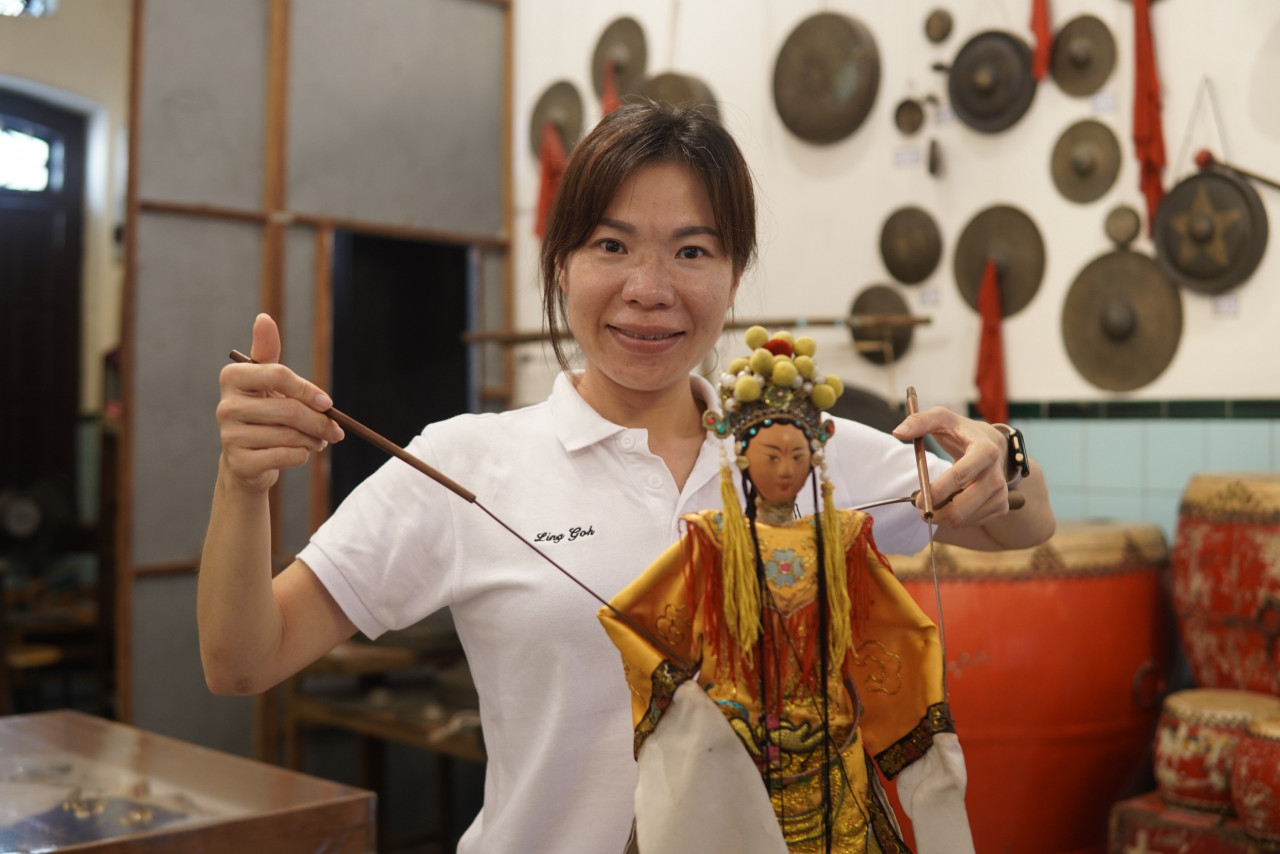
Toh has now founded her own Teochew Puppetry troupe in Penang, and has passed down her knowledge to her children, Ling Goh and Elvis Goh, who are accomplished performers in their own right.
A challenging form of opera
The Teochew Puppetry tradition of Penang is a distinct and increasingly rare form of puppetry that narrates folk tales and legends through a skillful play of marionette puppets.
It is a more traditional and challenging form of opera, requiring fast and fluid animation of puppets to imitate human-like gestures.
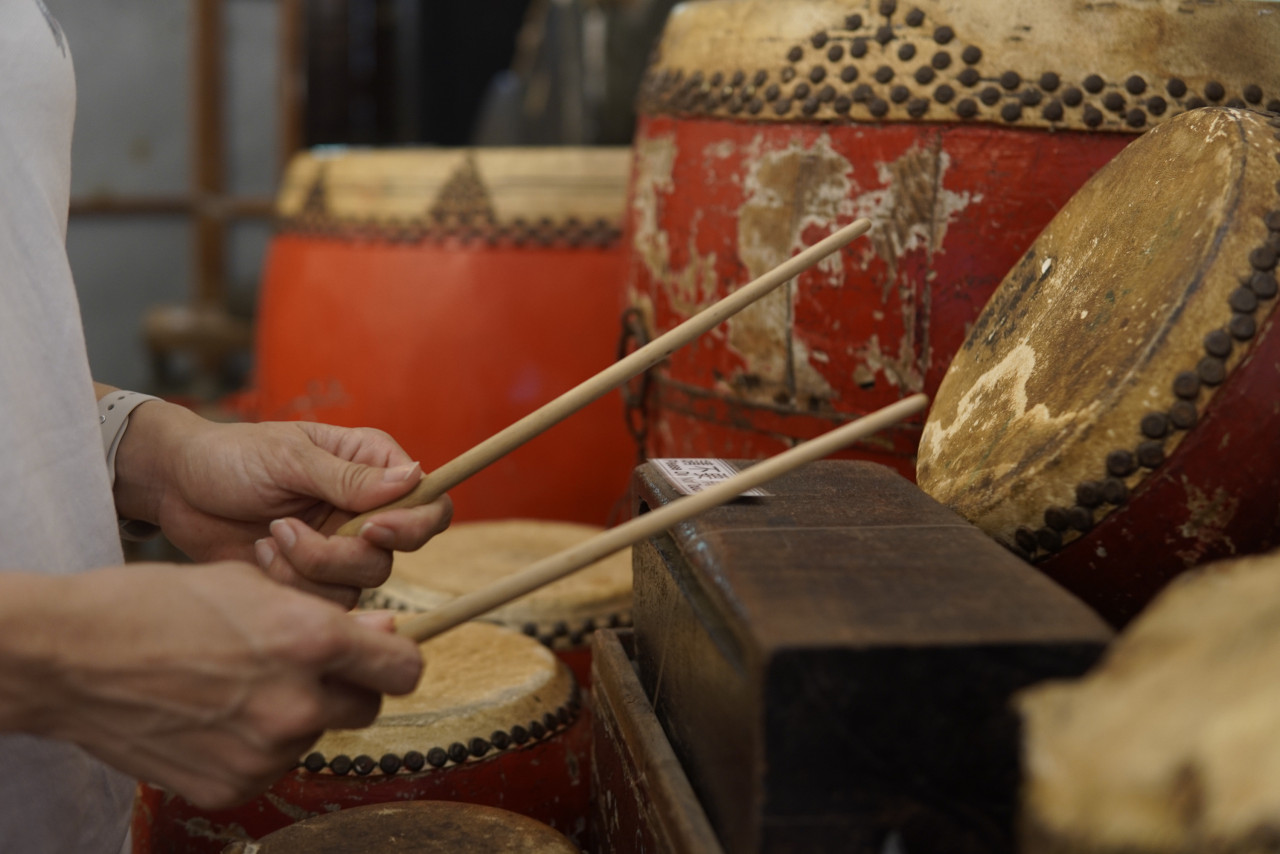
Traditionally, Chinese puppetry troupes consist of nine members divided into groups of three to handle puppets, sing and play musical instruments. The orchestra comprises gongs, drums, erhu and cymbals.
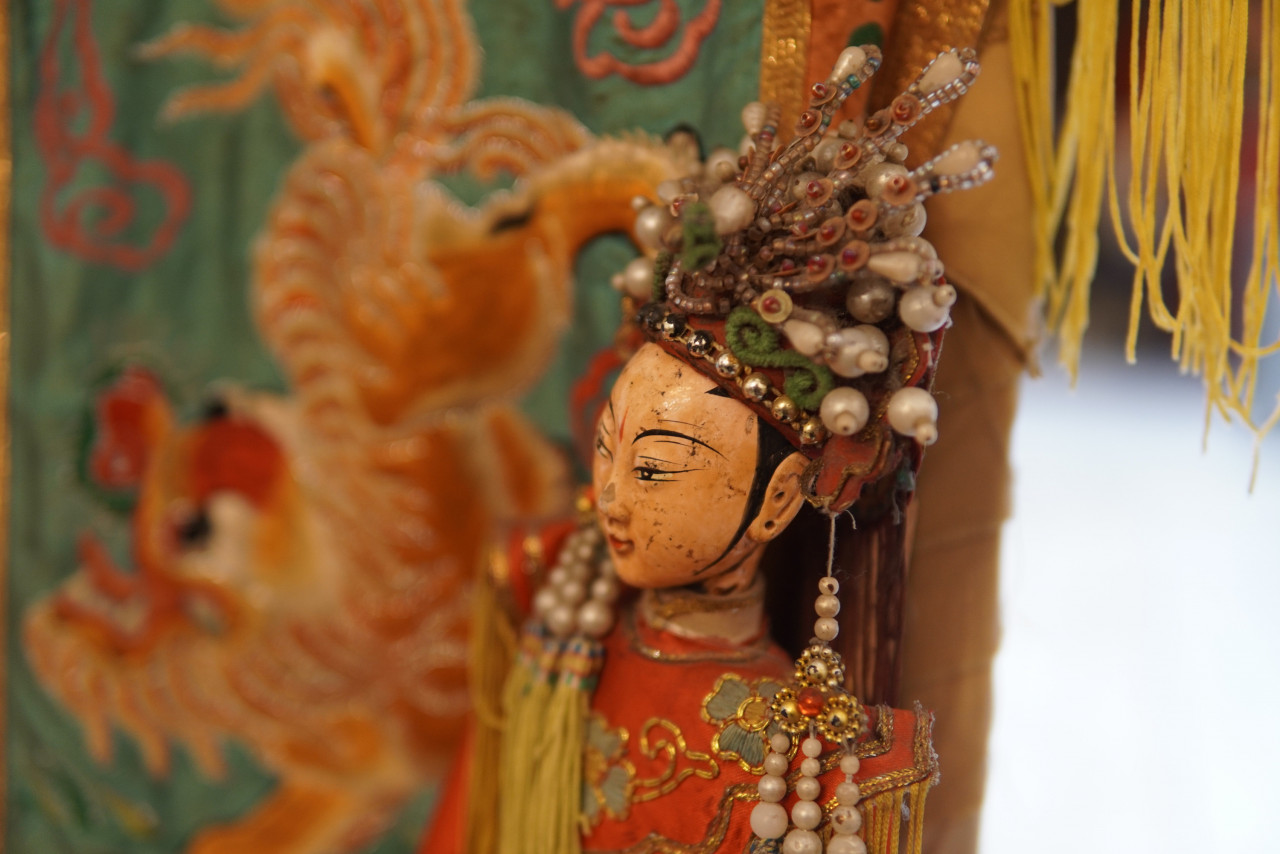
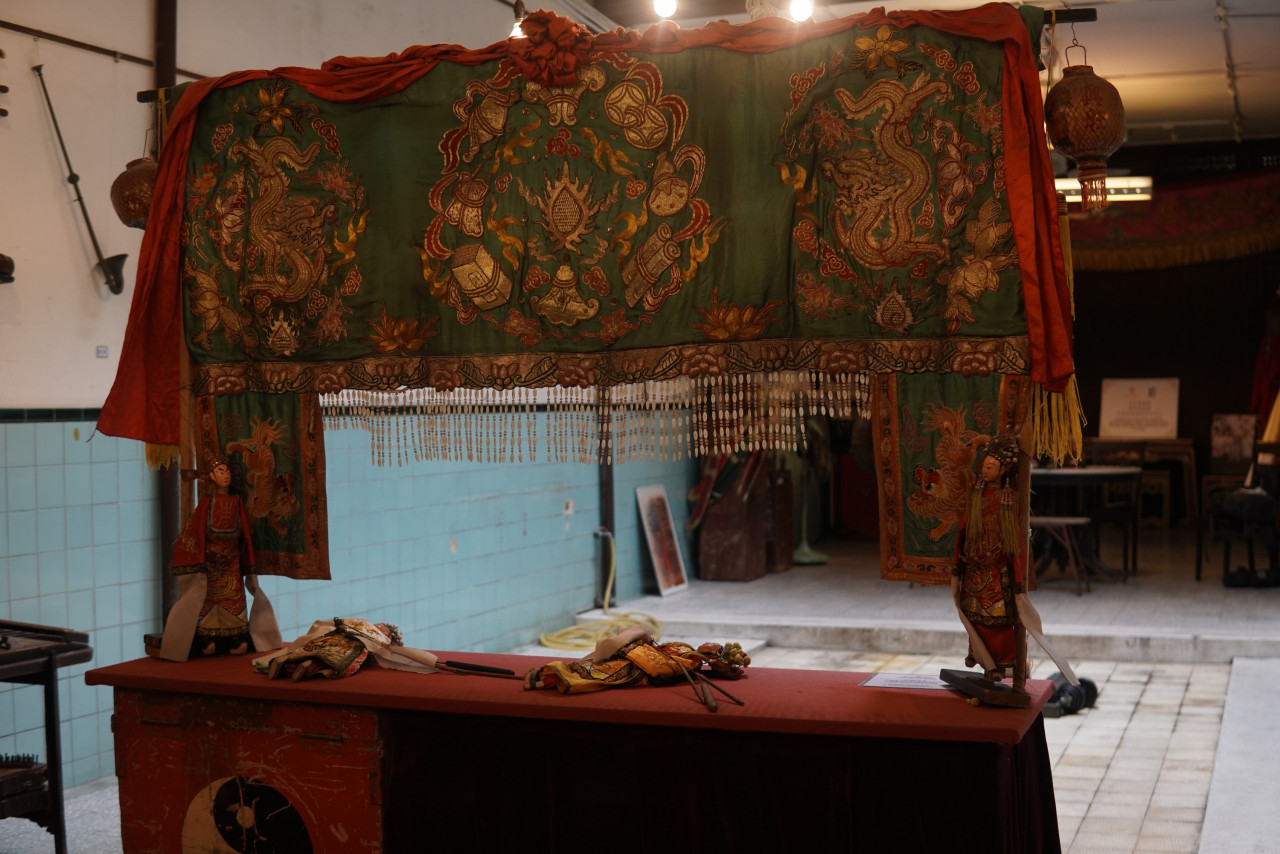
Each puppet takes about two to three weeks to make – they are hand-crafted from wood, clay and paper, weighing several kilograms each. Older puppets are made of tightly-packed bundles of hay.
The puppets are controlled by iron rods attached to the back and limbs. Each character would have its own newly-made costume, richly detailed, just like those of a regular Chinese opera performer.
Honouring masters of traditional arts
Adiguru Cendana is a community arts programme that aims to sustain the development and ensure continuity of Malaysian traditional art forms, implemented by Cendana (Cultural Economy Development Agency) in collaboration with cultural organisation Pusaka.
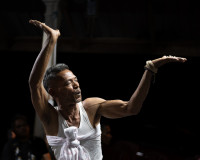
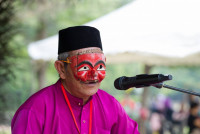
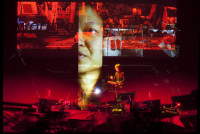
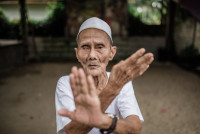
A total of 34 masters of traditional arts throughout the country have received Adiguru Cendana grants.
Adiguru Cendana focuses on supporting those working in specialised areas that includes Oral Traditions, Music, Dance, Theatre, Storytelling, Visual Arts and Craft. It is a community arts programme aimed to:
- honour an individual or group for mastery and lifetime achievement in nurturing the artistic excellence, vitality, and development of Malaysian traditional arts in their local community;
- amplify the efforts of masters of traditional arts to sustain the practice of their art in their local communities;
- support masters of traditional arts to teach their art to youth in their local communities;
- enable masters to maintain/ improve infrastructure (eg: community stage) or improve other material support (eg: costumes, instruments) for traditional arts in local communities;
- help enhance the public profiles of masters of traditional arts to garner wider appreciation and understanding; and
- facilitate connections and partnerships between masters, their local communities and regional economic corridor development and more. – The Vibes, January 23, 2023