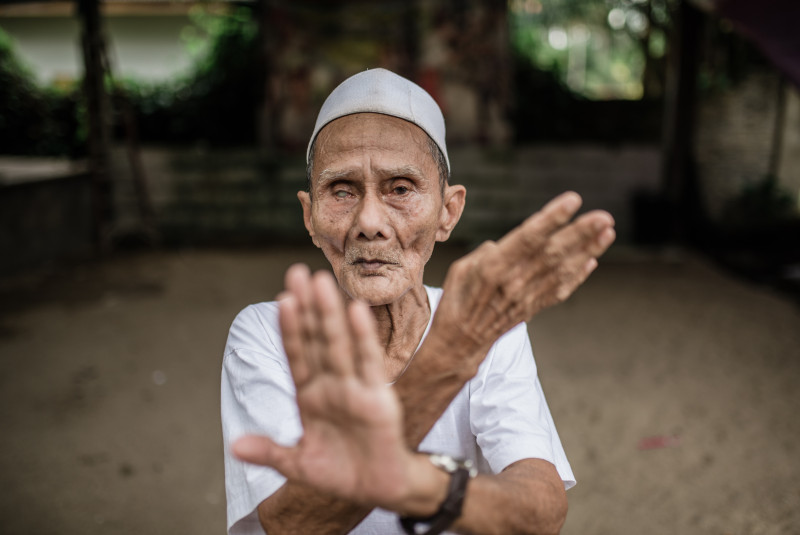
YUSUF bin Awang Isa, now 81 years old, comes from Pasir Mas, Kelantan, and has been involved in the practise of martial arts since he was 18 years old, having been born into a family of swordsmen.
Yusuf started learning silat under his uncle, who was referred to by the people in the village as the Pendekar Hasaan Naga Ibu, and some others teachers, before going to southern Thailand to study martial arts during his teenage years to increase his knowledge.
When he was 28 years old, he opened a silat court led by himself and continued to develop the art of Jawi Silat until today.
Silat Jawi
The style of silat taught by Yusuf is Silat Jawi, known by some as Silat Pulut. What's unique about it is that it is not a combat form of martial arts. Silat in general is divided into two categories, competition and performance. When it comes to performance, the art form is always presented as a soft, unique and attractive traditional silat dance.
This form of dance performance has been passed down through the generations, especially in Kelantan when compared to other forms of silat.
Silat Jawi differs from other types of silat because punches and kicks are not allowed at all. While winners are usually judged when they have knocked down their opponents, in Kelantan, this performance silat is usually accompanied by drum and flute music.
Yusuf also believes that his practise of silat over the years has made his body healthy, "If you feel like you have a fever, practice a little silat and feel fresh."
He also wants to continue his family's legacy in silat for generations to come, but admits that it is increasingly difficult to find young people who want to adopt this heritage. This is one of the reasons he is still teaching despite his advanced age.
Past and present
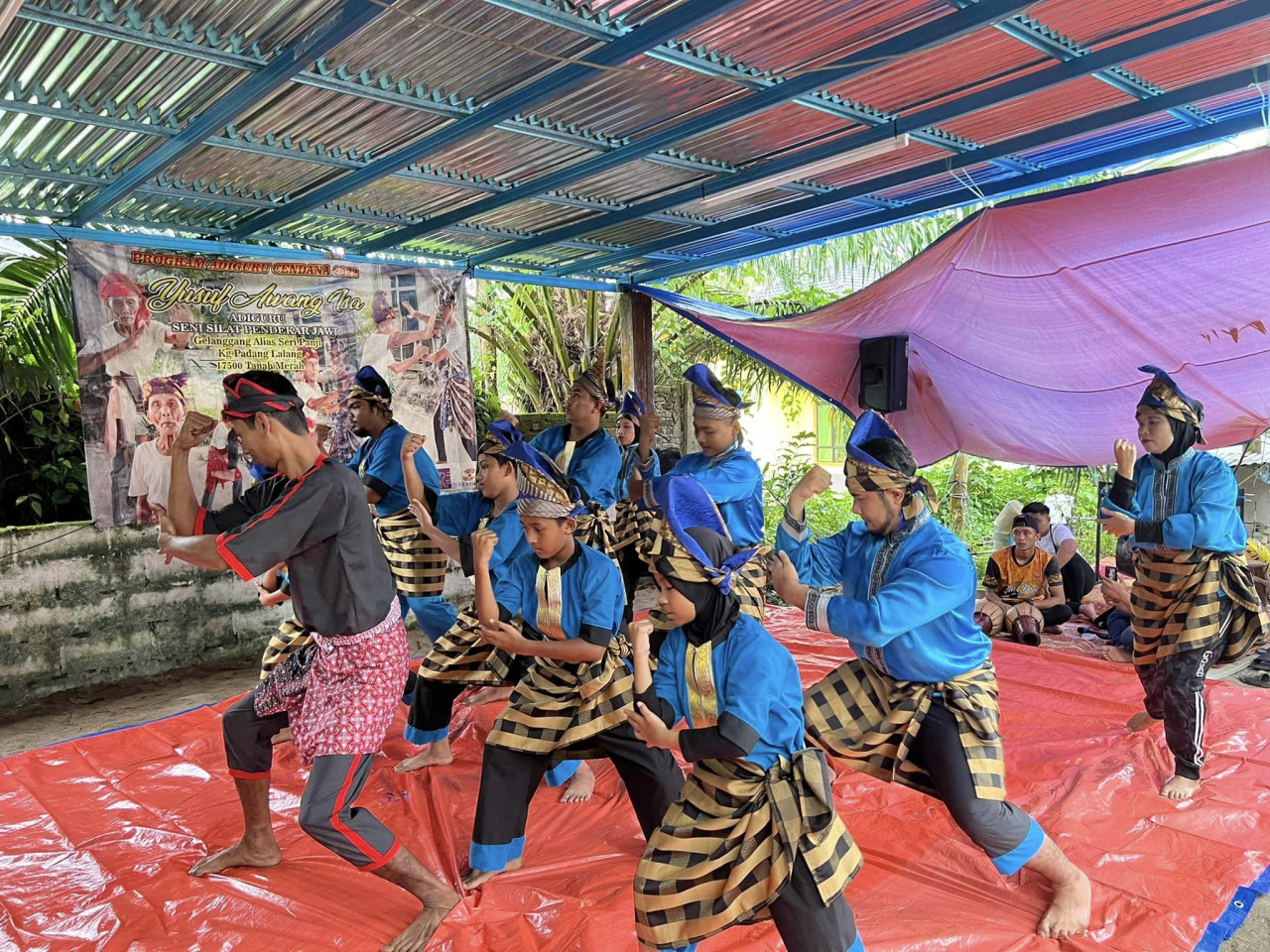
In the graduation ceremony for his students, which is called 'Plima Silat' or closing the court, according to Yusuf, there will be a little ceremony. It is part of the tradition to celebrate the end of training with a small feast of food decorated with yellow glutinous rice, which is synonymous with Malay customs.
There is also a special appearance of martial artists from other schools who are invited to test the knowledge of the students who completed their training. "A group of outside fighters will be invited to 'fight' with us in order to strengthen their skills. All those who come will do martial arts according to their respective styles. What is seen is the ability to defend oneself," he said.
When comparing how Jawi martial arts are thought from the past to the present, Yusuf said there have been many changes. According to Yusuf, compared to before, 70% of the students who came were really interested in learning, but now only about 30% do so.
"To attract the interest of young people, sometimes we combine the training with a meal. First they just look around. After a while they are interested," he said. He added that their approach is not too serious compared to other styles of silat that have elements of combat and playing with weapons. As for their clothes, they are required to wear loose batik cloth and a headband.
The variation of this style of silat also depends on the respective teacher. The importance of studying with many different teachers is highly encouraged. The time required for a student to complete his studies depends on various factors.
"It usually takes a student 3-4 months to be said to be proficient in this art. It depends on the age factor and the time spent on training," Yusuf explained. The students who come to him range from as early as 7 years old, with his older students at 40 years of age.
On being awarded the Adiguru Cendana, Yusuf said "I am very honoured with this award even though I am very old. This is recognition for the art of martial arts and thanks to me I can't sleep (laughs). If there is no support from other parties, it is difficult to open the court". – The Vibes, February 26, 2023
Adiguru Cendana is a community arts programme that aims to sustain the development and ensure the continuity of Malaysian traditional art forms, implemented by Cendana (Cultural Economy Development Agency) in collaboration with cultural organisation Pusaka. A total of 34 masters of traditional arts throughout the country have received Adiguru Cendana grants.