
TRADITIONAL construction methods, materials and designs of the multi-cultural society in Malaysia are what sets the building architecture in this country apart from its mono-cultural regional counterparts.
These are particularly evident in the Straits Settlements ports of Penang and Melaka, and in early tin mining towns like Gopeng, and in cities like Ipoh and Kuala Lumpur.
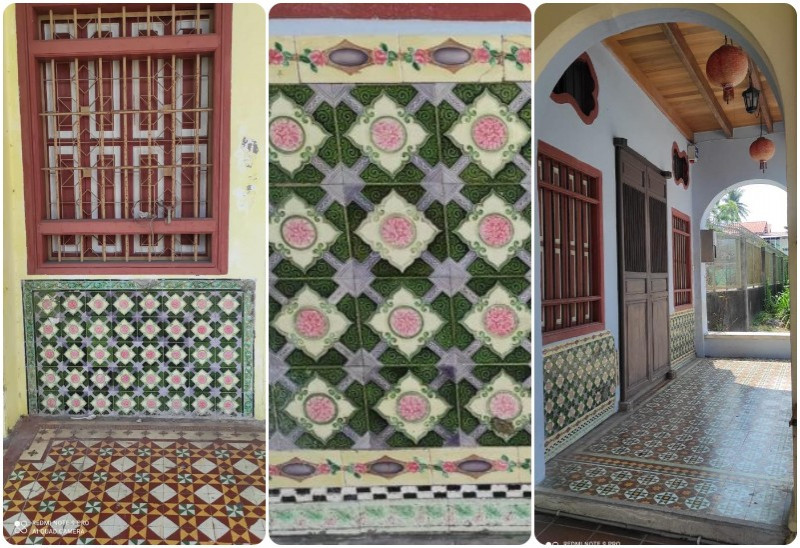
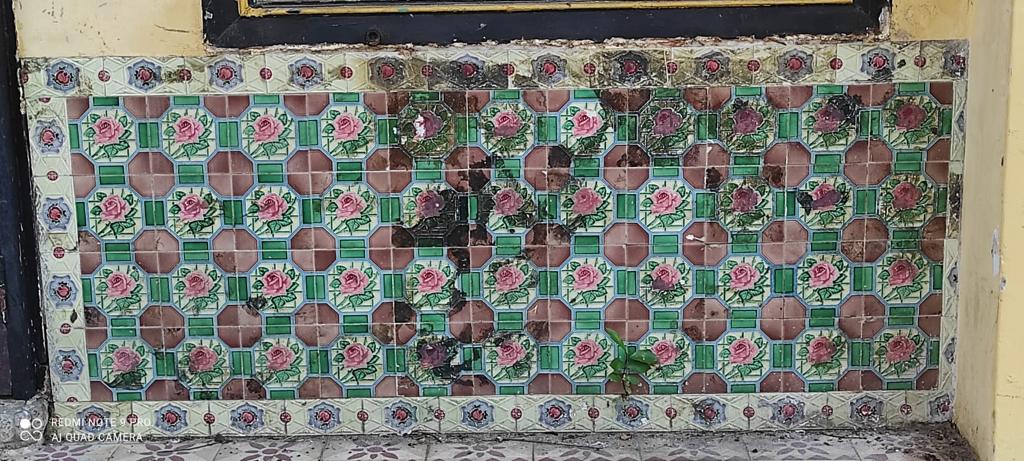
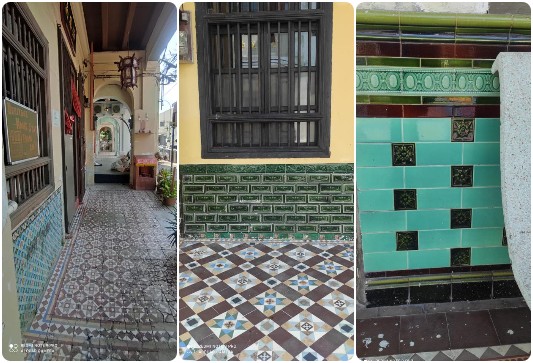
One of the unique architectural features in these towns is the playful and colourful tile work installed outside and inside the walls and floors of Straits Eclectic style shophouses.
These tiles go by a string of names, depending on who you ask, the manufacturer or origins, and the production techniques or design.
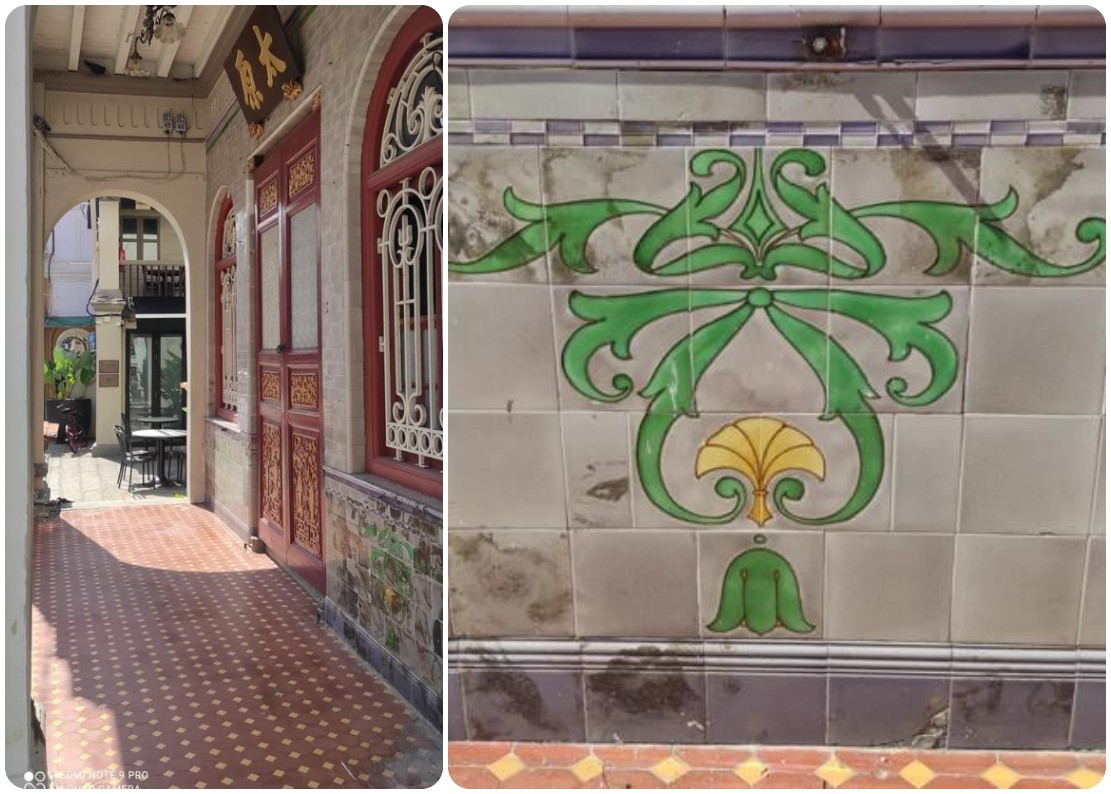
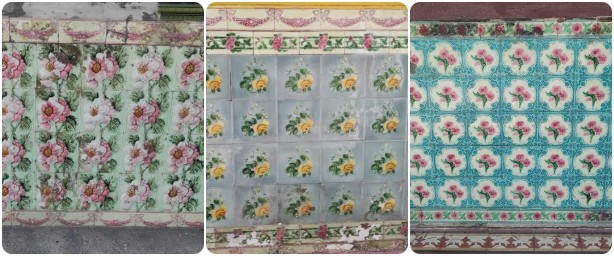
Among the more common ones are Majolica tiles, Peranakan or Nyonya tiles, Sino-Portuguese tiles, Minton tiles, Stoke-on-Trent tiles, encaustic tiles, tube line tiles, high relief tiles, transfer printing tiles and block printing tiles.
The unique burst of colourful tiles and beautiful designs on early structures are some of the elements that are recognised as the Outstanding Universal Values (OUVs) in the cities of George Town and Melaka – which are jointly listed as historic cities of the Straits of Melaka by the United Nations Education, Scientific and Cultural Organisation (Unesco).
However, the removal, destruction and replacement of these tiles on structures in both cities attests to the lack of awareness or appreciation for the unique and special nature of this feature.
Recently video evidence of Victorian period Minton tiles being hacked off by contractors carrying out works at the colonial-era Malayan Railway (also known as Wisma Kastam) building in China Street Ghaut was captured by the George Town Heritage Action Group.
These encaustic tiles from the early 19th century are similar to ones installed in old train stations around Europe, the United Kingdom Houses of Parliament, United States Capitol and the New York Central Park Bethesda Arcade.
The group also captured photos of debris outside the Hakka Association building in Tok Aka Lane which suggests illegal hacking of antique floor tiles which goes against guidelines in the George Town Special Area Plan.
These are just two recorded incidences in March this year alone – detected solely by the action group members who act as watchdogs who monitor unchecked illegal renovations, developments and demolitions in the city’s heritage core and buffer zones.
George Town Heritage Action group co-founder Mark Lay said that most of the tiles, which are also known as Majolica tiles, were the hallmark of occupants from a wealthy background.
The tiles were imported from Europe and later Japan – this includes art nouveau and art deco tiles.
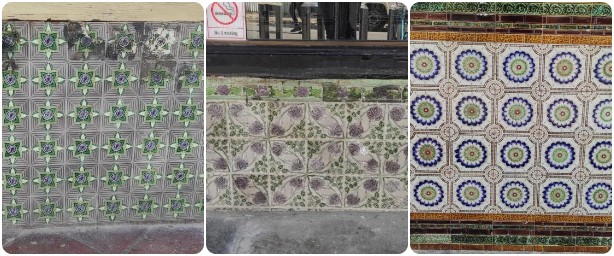
Some of these tiles are visible in George Town, along five-foot ways of its shophouses. A colourful collection of different tiles and patterns can be seen along Muntri Street’s late Straits Eclectic style shophouses in George Town.
Some of these tiles have been well maintained, while others are dirty, dilapidated or damaged, and in some cases – have been replaced with modern replicas. However, to the trained eye – the lack of authenticity is visible immediately.
When contacted Victor Lim who has been collecting and studying tiles since the 1970s, particularly what is dubbed as ‘nyonya’ or ‘peranakan’ tiles in Singapore, said some of the tiles along Muntri Street were authentic while some were more modern replacements.
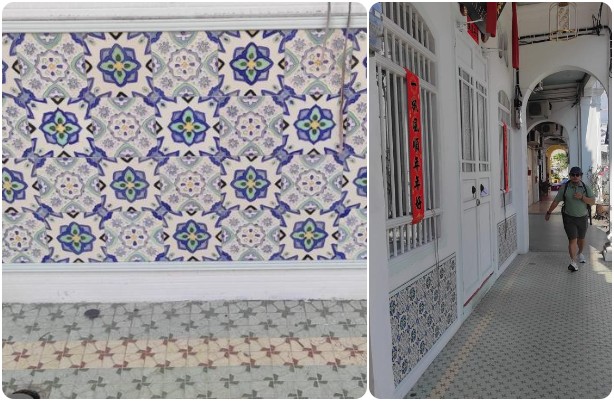
Victor who set up his own tile manufacturing company Aster by Kyra said most of the tiles on shophouses in the Straits Settlements were imported from England, Belgium, Germany and the Netherlands in the late 19th and early 20th centuries.
The art nouveau tiles featured natural elements while art deco tiles featured more patterns and geometric forms. The wealthy Peranakan community during that era preferred auspicious patterns like fish, fruits and birds.
The Japanese who began manufacturing tiles sometime in the 1920s added to the options by engaging Chinese artists to paint more oriental-inspired auspicious designs like peonies, dragons, lotus flowers and pomegranates.
The unique colour, glazing and carving in pre-1930s tiles set it apart from the newer mass machine-produced ones today. However, some of the materials used in the production of tiles before 1935 were declared toxic.
The toxic materials used only applied to the tile production process and not the finished product, Lim explained.
Many manufacturers ceased tile production after 1935 – making the older tiles more valuable in terms of techniques, materials and designs.
Sadly, the lack of awareness and appreciation for the value of these tiles, which is an important part of Malaysia’s architectural history, has led to neglect, destruction and disposal of what is now becoming a rare and expensive, but much sought-after item by collectors and preservationists.
These antique tiles can fetch between RM200 to over RM1,000 per piece today.
George Town World Heritage Incorporated general manager Ang Ming Chee told The Vibes in March that contractors appointed to conduct renovations to buildings in the core and buffer heritage zone should liaise with the GTWHI before carrying out work.
“We provide free consultancy services to contractors engaged to do work in the heritage areas. They just need to contact us for advice,” said Ang.
She added that the guidelines on the protection, restoration and preservation of tile work on George Town structures are stipulated in the George Town Special Area Plan.
The plan’s five-footway design management guide states existing decorative tiles need to be maintained and restored, and the use of new dado (lower part of a wall) tiles can be considered on a case-by-case basis.
Traditional floor finishes such as clay tiles, terrazzo tiles, and mosaics need to be prioritised, while any new finishing proposal should be in accordance with the original design, it states. – The Vibes, May 13, 2023