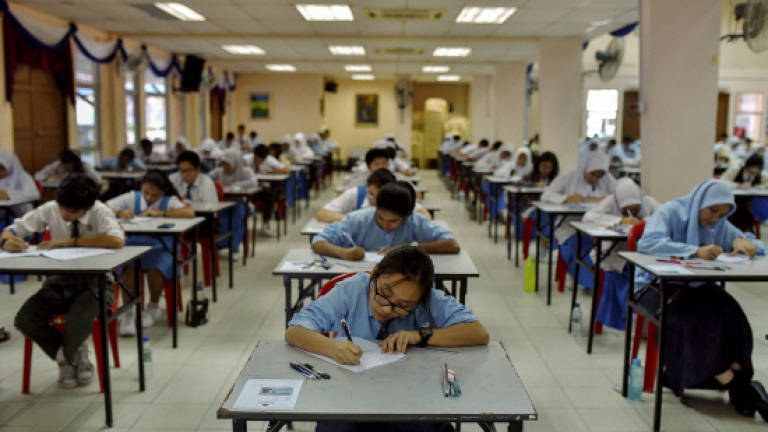

KUALA LUMPUR – Stakeholders have welcomed the Education Ministry’s move to abolish the Form 3 Assessment (PT3) examinations, but called for progressive reforms in its place.
United Progressive Kinabalu Organisation president Datuk Seri Wilfred Madius Tangau said that while the decision is a step towards decreasing the national education system’s exam-oriented approach, comprehensive measures must also be taken to ensure it was not merely a “piecemeal” call.
“Pedagogies should be changed to meet the demands of this new approach. With science subjects, for example, an appreciation of and interest in the subject is more vital than academic results,” he said in a statement.
Tangau also suggested that the ministry adopt an inquiry-based science education (IBSE) approach as part of the new education format.
He noted that the approach is not a new idea, as pilot studies have been conducted since 2018 while he was serving as Sabah’s Trade and Industry Minister.
Tangau said that psychometric assessments should also be introduced as a form of self-assessment for students to identify their strengths and weaknesses.
The Tuaran MP also said that technical education and vocational training (TVET) programmes should be incorporated into the education system, adding that efforts to establish the Malaysian Technologists’ Board were aimed at recognising and empowering TVET programmes nationally.
Earlier today, Education Minister Datuk Mohd Radzi Md Jidin said that school-based assessments will continue to be bolstered to ensure that parents and teachers are kept updated on students’ achievements.
The minister said that the new assessments will include three components, namely classroom assessments; physical activity, sports and co-curriculum assessments; and psychometric assessments.
Meanwhile, national education laureate Tan Sri Alimuddin Mohd Dom said parents have no reason to fret over the decision to scrap the exam as students will still be undergoing assessments by the Education Ministry.
He said the assessments will inadvertently motivate students to closely follow their studies all year round.
“If we were to limit examinations to, for example, the Primary School Achievement Test (UPSR) for Year 6 students, it will appear as though students in other years take things lightly and merely wait for the ‘big’ exam,” he told Getaran, The Vibes’ Bahasa Malaysia sister portal.
Meanwhile, Alimuddin said that many engagement sessions must have been held with non-government organisations and stakeholders in the education sector before the decision was finalised.
Noting that developed countries such as England and several European nations no longer have examinations as a requisite, he opined that affected students will probably not face many difficulties as they are normally assessed every year-end.
“There is no need for them (parents) to worry. The important thing is that the assessment will identify the extent of their (children’s) academic understanding.
“For example, if a student can obtain an A for a subject, then that means he understands the concepts involved. Assessments have always been part of the national education system,” he said. – The Vibes, June 2, 2022