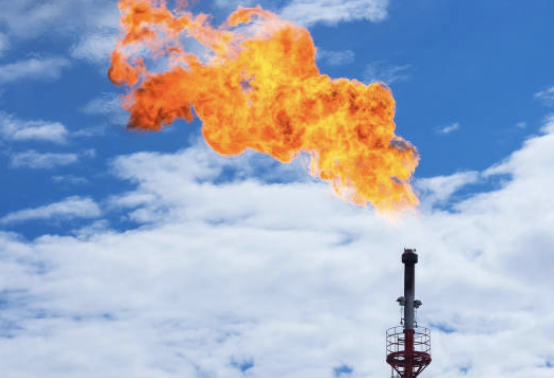

KOTA KINABALU – Experts from several Malaysian universities are developing a tool to measure methane emissions – a potent greenhouse gas said to be responsible for over 25% of the current global warming.
The tool, which is expected to be completed in 2024, could assist policymakers in making informed decisions on methane reduction investments by providing a range of cost-effective options in the future.
The experts say that quantifying methane emissions remains a challenge despite the existence of advanced detection technologies and existing available datasets, including from government reports which used less complex methodologies.
This could lead to significant uncertainties while the impacts of the methane emissions could see elevated temperature rises further over the next 10 years.
Swinburne University of Technology Associate Professor Viknesh Andiappan and his team are now developing a marginal abatement cost curve for methane emissions to deal with the cost-related concerns.
“This comprehensive tool will help policymakers make informed decisions on methane reduction investments by providing a range of cost-effective options,” he said.
Meanwhile, a tool to measure methane emissions in tropical regions like Malaysia is also being developed by a team comprising experts from Universiti Sains Malaysia (USM) and Universiti Kebangsaan Malaysia (UKM).
The group is led by Yusri Yusup from USM.
Yusri, a meteorology, atmospheric science and environmental expert said they are incorporating their effort with internet of things, low-cost sensors and drones to boost cost-effectiveness in methane measurement.
“While satellites provide global-scale coverage, measuring methane in tropical regions, such as Malaysia, faces challenges due to cloud cover and water vapour,” he said.
Nottingham Malaysia University associate professor at the School of Environmental and Geographical Sciences, Matthew Ashfold said the development of the tool was crucial as there was a significant discrepancy in the data from publicly available sources such as information obtained from the Malaysian government and the International Energy Agency (IEA).
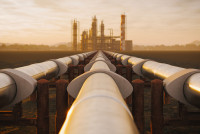
This is especially so in the oil and gas industry where the sector is a major contributor to the carbon emissions.
“When we compare the different datasets, there is quite a big range.
“For example, government data attributes 57% of emissions to oil production venting, while the IEA estimates 27% from both oil and gas venting.
“These differences, arising from varying methodologies, highlight the need for more scientific research and enhanced Monitoring, Reporting, and Verification practices to attain higher-quality data,” he added.
Malaysia is a participant in the Global Methane Pledge which aims to reduce methane emissions by 30% by 2030 but still lacks a specific plan to reduce methane emissions.
Universiti Malaya environmental politics and governance Associate Professor Helena Varkey said her team believe the oil and gas industry plays an important role in tackling methane emissions.
“As a global leader in these sectors, Malaysia has the potential to be a champion in methane management. However, accurate and transparent reporting is key,” she said.
EDF’s director of global energy transition Shareen Yawanarajah, meanwhile, believed the formulation of a national reduction plan could accelerate Malaysia’s decarbonisation effort.
“By developing a national methane reduction plan based on appropriate policy instruments and measurement-based emissions data, Malaysia can accelerate and track progress towards meeting its decarbonisation goals.
“The work of local researchers, data sharing and collaborative efforts between all stakeholders is critical if Malaysia is to contribute significantly to global climate change mitigation efforts,” she said. – The Vibes, September 22, 2023