MOSCOW – Sixty years after he became the first person in space, there are few figures more universally admired in Russia today than Soviet cosmonaut Yuri Gagarin.
His smiling face adorns murals across the country. He stands, arms at his sides as if zooming into space, on a pedestal 42.5m above the traffic flowing on Moscow's Leninsky Avenue. He is even a favourite subject of tattoos.
The Soviet Union may be gone and Russia's glory days in space long behind it, but Gagarin's legend lives on, a symbol of Russian success and – for a Kremlin keen to inspire patriotic fervour – an important source of national pride.
"He is a figure who inspires an absolute consensus that unifies the country," says Gagarin's biographer Lev Danilkin.
"This is a very rare case in which the vast majority of the population is unanimous."
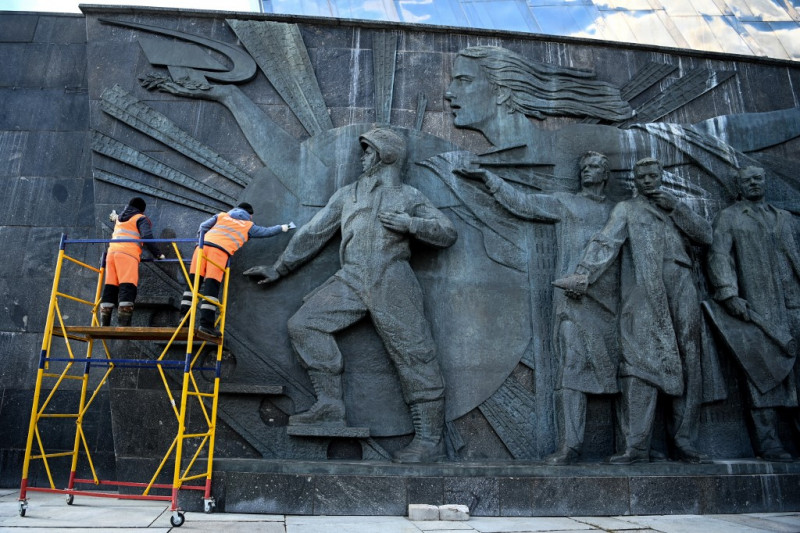
The anniversary of Gagarin's historic flight on April 12, 1961 – celebrated every year in Russia as Cosmonautics Day – sees Russians of all ages lay flowers at monuments to his accomplishment across the country.
The enduring fascination comes not only from his story of rising from humble origins to space pioneer, or even the mystery surrounding his death.
Gagarin, says historian Alexander Zheleznyakov, was a figure who helped fuel the imagination.
"He transformed us from a simple biological species to one that could imagine an entire universe beyond Earth."
Humble beginnings
The son of a carpenter and a dairy farmer who lived through the Nazi occupation, Gagarin trained as a steel worker before becoming a military pilot and then, at age 27, spending 108 minutes in space as his Vostok spacecraft completed one loop around the Earth.
He was lauded for his bravery and professionalism, an example of the perfect Soviet man, but his legend was also imbued with tales of camaraderie, courage and love for his two daughters and wife Valentina Gagarina.
Long a secret, Gagarin wrote his wife a poignant farewell letter in the event that he died during his mission.
"If something goes wrong, I ask you – especially you – Valyusha, not to die of grief. For this is how life goes," he wrote, using a diminutive for Valentina.
In an interview with AFP in 2011, cosmonaut Boris Volynov recalled a man who, despite sharing privileges of the Soviet elite, spent hours on the phone to procure medicine or a spot in a hospital for his less well-off friends.
On his return to Earth, Gagarin found himself at the centre of a propaganda campaign on the superiority of the Soviet model.
Biographer Danilkin says Gagarin was used by authorities as an example to the rest of the world, but also to convince Soviet citizens, who had endured World War II and Stalin-era repressions, "that the sacrifices of the previous decades were not in vain".
President Vladimir Putin, he said, has co-opted that legacy to cement his own hold on power, promoting Soviet victories to encourage support for his 20-year rule.
"The current authorities methodically appropriate popular cults: first that of victory during World War II, then the conquest of space," Danilkin says.
Tragic hero
Like all great Russian heroes, Gagarin is a tragic figure.
His death during a training flight in 1968 at the age of 34 remains a mystery because authorities never released the full report of the investigation into the causes of the accident.
Partial records suggest his MiG-15 fighter jet collided with a weather balloon, but in the absence of transparency, alternative theories abound.
One holds that Gagarin was drunk at the controls; another that he was eliminated by the Kremlin which feared his popularity.
More than 40 years later, many Russians have yet to come to terms with his death.
"How could the top cosmonaut, such a young and kind man, die like that so suddenly?" says historian Zheleznyakov.
"People are still trying to get over it." – AFP, April 12, 2021










.jpeg)




.jpeg)