PARIS – The boom in demand for placing small satellites into orbit has boosted interest in small rockets, but industry players do not think the niche will become a business segment of its own.
"This time last year, we were able to count over 120 startups for microlaunchers, small rockets that would carry a single small satellite. As we look today, there is a significantly smaller number of those," said Tory Bruno, CEO of Boeing-Lockheed Martin joint venture United Launch Alliance (ULA), said at a recent industry gathering.
The frenzy of proposals for small rockets, or microlaunchers, comes as new satellite-based phone and internet networks are shifting away from a few satellites in high, geostationary orbits.
Instead they use constellations of many, small satellites placed in low earth orbits (LEO).
In the past decade 1,805 small satellites have been placed in orbit and the advisory firm Euroconsult expects that number to rise to 10,000 by 2030.
This year, 95 of the 1,079 satellites launched as of November 1 were small satellites. Of those, three-quarters were part of the Starlink network of SpaceX chief Elon Musk.
Many startups and small companies believed this would create "a market for microlaunchers that are cheap to build and much cheaper to exploit than a big launcher", such as the Ariane or SpaceX's Falcon 9, said Xavier Pasco, a space industry specialist and head of French think tank the Foundation for Strategic Research.
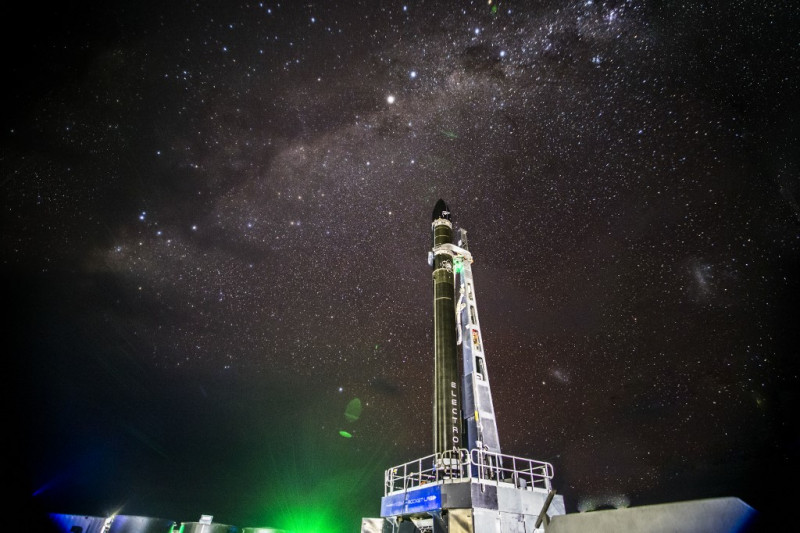
Only two small rockets are operational for the moment, according to Euroconsult. One is China's Kuaizhou-1 and the other is the Electron by New Zealand-based US firm Rocket Lab.
The Virgin Orbit company of British mogul Richard Branson tested its LauncherOne in May, but because of a technical failure the plane-launched rocket failed to reach space. The latest test by US firm Astra in September also failed.
India's space agency has a maiden launch of its SSLV planned for December.
A number of European firms are also in the competition.
Spanish firm PLD Space is designing a rocket it plans to launch from Andalusia. British firm Orbex plans to launch its Prime rocket from northern Scotland.
Italy's Avio and Germany's OHB, which both work on the Ariane, each have their own microlauncher projets. Avio plans a light version of the Vega while OHB's Rocket Factory Augsburg unit is designing the RFA One.
'Niche market'
Arianespace chief executive Stephane Israel is not convinced of the need for microlaunchers.
"There is a confusion because people are saying ‘because you have small satellites going LEO, you need microlaunchers’. It’s not the case,” he said at the World Satellite Business Week.
One of those reasons is that with the rollout of these constellations there are a lot of satellites to put into orbit quickly, hence favouring packing them onto big launchers.
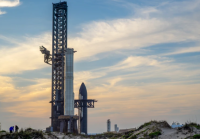
Each Falcon 9 rocket can carry 60 Starlink satellites.
Then the cost factor comes into play.
“The fundamental challenge that microlaunchers have is dollars per kilogram, because of the effect of scale, always favours the large launch vehicles when the launch vehicle capacity can be filled up," said ULA's Bruno.
"It’s really a niche market for servicing those constellations," he added.
But Tiphaine Louradour, head of International Launch Services (ILS) which markets Russian Proton rockets for commercial launches, pointed out they will also offer speed to clients.
"It’s more for these microlaunchers for addressing a government need for an immediate access to space," she said.
A small rocket with just one satellite can be prepared much quicker than a large one if the launch firm waits for a full payload. This also potentially makes them advantageous to replace damaged satellites.
SpaceX's president and chief operating officer, Gwynne Shotwell, said that niche role means there won't be room for many of these small launchers.
"I don’t think there’s enough going for more than two, maybe three of these microlaunchers," she said. – AFP, November 19, 2020