
DESPITE facing immense pressure during the two years of the Covid-19 pandemic, the Malaysian healthcare system has withstood the challenges that came its way.
This can be inferred from a new survey published by Ipsos that places the level of trust Malaysians have for its healthcare system at 64%. This outperforms the Global Country Average and is the eighth highest among the 34 countries surveyed.
The strong trust shows that in the eyes of the Malaysian public, the healthcare system withstood the test of the pandemic and trust remains high as the country moves into endemicity.
Ipsos Malaysia Public Affairs associate director Lars Erik Lie said, “After two years with the healthcare system under pressure from Covid-19, trust in Malaysian healthcare remains stable as we enter the post-pandemic phase.
"Almost two out of three Malaysians express trust in the system, in the upper tier compared to people in other major countries across the world. The consistently high trust indicates that the healthcare system’s role in managing the pandemic has left a lasting impact.”
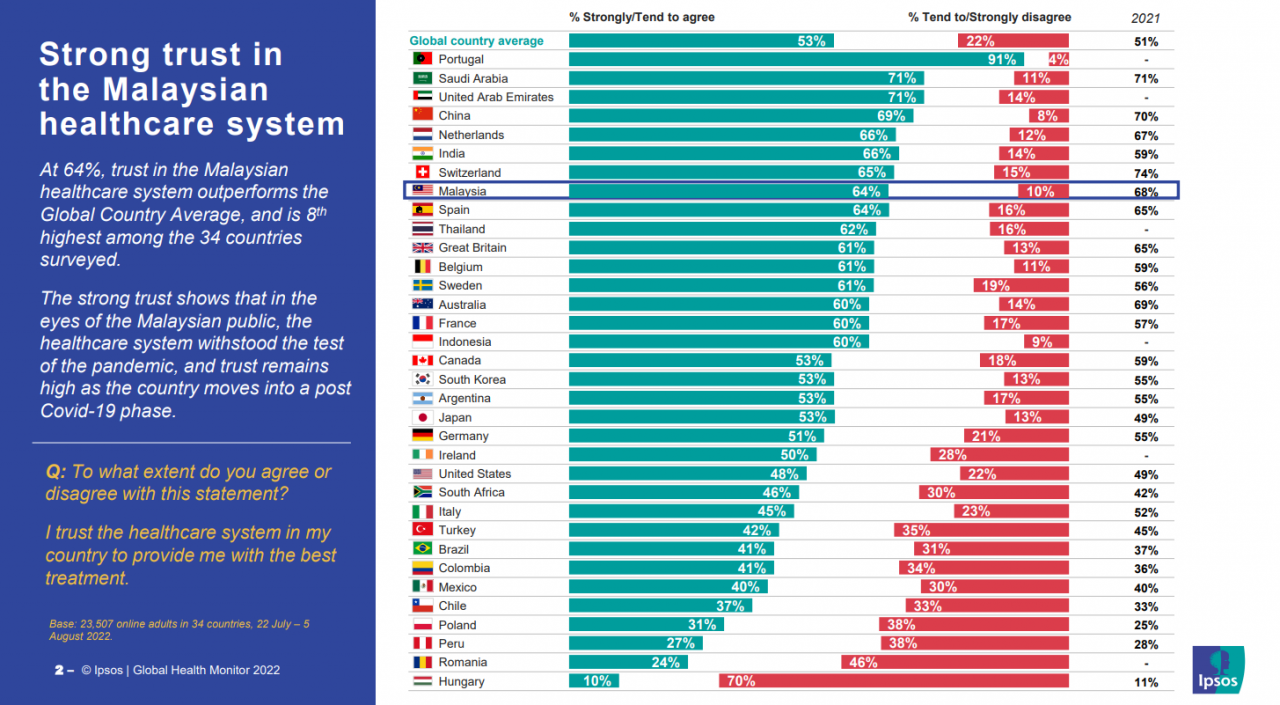
Countries that ranked highest on the survey were: Saudi Arabia, United Arab Emirates, China, Netherlands, India, and Switzerland. The United States and Great Britain fell behind with 48% and 61%, respectively.
Post-pandemic, a major concern for most Malaysians will be mental health illnesses as well as obesity, diabetes, and heart disease.
“As Covid-19 recedes, mental health issues will require continued focus as it is still considered among the major health problems, both in Malaysia and globally.
"Attention is also swinging back to lifestyle illnesses such as obesity and diabetes, and the healthcare challenges related to smoking are brought to the forefront with stricter legislation on the cards,” Erik Lie said.
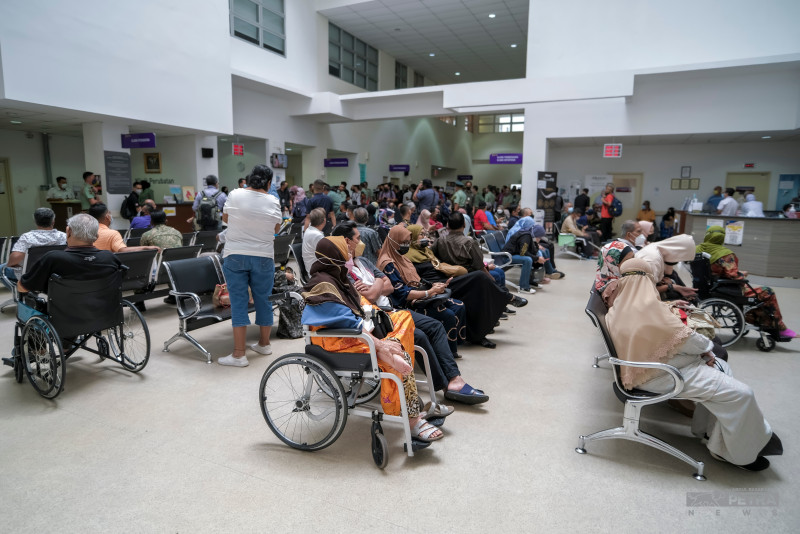
The survey also revealed the main problems of the current healthcare system in Malaysia were access to treatment and the long waiting periods, of which almost half of Malaysian agreed, receiving more attention than any other issue.
The cost of accessing treatment, lack of staff, and poor quality of treatment were also causes of concern for Malaysians. These perceptions have remained consistent through the years.
“Malaysians will need assurances that healthcare remains accessible, affordable, and properly staffed – these core concerns are shared with their global peers and outstrip concerns about the quality of treatment and sufficient healthcare investment,” Erik Lie remarked.
Health Minister Khairy Jamaluddin has tabled six new initiatives totaling RM3.4 billion to the Ministry of Finance to be included in Budget 2023 to address these areas of concern.
In a recent interview, he said, “the six new initiatives proposed are the strengthening of the healthcare and wellness programme, with an estimated budget of RM738 million, improvement and repair of the ministry's health facilities (RM791.5 million) and improving the effectiveness of healthcare treatment (RM850 million).
“It also includes the replacement of critical and obsolete medical assets (RM400 million), digitalisation of healthcare services (RM460 million), and appreciation incentives for medical personnel (RM183 million)," Khairy told reporters during the One-Year Achievement as Health Minister event last month.
He also aims to double the public healthcare budget to 5% of Malaysia’s gross domestic product (GDP) within eight years by 2030. Currently, the public health care budget stands at 2.58% of the GDP, making it the smallest among middle-income countries.
“That is why I said we need 5% of GDP. That is non-negotiable. Hopefully, if the White Paper is approved, by 2030, we will be at 5% of GDP. More money for us, more money for all of you,” he remarked during a town hall session in Kuching.
Budget 2023 is set to be tabled in Parliament tomorrow. – The Vibes, October 6, 2022


.jpeg)