EUROPE has the Auschwitz concentration camp in Poland, where during World War II, the Nazi Germany regime murdered up to 1.1 million people, mostly Jews, by fatally gassing them in special chambers.
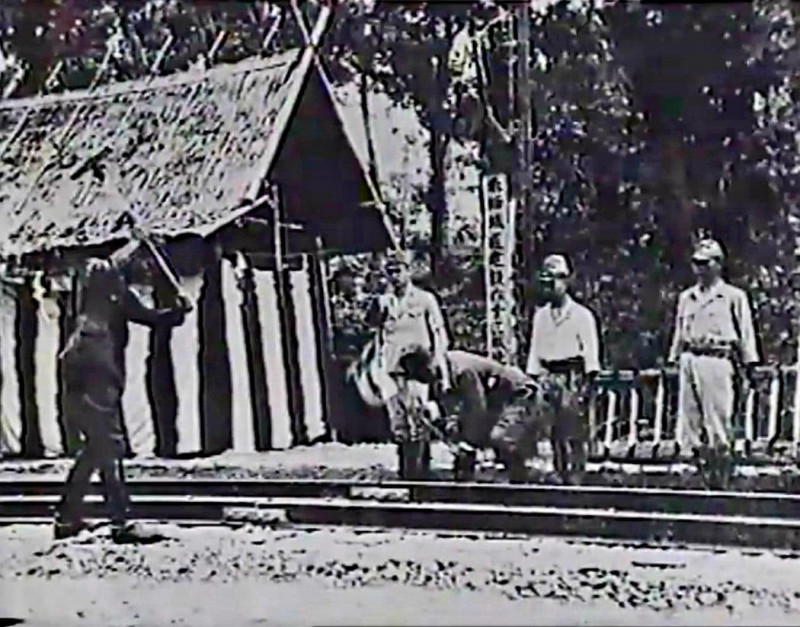
Meanwhile in Southeast Asia, where the war spread to in 1941, there is the Death Railway in Kanchanaburi near the Thai-Myanmar border, where up to 100,000 forced labourers and captured Allied prisoners perished.
Both chapters serve as grim reminders of what happens when mankind turns on each other, and as the Ukraine-Russia war has recently passed the one-year mark, one man in Malaysia is championing a lonely campaign of seeking justice for the victims of war.
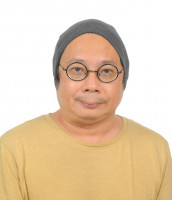
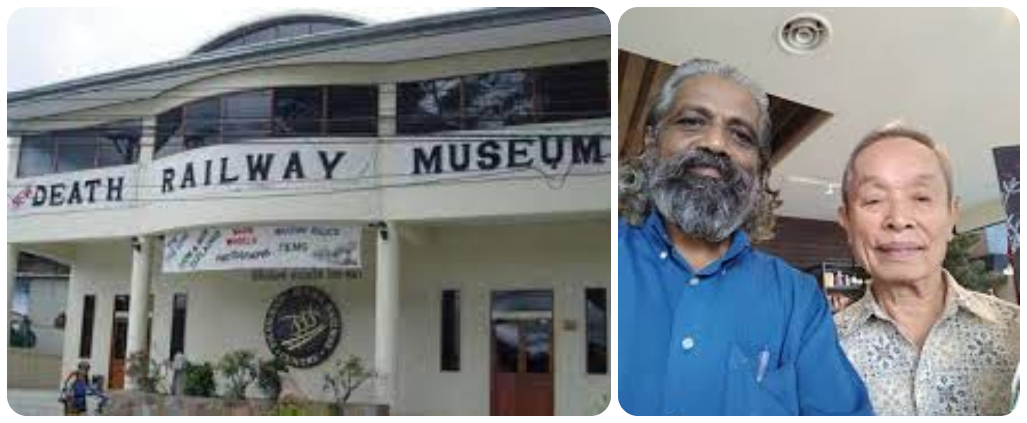
P. Chandrasekaran has become the national face of seeking justice and the truth behind the horrible deaths of Malayans along the infamous railway tracks.
Although the cruel conditions at the tracks have since become footnotes in historical narratives, Chandrasekaran said that more can be done by the Malaysian authorities.
The death railway saga began when the Imperial Army of Japan wanted to prepare their military for an invasion of India, which was then a colony of the British who they were at war with.
Much has been written and researched about the Death Railway and its impact on the lives of Malaysians, of whom 80% are believed to be Indians of Tamil origin.
Compensation or lack thereof
One point continues to be contentious, as an alleged amount of RM207 billion was reportedly channelled by Japan to Malaysia in a series of compensation repatriations from 1967 to 2004.
These payments give the impression that Japan has fulfilled its obligations, but what about the recipient governments – that is the issue, which Chandrasekaran says stings him.
The Malaysian Parliament was however notified in 2013 that the Japanese Embassy in Kuala Lumpur denied the RM207 billion was paid out by their government as compensation.
In a statement by the embassy at Jalan Tun Razak, its then second secretary Takaharu Suegami was reported as saying that the matter was outside the involvement and knowledge of the Japanese government.
“We must remind you that the embassy has never confirmed that RM207 billion was paid to the Malaysian government as compensation to the victims,” he said.
Suegami referred to World War II as “unhappy events” and that war compensation on the matter had been fully and finally settled under the San Francisco Treaty which entered into force in 1952.
There is the Sept 21, 1967 agreement between Japan and Malaysia where in order to promote economic cooperation, Japan agreed to supply grants to Malaysia of the products and services of Japan to the total value of RM25 million.
But with a new federal government in play, Chandrasekaran felt it was timely for a revisit, namely to champion why no compensation was paid to the victims or their descendants while seeking funds to upgrade a memorial dedicated to the Asians who died while constructing the railway tracks.
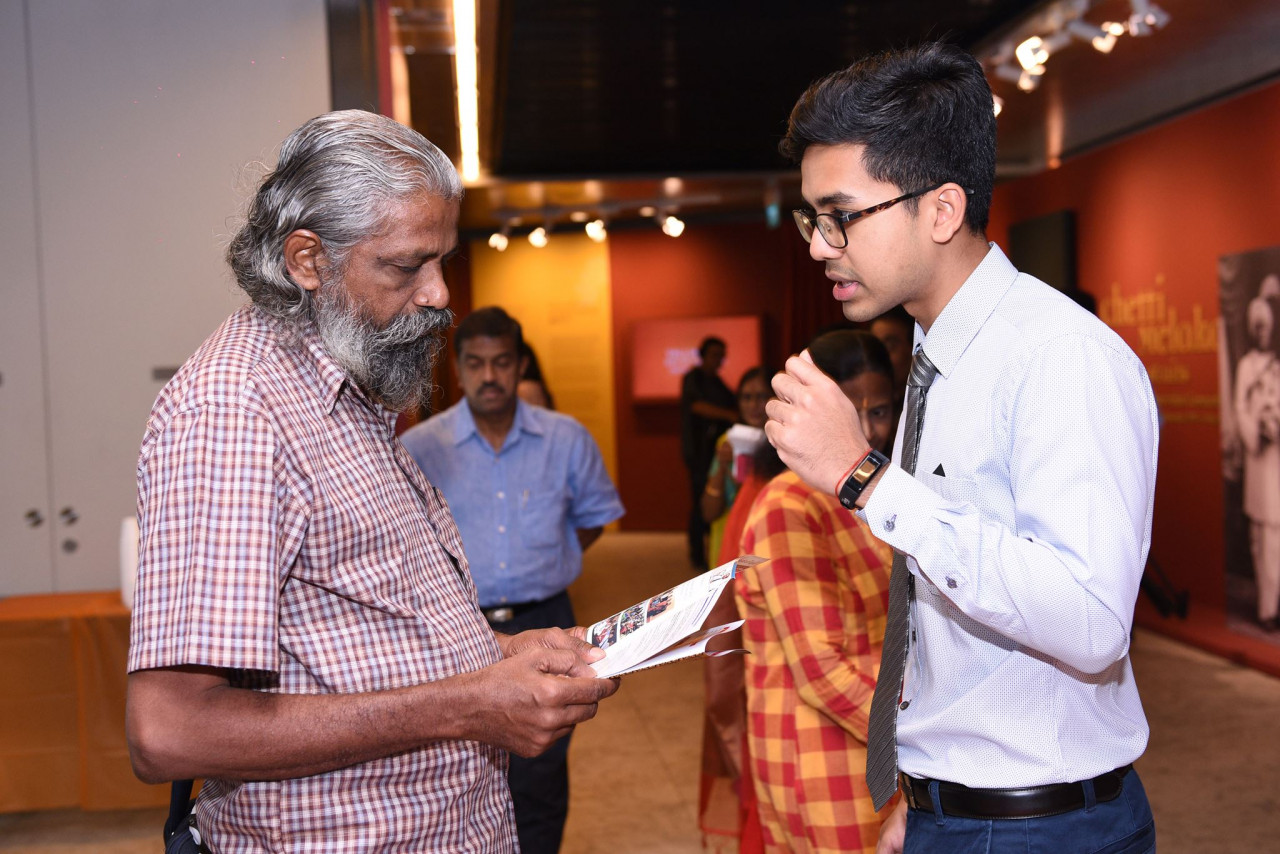
He sat down in a Zoom session with The Vibes and Singaporean legal academic Dr W. L. Cheah, who lectures at the National University of Singapore.
Where did the money go?
According to Chandrasekaran, although much has been written about them, the plight of the Death Railway victims and their families remained the same since he began his crusade for justice, over three decades ago.
Now into his 60s, the bearded Chandrasekaran says the government should reopen the files into reports that Japan did indeed pay a certain compensation sum as of 1967 to Malaysia, but the funds went elsewhere instead of to the families.
His research has now yielded four remaining survivors, who are at life's edge as they are now in their 80s to 90s, while only a handful of the relatives of the victims remained in the Death Railway Interest Group (DRIG) which Chandrasekaran chairs.
"The four can die anytime. One by one is going as we debate this process. Interest in waning as nothing has progressed despite our forums and media highlights."
Penang's Bagan Dalam assemblyperson M. Satees also revealed that his grandfather was also part of the Malayans who joined other Tamilians around the region to work at the railway project which turned deadly for the workers.
"Yes, I think some form of justice or compensation is needed here."
His colleague, Penang Deputy Chief Minister II Dr P. Ramasamy is also keen to find out if the victims are justified in seeking compensation.
In 2013, the issue became heated when former Perak mentri besar Datuk Seri Mohd Nizar Jamaluddin and former MCA vice-president Datuk Chua Jui Meng highlighted the fact that the victims did not receive any compensation, despite reports that a certain sum was paid out to the Federal Government.
Chua had blogged about it on a few occasions in the run up to the general election then, but the issue remains as murky as the graves that the victims were laid to rest in.
"I have asked Nizar to attend a symposium on the matter later in 2016 but he could not come," said Chandrasekaran, who sounded despondent at the conference call.
He cited that he has liaised with academics such as Prof Dr Sivachandralingam Sundara Raja from Universiti Malaya on the matter, so the research he has done has creedence if the authorities need points of reference.
Japan’s obligation to the victims
In essence, the Death Railway represents the highest number of Tamilians in one location, who are said to have perished or were scarred for life with injuries and the trauma of working in despicable conditions.
There were reports that compensation was also sought by ‘comfort women’ – a euphemism for sex slaves.
As recently as last week, lawyers representing Filipino women who were forced to work as sex slaves by Japan urged Manila to pay them compensation, after a United Nations committee called on the government to provide them with “reparations”.
During World War II, up to 200,000 women – mostly from Korea but also other parts of Asia, including the Philippines – were forced to work in Japanese military brothels, according to historians.
Memorialising the past
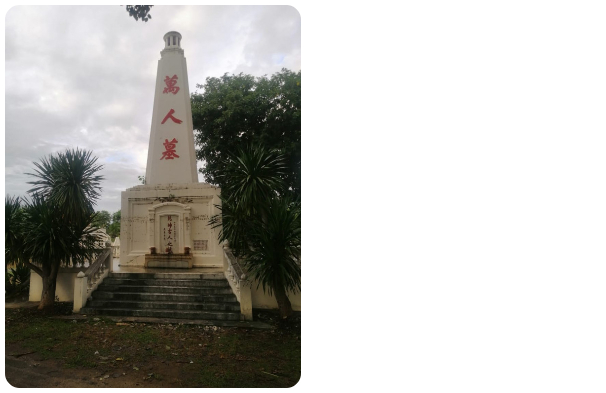
Compensation aside, Chandrasekaran is also trying to raise up to RM80,000 to upgrade the only monument built to honour the Asians whose lives ended on the Death Railway.
Although some quarters have discouraged him, on the grounds that the monument will be a landmark to promote tourism in Thailand, Chandrasekaran said that it is still the only relevant leftover of the Death Railway’s legacy.
"The living proof is now down to four only in Malaysia, who are elderly and ailing."
History and memoirs have documented the dark chapter of war but it mostly tells the fate that befell the 60,000 Allied POWs who worked at the infamous railway line when construction started in 1943.
The historical accounts do not mention the almost 200,000 Asians made up of Thais, Burmese, Javanese, Chinese, Malays and Tamils from Malaya who were forced to work there, where almost half of them lost their lives compared with the 13,000 Allied POWs.
Chandrasekaran's research revealed that Tamils from Malaya alone accounted for about 100,000 of the Asians involved there.
A correspondence dated Oct 1, 1946 between Dr C. Siva Rama Sastry of the Congress Medical Mission to Malaya and the Congress Party leader back in India – then Jawaharlal Nehru – lends credence to this figure.
There are three war cemeteries, in Kanchanaburi and Chungkai in Thailand, and Thanbyuzayat in Myanmar, which stand as testaments to the fate that befell the POWs, but the Asians who perished remain buried in unmarked graves along the track.
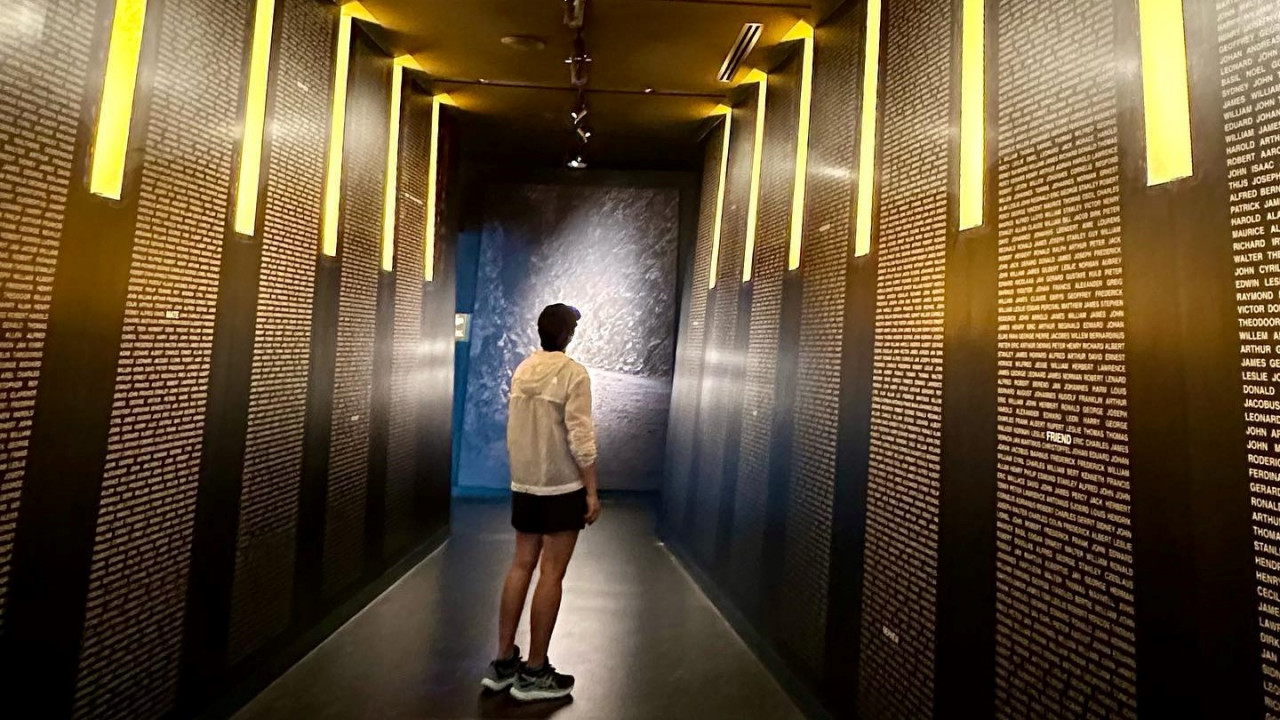
There is a Hellfire Pass where a monument managed by the Australians was erected. The name was given due to the heavy loss of lives suffered during the hellfire stretch of the railway which went for 415 km long rail tracks.
It was built during the period of 1942 to 1943 and it was designed to supply Japanese troops so they could invade India, although the invasion never materialised except for the Battle of Imphal, which forced the Japanese troops to retreat back to Myanmar.
There are also reports that after the war, Japan compensated Malaya with machinery and ships but the actual compensation payout was diluted due to the British's role as a colonial power, where some of the assets went to them instead of Malaya.
Some compensation also went to tin miners and plantations under British control, and it worsened apparently when the United States – who were administering Japan after the war – stepped in, and decided to deny Malaya's war damages claims to ensure that Japan was not made bankrupt.
In conclusion, Chandrasekaran said that there can be many reasons but the crux of the matter is whether compensation should be given to the actual victims of the carnage of war rather than to just their governments.
And for this, he continues the struggle for justice as for the victims, what happened 82 years ago still seems like yesterday as the memories linger. – The Vibes, March 14, 2023







.jpeg)