BECAUSE of the destruction of their habitat due to climate change, more and more animals are being forced to migrate to cities.
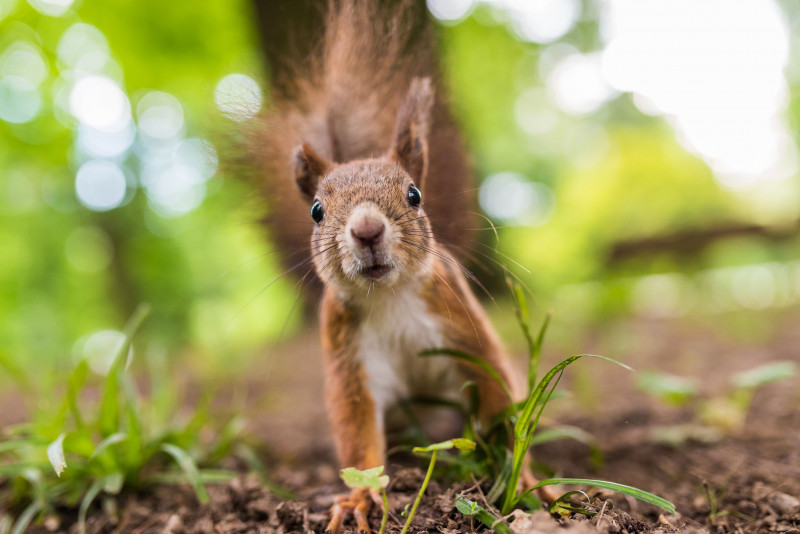
While many of them are threatened with extinction, those that are able to adapt could be the most likely to survive the climate crisis. This is the case for coyotes, red squirrels, chickadees and lizards, according to Canadian researchers.
Urbanisation and the destruction of nature undoubtedly have an impact on the living conditions of animals.
But according to Carly Ziter and Riikka Kinnunen, two researchers from Concordia University (Montreal, Quebec), the animals that adapt quickly to urban life are likely to be those that have the best chance of surviving.
"One of the most important qualities in urban animals is their ability to change their behaviour, coming up with innovative ways to socialise, avoid dangers or cope with challenging urban environmental conditions," the researchers write in a paper published via The Conversation.
In their research on urban animals, the scientists found that many animals have changed their morphology to adapt to the sometimes extreme conditions in cities.
Some lizards, for example, have seen their legs increase in length in addition to acquiring thin scales on the bottom of their feet.
These physical characteristics allow this species to "better cling to smooth urban surfaces like glass, metal or painted concrete," explain the researchers in their paper.
This ability to adapt is also seen in coyotes that avoid humans (especially cars) by being more active at night in Edmonton (Alberta, Canada). Similarly, rosy-faced lovebirds use air vents to cool down during hot days in Phoenix (Arizona, USA).
This resilience to climate change is not only observed in animal species.
A study carried out last year, led by a team of researchers from the University of Toronto, showed that certain plants were ubiquitous in urban green spaces (parks, lawns, roadsides, etc.).
Based on samples from 160 cities around the world on five continents, this research notably found that clover populations have a high capacity to adapt to urban spaces. – ETX Daily Up, March 16, 2023