
GROWING old should no longer be viewed in a negative light in Malaysia as the country prepares to embrace its status as an aged population.
By 2030, Malaysia is on track to become an aged nation, where 15% of the population will be 65 and higher.
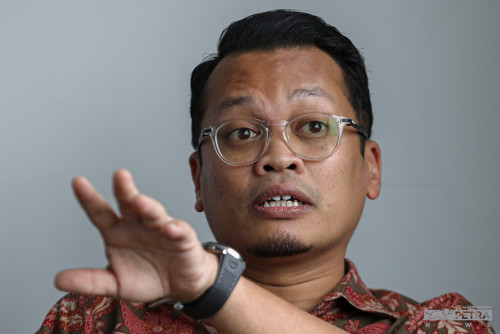
Malaysian Healthy Ageing Society president Prof Dr Shahrul Bahyah Kamaruzzaman said that to ensure the integration of an ageing society into the socio-economic structure, the country must introduce age-friendly policies now. This includes better regulation of nursing homes and geriatric healthcare.
Shahrul, who is a senior consultant geriatrician at the Universiti Malaya faculty of medicine, said age-friendly policies must not remain on paper but be put into practice to prepare the country for 2030.
She noted the importance of finding a balance between growing old gracefully and continuing to contribute to nation-building.
“We are part of the Asean grouping, which is fast becoming an aged region, with Indonesia, Laos, Cambodia, and Vietnam expected to reach aged nation status around the same time as Malaysia,” Shahrul said.
She was speaking on the sidelines of the Asean Conference on Healthy Ageing, which had the theme “Ageing successfully – equitably, actively and naturally,” in George Town.
Singapore became an aged society in 2017 and is set to attain “super-aged” status in 2026. By 2030, one in four Singaporeans will be aged 65 and more, up from one in six now.
On raising the mandatory retirement age from 60 to 62, Shahrul said healthcare and socio-economic needs must be integrated if the country wishes to extend the retirement age.
“Our retirement pensions, from the Employees Provident Fund to Socso (Social Security), must be revamped to incorporate an extension of the retirement age. We must advocate for a healthy longevity scheme for Malaysians who live longer,” she said.
Shahrul also highlighted the need for financial literacy to be taught early in primary school to prevent a debt-prone workforce.
She added that care services, housing, social amenities, and a support structure for caregivers must be in place to prepare for an aged nation by 2030.
Shahrul supported the need to revamp the national healthcare policy to make geriatrics affordable for the elderly, including more rehabilitation therapists and mental health counsellors, as there is a spike in depression and anxiety among the elderly.
She emphasised the importance of improving the ecosystem surrounding care for the elderly, noting that healthcare for the aged remains unaffordable for many Malaysians.
A white paper on geriatric healthcare must also be formulated by the Health Ministry, she said.
“We have a mantra in our society that no senior citizen should be left behind in our quest to provide universal care for all elderly people.”
Some doctors have proposed a task force to prepare the country for ageing. The task force should comprise inter-ministry representatives to cope with the surge in the elderly population.
“We can no longer work in silos. We need to be fully integrated to cope with an aged society,” Shahrul said. – August 5, 2024.