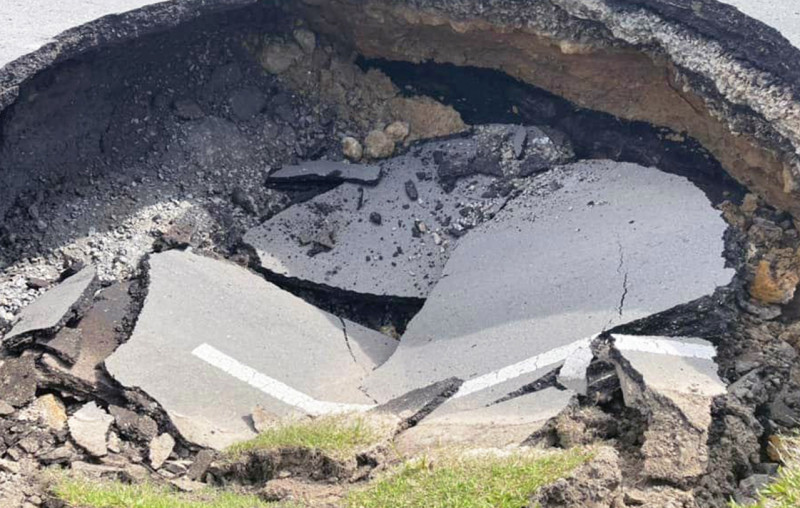
HUMAN activity and soil erosion were among the primary factors responsible for the 8m-deep sinkhole that appeared on Jalan Masjid India last month, which tragically claimed the life of an Indian national, according to the Natural Resources and Environmental Sustainability Ministry.
The ministry reached this conclusion following investigations by several agencies, including the Mineral and Geoscience Department, which used ground-penetrating radar to probe the area.
"Based on the investigations, the sinkhole incident was caused by multiple factors, including anthropogenic (human) activities, weather conditions, and erosion of the underlying soil layers," the ministry said in a statement.
A technical report on the geological and sub-surface structure is expected to be completed within the next three months. The report is being prepared by a task force led by Kuala Lumpur City Hall (DBKL), which is examining the land structure of the Masjid India area.
The sinkhole, which appeared on 23 August, claimed the life of 48-year-old Indian tourist Vijayaletchumy, who was walking near Malayan Mansion when she was swallowed by the collapsing ground. Despite extensive efforts by rescuers, including various search methods, they were unable to recover her body.
The search was eventually called off due to safety concerns for the rescue team, as well as the surrounding area, after another sinkhole was discovered near the original site.
The ministry explained that Kuala Lumpur’s bedrock is made up of around 30% limestone, with the remaining 70% consisting of granite and metasedimentary rocks, including the Kenny Hill Formation, Hawthornden Schist, and Dinding Schist.
“The area where the sinkhole occurred is primarily underlain by schist, phyllite, and quartzite of the Kenny Hill Formation,” the ministry added.
While the ministry reassured the public that Kuala Lumpur remains safe, it emphasised the importance of enhancing sub-surface monitoring, maintenance, and investigation procedures to help identify and prevent future sinkholes or ground subsidence.
Additionally, through the Mineral and Geoscience Department, efforts are underway to improve sub-surface data for the Klang Valley. This initiative, which involves 10 local authorities, is part of the Greater Kuala Lumpur Geological Mapping Project. – September 7, 2024.