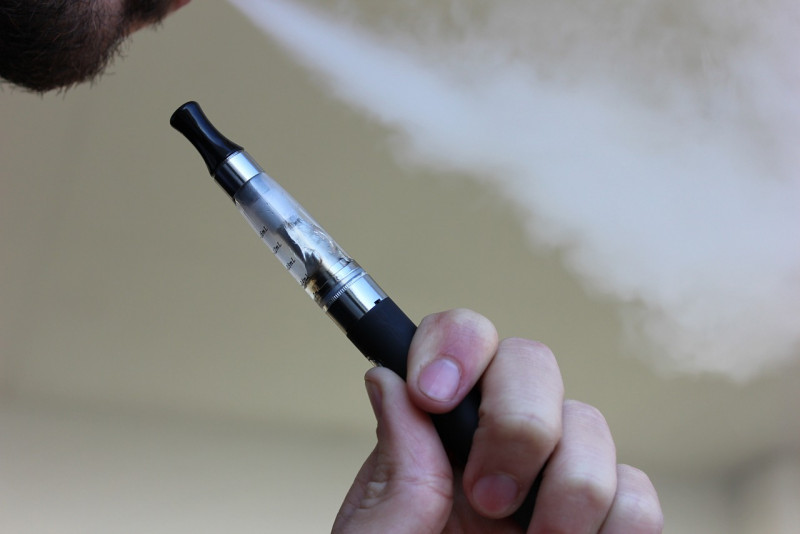
THE prevalence of vaping in schools remains an ongoing issue with 12,252 students caught vaping in schools this year alone, said the MCA.
Its deputy president, Datuk Dr Mah Hang Soon said since the penetration of e-cigarettes (e-cigs) in 2013 as an alternative to conventional cigarettes, their use has grown rapidly and become difficult to control.
“Vaping products, including e-cigs, are widely available and often sold in stores or online.
“Despite regulations, unscrupulous vendors sometimes sell these devices to minors, making them easily accessible to students,” he said.
The MCA Education and Consultative Council chairman also said that many vaping products are marketed in ways that appeal to young people.
“They come in a variety of flavours like fruit, candy, and dessert, making them more attractive to youth.
“Some vaping devices are marketed as everyday items, such as crayons or face masks, making it easier for students to bring them into schools unnoticed.
“This makes it harder for teachers and parents to detect vaping devices, contributing to their prevalence in schools,” he said.
Dr Mah also said that peer pressure plays a significant role in adolescent behaviour.
With the rise of social media and the glamorisation of vaping by influencers or peers, students may feel compelled to try vaping to fit in or look ‘cool’, he added.
To combat vaping in schools, he said the Ministry of Education (MoE) has introduced several measures, including discipline management and banning e-cigs in schools.
“These guidelines require adherence by schools, district offices, and state departments to create a unified approach against vaping.
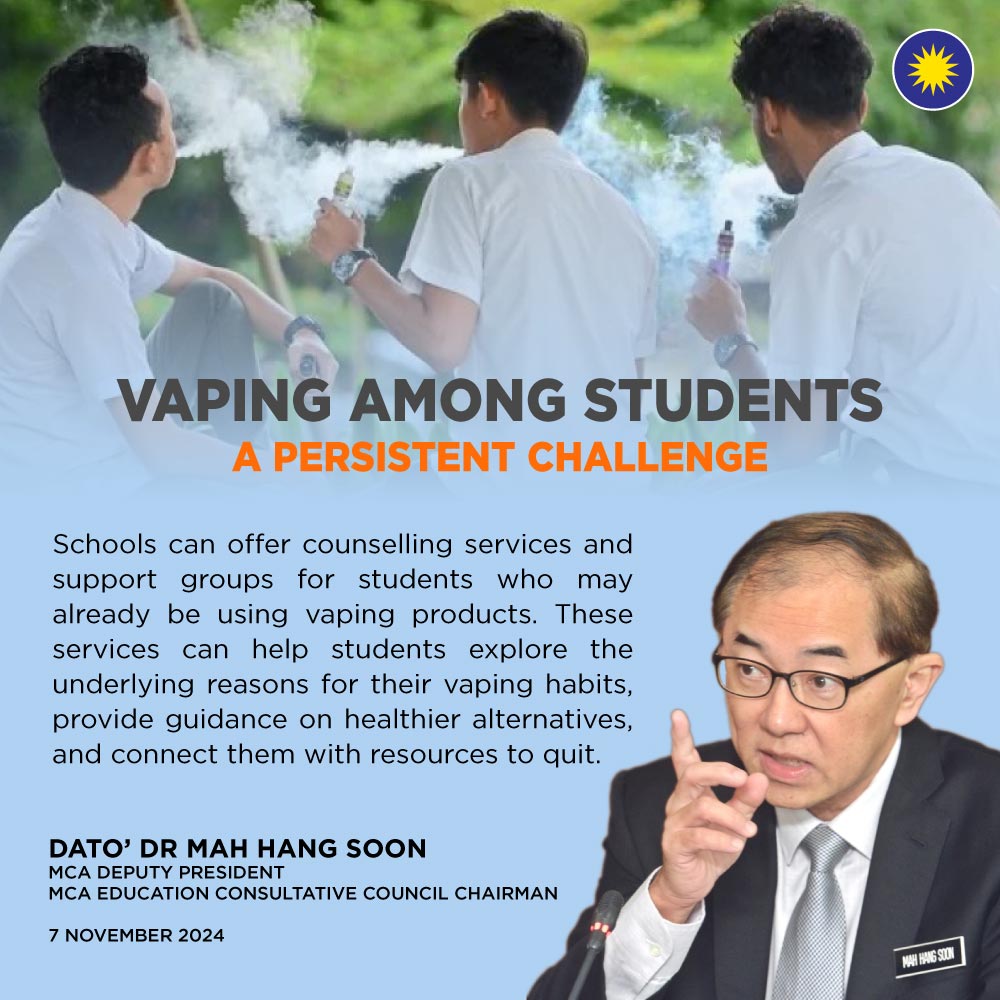
“As part of the implementation, schools can offer counselling services and support groups for students who may already be using vaping products.
“These services can help students explore the underlying reasons for their vaping habits, provide guidance on healthier alternatives, and connect them with resources to quit,” he said.
He said this supportive approach not only addresses the immediate issue but also promotes long-term behavioural change.
Dr Mah noted that the combined efforts of regulatory actions, education programmes, and school-based policies are essential in addressing the vaping issue among students and safeguarding the health of future generations.
He said parents must also monitor their children's activities, educate them on the risks of vaping, and discuss the school’s policies.
“This can create a support system at home that reinforces the anti-vaping stance in schools,” he added. - November 7, 2024













.jpeg)