MALAYSIA’s elite disaster response team, SMART, has once again proven its exceptional capability on the global stage following its rapid deployment to Myanmar after a deadly earthquake
The devastating 7.7-magnitude earthquake that struck Myanmar on 28 March claimed over 3,000 lives and raised serious concerns about Southeast Asia’s disaster preparedness.
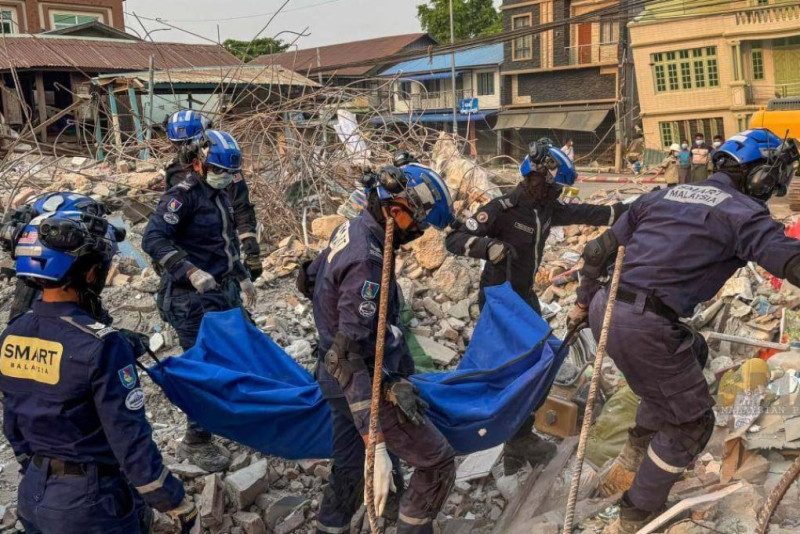
Just two days later, Malaysia’s Special Malaysia Disaster Assistance and Rescue Team (SMART) arrived in Naypyidaw, highlighting the country’s advanced search and rescue (SAR) capabilities.
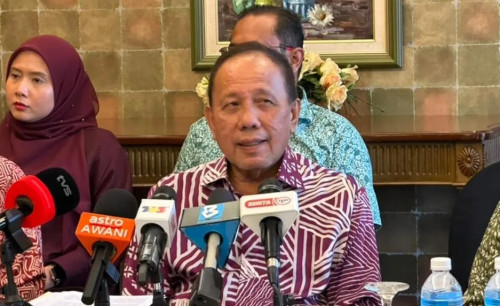
Deputy Director-General (Operations) of the National Disaster Management Agency (NADMA), Datuk Dr Abdul Gapar Abu Bakar, said SMART was among the first international teams to conduct SAR operations in Myanmar, operating under the highest international standards.
“The earthquake occurred at 2.30pm, and by 4pm we had received an official request from the Myanmar government to send a humanitarian and rescue mission,” he said during a special episode of Buletin TV3’s Podcast Utama.
The urgent request was brought to Deputy Prime Minister Datuk Seri Dr Ahmad Zahid Hamidi, who is also NADMA Chairman, and received immediate approval.
Following this, Malaysia’s National Disaster Command Centre (NDCC) in Pulau Meranti was activated as the main coordinating hub. NADMA immediately established communication with the Ministry of Foreign Affairs, the Malaysian diplomatic mission in Myanmar, and Myanmar’s national disaster management agency.
Abdul Gapar noted that the mission came at a time when many civil servants were already on leave in preparation for Aidilfitri celebrations, but they were swiftly called back to duty, reflecting their deep commitment to national service.
“At the time, we were told that even getting fuel from a petrol station meant queueing for kilometres,” he said, describing the logistical hurdles they had to manage from the outset.
Due to safety regulations, fuel could not be transported aboard the Royal Malaysian Air Force’s A400 aircraft. This made the collaboration with Malaysia’s diplomatic office in Myanmar critical to ensure local fuel supplies were arranged ahead of the team’s arrival.
“Once all the teams had arrived that night, there were several important matters that needed to be settled, including official documentation, letters, and so on,” he shared.
Throughout the mission, NADMA maintained precise oversight. Every day at 8am Malaysian time, a detailed report was submitted to Abdul Gapar, listing the number of personnel on the ground and their operational locations.
Yet, according to Abdul Gapar, what sets SMART apart is not only its technical expertise, but its strong sense of social sensitivity — a form of ‘social intelligence’ that differentiates them in complex humanitarian missions.
“Alhamdulillah, I saw that all our personnel internalised their training and applied it well. People may think rescue work is as simple as drilling a hole and lifting someone out. But it’s not that simple,” he said.
Malaysia is currently one of only two ASEAN nations recognised as a ‘Heavy USAR’ (Urban Search and Rescue) team by the International Search and Rescue Advisory Group (INSARAG) — a clear testament to SMART’s world-class capability. – April 19, 2025



.jpg)