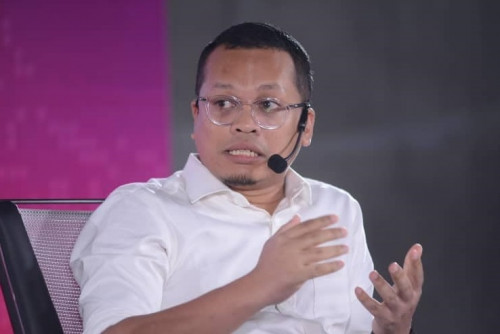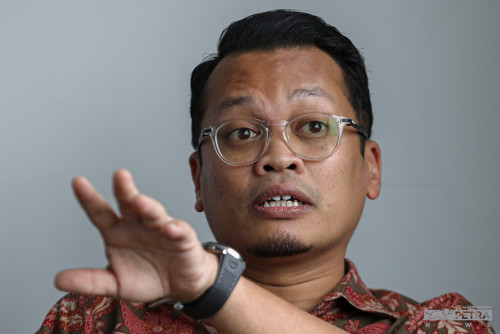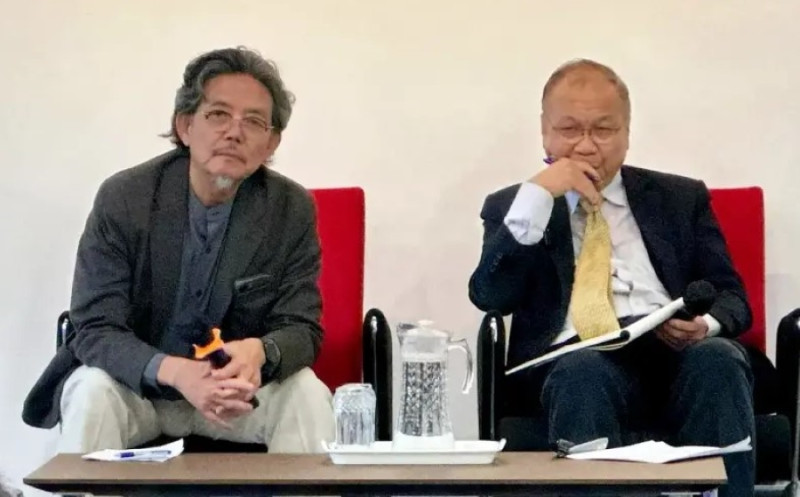

PUNITIVE import tariffs imposed by the United States on Malaysian goods are unlikely to be prolonged, as the economic blowback to the U.S. itself becomes increasingly apparent, said Professor Datuk Dr Woo Wing Thye.
Speaking on the outlook of U.S. trade policy, Dr Woo —a Penang institute Fellow —said the U.S. economy is also bearing the brunt of the tariffs, and expects that “rationality and sensibility would prevail” in shaping future decisions in Washington — particularly if key fundamentals such as the U.S. dollar’s value continue to weaken and inflation is exacerbated by higher consumer prices.
However, he cautioned that some form of the tariffs may remain in place even after formal reductions. “A watered-down version of the tariffs may linger,” Woo said.
“Instead of the 24% tariff on Malaysian imports, the U.S. may reduce it only marginally or maintain it at the current base rate of 10%, which is now applied by U.S. Customs and Excise.”
He said that the 90 - day pause by the U.S. and its reconciliatory measures to China and the rest of the world, is an indication that the punitive tariffs is not working effectively.
"Well China is indeed a threat to the U.S. hegemony. Japan at the peak of its economic strength only represented 20% of the U.S. gross domestic product. China has the attributes to take on the U.S. economy might as the world's largest."
But the world should not be held hostage over the trade impasse between U.S. and China, he said.
The Penang - born economist said that the rest of the world, including the European Union should come together to offset the trade war between the number and two biggest economies in the world.
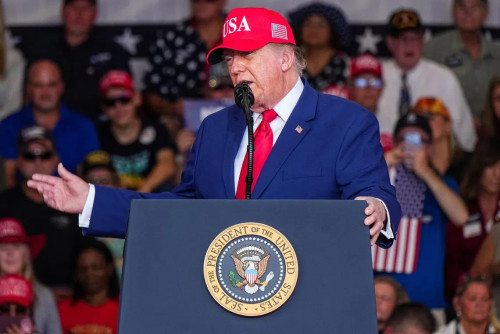
Speaking at a special session on tariffs at the Penang Institute today, which was moderated by its executive director Datuk Ooi Kee Beng, Woo espoused that countries need to adapt with the unilateral approached adopted by U.S. President Donald J. Trump.
He said this as Parliament convened for a special sitting on the U.S. tariffs today.
Woo's messaging to the lawmakers is that they should stand behind Prime Minister Datuk Seri Anwar Ibrahim's move to fused together an Asean regional economic bloc.
He proposed a united ASEAN response to U.S. tariffs, and a trade pact among countries friendly with both the U.S. and China, amid rising trade tensions.
He warned that acting alone could lead to one country benefiting at the expense of others, creating more friction than the present globe uncertainty.
Instead, a joint approach would create shared benefits, and he urged Malaysia, as ASEAN Chair, to initiative and stimulate for a more cooperative trade strategy.
Woo has also proposed forming "buffer states" — countries friendly with both the U.S. and China — to create a free trade bloc based on World Trade Organization guidelines.
He calls this idea "open regionalism".
Woo also called for ASEAN, Japan, and South Korea align existing trade deals like the Regional Comprehensive Economic Partnership (RCEP), Comprehensive and Progressive Agreement for Trans-Pacific Partnership (CPTPP), and Indo-Pacific Framework for Prosperity (IPEF) under this new partnership. - May 5, 2025