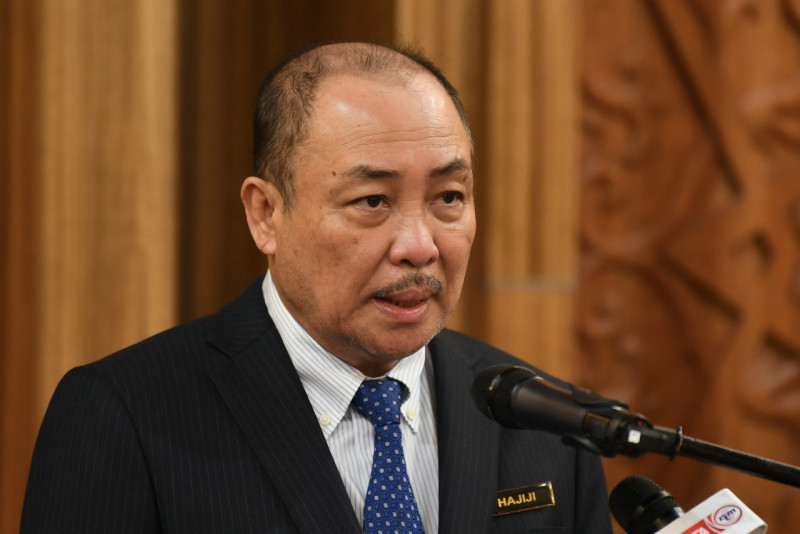
THE Sabah state government is allegedly the target of a plot to unseat Chief Minister Datuk Seri Hajiji Noor through coercive tactics including threats, bribery, and document falsification, in a bid to gain access to the state’s natural resources.
Chairman of Gerakan Kuasa Rakyat Malaysia (G57), Datuk Zulkarnain Mahdar, has claimed that certain individuals are attempting to destabilise the government after failing to secure approval for a land concession spanning one million acres in Sabah. According to Zulkarnain, the group resorted to threats when their application was rejected.
Speaking during the ‘Interviu’ programme hosted by Haizir Othman at Dewan Karangkraf on Thursday, Zulkarnain said: “The individual involved sought a licence to explore one million acres of land in Sabah. When the request was denied, the whistleblower demanded his money back, and a state assemblyman was willing to oblige.
“At the same time, threats were issued against the Chief Minister — essentially warning that if the licence was not approved, they would topple the Sabah government by releasing a video.”
The video in question, allegedly featuring a conversation between a Sabah state assemblyman and another individual, has recently circulated on social media.
Zulkarnain said Hajiji had informed him directly that he would not sign off on such a vast concession, knowing full well the political consequences.
“Hajiji understands that the threat could have the impact we are seeing now. But he chose not to give in, to protect Sabah’s natural wealth,” he said.
G57 has since lodged reports with both the Royal Malaysia Police and the Malaysian Anti-Corruption Commission (MACC), asserting that the matter involves a clear attempt to overthrow the existing state administration.
“This wasn’t reported to the authorities at first — it was exposed to the media instead. We must remember, in politics today, perception is everything. Facts come second. And they’re working hard to shape public perception negatively,” Zulkarnain added.
On the issue of political funding, he suggested that clearer regulations are needed to avoid further controversy.
“As elected representatives, it’s only natural that financial stability is required to serve the people effectively.
“I’m quite drawn to calls by some politicians for political funding reform, especially in Sabah, where the current framework is still vague. Politicians need significant operational funds, and I believe this should be addressed,” he said.
He added that parties regularly host events which require funding, usually through contributions from various sources.
“If other parties can do it with support from certain quarters, then we must ask why this is seen as an issue when it involves others,” he said. - May 29, 2025