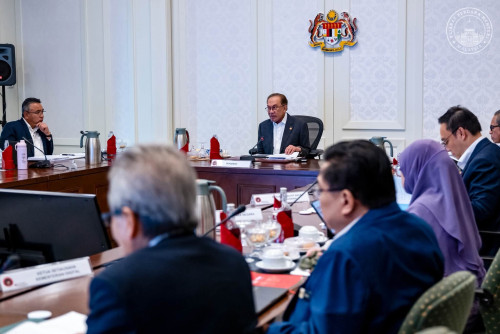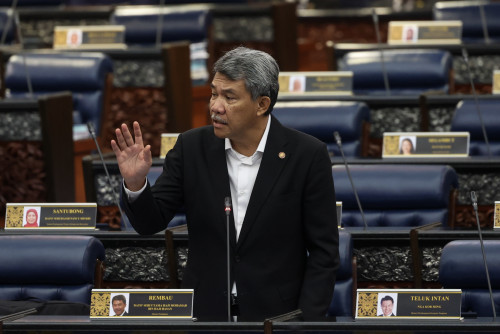
THE impending resignations of two senior Malaysian ministers will not derail the country’s progress in finalising its National Environmental, Social and Governance Strategic Plan (NESP) or the 13th Malaysia Plan (RMK13), Deputy Minister of Economy Datuk Hanifah Hajar Taib confirmed on Thursday.
Speaking on the sidelines of the Forward Faster 2025 Symposium organised by the UN Global Compact Network Malaysia and Brunei (UNGCMYB), Hanifah stated that both documents are either near completion or advancing steadily despite the recent cabinet developments.
“The RMK13 is almost ready and will be presented to the Cabinet soon, while work on the NESP is actively ongoing,” she said.
“All ministries understand the importance of ESG, and the civil service has been diligently crafting the framework with a clear vision of the outcomes they aim to deliver.”
Her remarks follow the announcement that Economic Affairs Minister Datuk Seri Rafizi Ramli and Natural Resources and Environmental Sustainability Minister Nik Nazmi Nik Ahmad will officially step down from their posts on 4 July.
While RMK13 is scheduled for tabling in Parliament next month, Hanifah noted that the implementation timeline for the NESP has yet to be confirmed.
Delivering the keynote address earlier at the symposium, Hanifah emphasised that the NESP aligns closely with global ESG benchmarks and complements the six pillars of the National Sustainability and Industry ESG Framework.
“NESP is a comprehensive initiative designed to guide Malaysian businesses towards ESG compliance and sustainable practices. It will gradually support Malaysian entities, especially small and medium-sized enterprises, in not only adopting ESG reporting but also meeting other compliance standards,” she said.
The one-day symposium, themed “Accelerating Corporate Sustainability Commitments for a Resilient Future,” brought together over 200 participants, including senior executives, sustainability practitioners and business leaders.
The event focused on in-depth discussions around the evolving role of businesses in achieving the UN’s 2030 Sustainable Development Agenda, especially amid worsening economic headwinds and rising geopolitical tensions.
The momentum is timely, as Malaysian corporate leaders increasingly integrate ESG strategies into core business operations, recognising sustainability as a key tool to mitigate risk, drive long-term value and support national development efforts. - June 5, 2025