
PENANG Chief Minister Chow Kon Yeow has assured that the state retains sufficient industrial land to support economic expansion for the next decade or beyong, despite growing concerns over limited land availability.
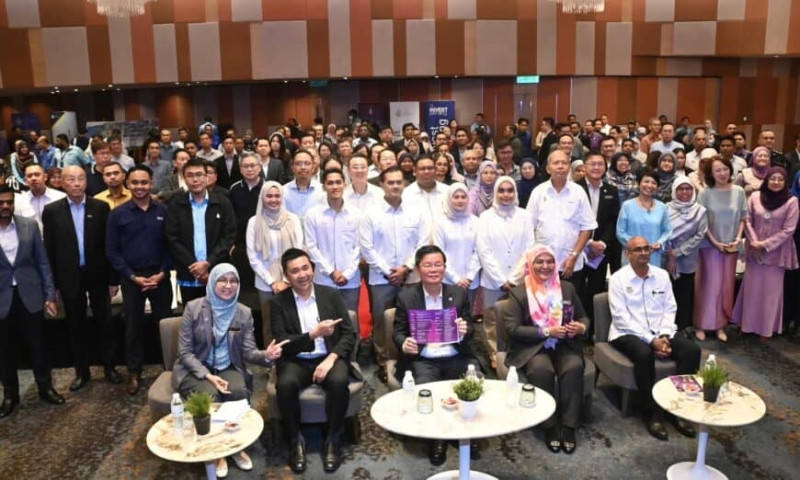
Speaking at the launch of the Penang Industrial Master Plan 2030 at the Eastin Hotel, Chow said current land reserves are adequate to accommodate manufacturing sector demands well into the future.
“We already have sufficient land planned to accommodate industrial production capacity for the next 10 to 15 years,” he said, in response to calls for vertical development to counter land scarcity.
Chow noted that at least 2,000 acres are presently in various stages of planning and development, including through land acquisition, requests for proposals, and offshore reclamation projects.
“The annual demand for industrial land is usually around 100 acres — not hundreds. For example, the Batu Kawan Industrial Park, which spans over 1,000 acres, has sustained investment for nearly 15 years since its development began in 2008,” he added.
He explained that not all investors require newly developed land, with many choosing to expand existing facilities or opt for ready-built factory spaces available on the market — a trend particularly evident among Chinese investors eager to fast-track operations.
The Penang Industrial Master Plan 2030, launched today, outlines strategies for transforming the state into a smart, competitive and sustainable industrial hub. It is aligned with the Penang State Structure Plan 2030, the state’s statutory planning document for long-term industrial growth.
Chow also addressed the issue of foreign labour, stating that industrial development must be approached holistically, beyond just land provision.
“We want a holistic approach because industrial development is not just about preparing land. It involves access to utilities, skilled talent, strong supply chains, and efficient transportation,” he said.
On foreign worker housing, Chow reiterated that workers would not be permitted to reside in residential estates, in accordance with legal provisions. Instead, the state is moving towards establishing Centralised Labour Quarters (CLQs) near industrial areas.
“These CLQs will be located within or close to the industrial zones where workers are employed,” he said, underlining the state’s commitment to responsible and comprehensive industrial planning. - June 20, 2025