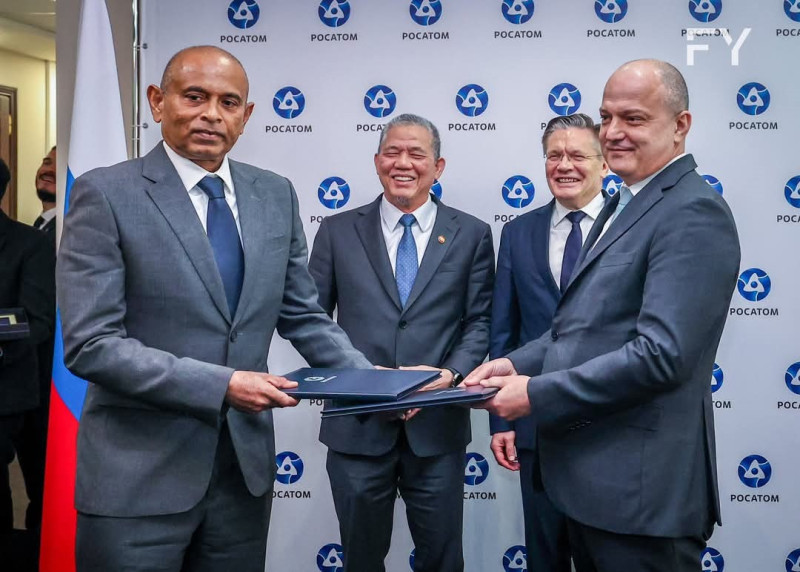
DEPUTY Prime Minister Datuk Seri Fadillah Yusof has concluded an eight-day working visit to Uzbekistan and Russia, marking a pivotal step towards reviving the nation’s nuclear energy ambitions while deepening international cooperation in halal trade, tourism, energy investment, and Islamic finance.
A key highlight of the visit was the signing of a confidentiality agreement between Malaysia’s MyPower Corporation—a special purpose agency under the Ministry of Energy Transition and Water Transformation—and Rosatom, Russia’s state atomic energy corporation. The agreement lays the groundwork for potential collaboration in the peaceful use of nuclear technology.
Bernama reported today that this move aligns with Malaysia’s ongoing assessment of its long-term energy strategy, particularly under the National Energy Transition Roadmap, where nuclear energy is being seriously reconsidered as a reliable and clean baseload option to diversify the country’s energy mix and meet its climate and energy security goals.
Malaysia had previously charted an ambitious nuclear development agenda, including plans to operate two nuclear power plants by 2021. However, the programme was shelved and the Malaysian Nuclear Power Corporation disbanded in 2018.
Today, amid rising pressure to decarbonise and expand energy sources, nuclear power is again under active consideration as a viable low-carbon alternative. A newly completed pre-feasibility study revealed promising findings, prompting the government to explore implementation pathways that fully comply with international safety, security, and non-proliferation standards.
Fadillah’s visit also strengthened Malaysia’s position as a global halal leader. Both Uzbekistan and Russia expressed keen interest in tapping into Malaysia’s well-established halal ecosystem.
Furthermore, the Uzbek government extended a formal invitation to Malaysia’s national oil and gas company, Petroliam Nasional Bhd (Petronas), to reconsider investing in the country’s energy sector. Petronas exited the Uzbek market in 2013, but new opportunities in upstream exploration and development now align with Uzbekistan’s efforts to revitalise its energy landscape.
Tourism ties were also reinforced with the launch of direct AirAsia X flights from Kuala Lumpur to Tashkent, operating three times weekly. Encouraging further growth in tourism and trade, Fadillah urged the airline to expand its route network to include Samarkand, the historic Silk Road city and UNESCO World Heritage Site, as a means of boosting leisure and cultural tourism.
Uzbekistan has also shown interest in partnering with Malaysia on carbon trading, and expressed a desire to leverage Malaysia’s extensive expertise in sukuk development—an area in which the country is globally recognised as a pioneer in Islamic finance. - June 28, 2025