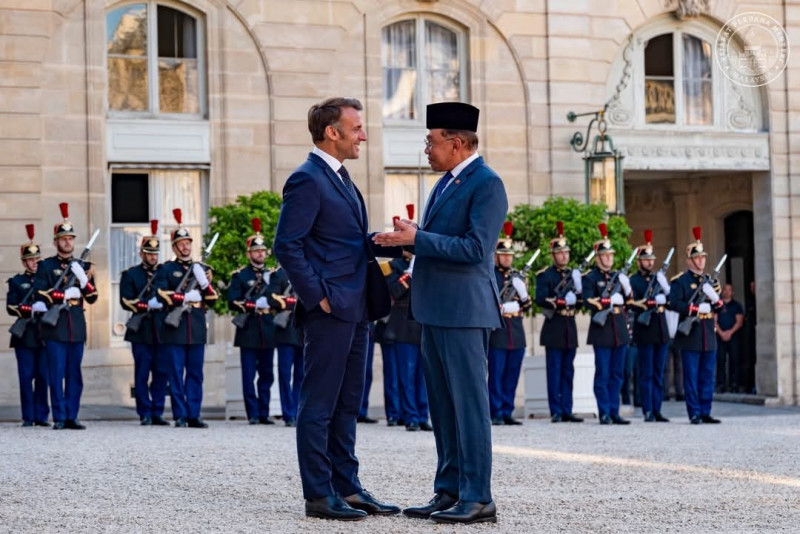
MALAYSIA and France have reiterated their joint call for an immediate and lasting ceasefire in Gaza, as well as the urgent delivery of humanitarian aid, amid growing frustration over the international community’s failure to prevent escalating atrocities in the besieged Palestinian enclave.
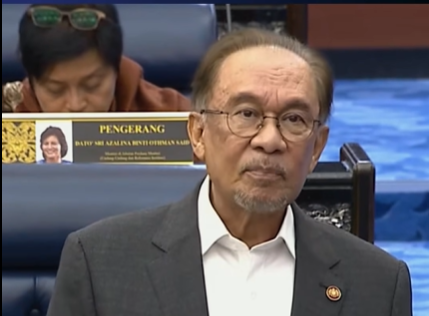
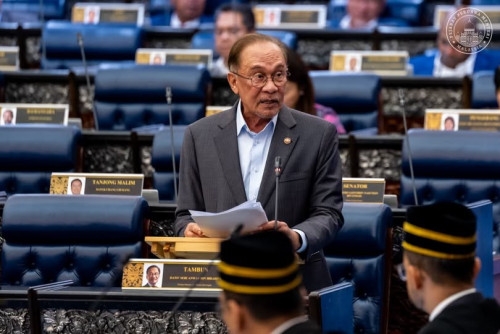
Speaking at a joint press conference at the Élysée Palace on Friday, Prime Minister Anwar Ibrahim and President Emmanuel Macron voiced agreement on the need for a permanent halt to hostilities and the release of hostages in Gaza.
“The two-state solution remains the best route to resolving the Palestine-Israel conflict,” said Macron. “We are working with several parties, including Saudi Arabia. For now, Israel must allow aid to reach Gaza.”
Anwar praised Macron for what he described as “genuine efforts” to end the long-running crisis in Gaza. “We unequivocally condemn the ongoing bombings and atrocities committed against civilians, women and children. It is deeply disheartening that the international community continues to fail in resolving this crisis.”
The Malaysian leader added, “We fully support your initiatives. Peace is non-negotiable, and if peace demands cooperation from both sides, I agree with you. That is why we remain committed to the two-state solution.”
Anwar also condemned Israel’s recent strikes against Iran, while affirming Malaysia’s support for French diplomatic efforts to bring stability to the wider Middle East.
Turning to the issue of nuclear arms, Anwar warned against double standards. “We cannot ignore the use of nuclear energy under the guise of peaceful purposes. The control and proliferation of nuclear weapons, or energy, cannot be viewed selectively,” he said.
“If you say no to Iran but yes to Israel, we have a problem. We must find a solution. I agree with you—we need to urge Iran to use nuclear energy only for peaceful means and allow inspections to which they have already committed.”
Macron responded by insisting Iran must clearly reaffirm its adherence to the Nuclear Non-Proliferation Treaty, reverse legislation that limits cooperation with the International Atomic Energy Agency, and accept a deal that ends uranium enrichment in return for the peaceful use of nuclear energy.
The French president said he had discussed these matters with Iranian President Ebrahim Raisi, Russian President Vladimir Putin, and US President Donald Trump, and would continue dialogue with other UN Security Council members.
He also reiterated France’s position on Ukraine: “We want an immediate ceasefire. We strongly condemn attacks on civilians. Russia’s war of aggression has consequences that stretch far beyond Europe—as we are now seeing with North Korean troops deployed on European soil.”
Earlier in the day, Anwar delivered a powerful address at the University of Paris-Sorbonne, where he described the situation in Gaza as “a failure of conscience, empathy, leadership and the ability to distinguish suffering from strategy.”
“The destruction of schools, the collapse of hospitals, and the wiping out of entire families reflect a profound failure to acknowledge the shared value of human dignity,” he said.
“When we fail to recognise the humanity in others, we risk losing our own.”
He urged the world to move beyond statistics: “Each number tells a human story—of mothers, children, fathers—and these experiences should not only evoke sympathy but spur each of us to act.”
Anwar criticised the international community for its paralysis: “While we often speak of human rights, democracy and the sanctity of life, the world has appeared powerless to stop this prolonged genocide.”
He welcomed rulings by the International Criminal Court (ICC) and the International Court of Justice (ICJ), but lamented the disregard shown by perpetrators.
“These rulings have been met with contempt and impunity. There is no other way forward—world leaders must speak with moral clarity and act with firm resolve to end this turmoil and slaughter.”
He concluded by pointing to movements offering hope. “Yes, we see glimmers of hope in the actions of students, academics, and civil society across the world. In their denunciation of genocide and calls to end this brutality, we find both comfort and urgency. But we need more than that.”
“We must continue to call for global solidarity, sustained support and tireless efforts to uphold justice.” - July 5, 2025