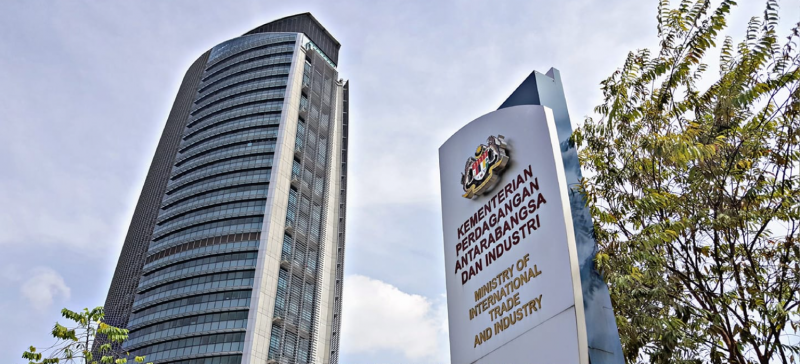
THE Ministry of Investment, Trade and Industry (MITI) has moved to defend its domestic steel sector by imposing provisional anti-dumping duties on hot-dip galvanised steel products imported from China, South Korea and Vietnam, following a preliminary determination that these goods are being sold at unfairly low prices that threaten local manufacturers.
MITI, in a statement, said on Friday that temporary duties ranging from 3.86% to 57.90% will take effect on 7 July 2025 and remain in place for up to 120 days, pending a final ruling expected by 3 November.
The investigation, launched on 6 February 2025, was prompted by a petition from CSC Steel Sdn Bhd, a domestic producer which argued that imports of galvanised flat-rolled steel—classified as non-alloy or alloy steel products coated with zinc using the hot-dip process—were being dumped in the Malaysian market at prices below those in their countries of origin.
“The Government has made a preliminary determination under Section 23 of the Act, and finds there is sufficient evidence to indicate that the subject merchandise from China, Korea and Vietnam is being imported at dumped prices,” MITI stated. “The continuation of the investigation is therefore warranted.”
To prevent further material injury to local manufacturers, MITI said the provisional measures will be applied in the form of bank guarantees at the margin rates identified.
Interested parties, including importers, exporters and trade associations, have until Monday, 14 July 2025, to submit their comments on the preliminary findings. A non-confidential version of the report is available via MITI’s Trade Remedies Investigation Management System (TRIMA) at https://traderemedies.miti.gov.my.
The decision underscores Malaysia’s increasing assertiveness in using trade remedies to protect strategic sectors against distortive practices.
MITI reaffirmed its commitment to promoting fair trade and industrial resilience, stating that “its central role is to accelerate national economic development and elevate Malaysia’s position as a globally competitive and preferred destination for quality investments.”
The case comes amid a broader global trend of heightened scrutiny on steel imports, with several economies taking similar steps to counter the effects of overcapacity and price undercutting by major exporters. - July 5, 2025