MALAYSIA has called on ASEAN member states to work collectively towards building a resilient, integrated semiconductor supply chain, positioning the region as a serious global player in chip innovation and manufacturing.
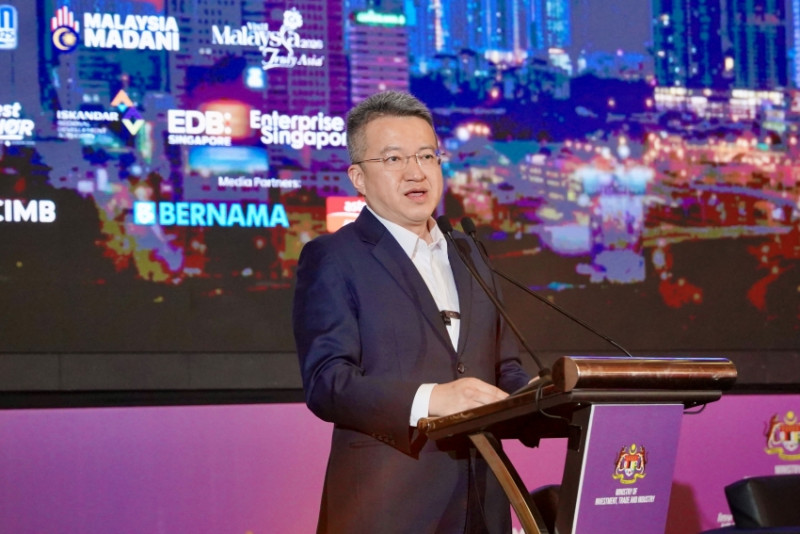
Delivering his opening address at the ASEAN Semiconductor Summit (ASEMIS) 2025 in Petaling Jaya on Thursday, Deputy Minister of Investment, Trade and Industry Liew Chin Tong, said the region must act decisively to avoid being left behind.
“Semiconductors are no longer merely an economic driver. They are a cornerstone of national security, technological prowess and societal advancement,” he said. “The use of chips in our daily lives continues to grow, and this trend is being rapidly accelerated by artificial intelligence.”
Describing the summit as both “timely and strategic”, Liew underscored the global industry’s evolving landscape — marked by shifting geopolitical dynamics, urgent supply chain concerns, and the rapid rise of next-generation technologies — as a turning point for ASEAN.
“Most importantly, there is an urgent need for regional collaboration,” he said.
Despite having a mature electronics industry — with over 5,000 firms and seven of the world’s top ten semiconductor companies operating in the country — Liew acknowledged that Malaysia has yet to produce a global chip giant akin to TSMC, Samsung or Huawei.
“Penang began producing chips around the same time as Taipei and Seoul, and earlier than Shenzhen,” he said. “Yet, we have not built the equivalent giants. The same is true of Singapore.”
He argued that Malaysia’s semiconductor strategy must now shift its emphasis from contract manufacturing to innovation-driven enterprise. “We must move from ‘Made in Malaysia’ to ‘Made by Malaysia’, and work with ASEAN counterparts to build regional champions,” he said.
That ambition is encapsulated in Malaysia’s National Semiconductor Strategy (NSS), launched in 2024. At its core is the goal of nurturing ten Malaysian technology companies with annual revenues of at least USD1 billion, and a further one hundred with RM 1 billion each in annual turnover.
“ASEAN’s strength lies in unity,” Liew added. “We have the strategic location, a vibrant and youthful workforce, manufacturing capabilities and an expanding digital economy. But to realise our potential, we need policy alignment, infrastructure readiness and deeper cross-border collaboration.”
As chair of ASEAN in 2025, Malaysia has placed the development of an ASEAN Framework for an Integrated Semiconductor Supply Chain among its top economic priorities. Liew said the framework should be finalised before the country hands over the chairmanship.
“Malaysia stands ready to work with all ASEAN partners and beyond, through joint investments, research alliances and knowledge sharing, to transform vision into reality,” he said.
Liew closed by thanking the Malaysian Semiconductor Industry Association (MSIA) and summit partners for their contributions, and expressed hope for “fruitful deliberations, meaningful engagements and transformative outcomes” from the event. - July 24, 2025