AS Malaysia advances towards becoming an aged nation by 2043, the Government has set out a sweeping reform agenda under the 13th Malaysia Plan (RMK13), with policies geared towards preparing society and the economy for the country’s changing demographic landscape.
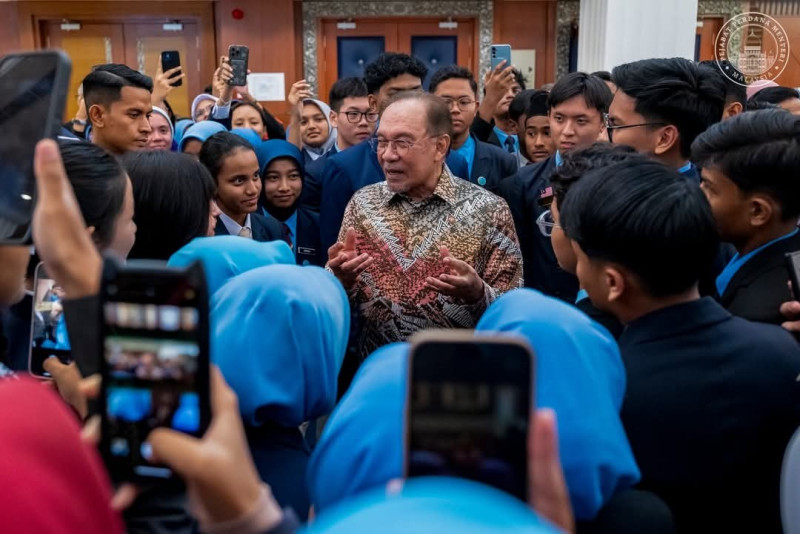
“Malaysia has been classified as an ageing nation since 2021,” said Prime Minister Datuk Seri Anwar Ibrahim in tabling RMK13. “This transition demands greater financial commitment. To meet the challenges that lie ahead, we have formulated the National Ageing Framework 2025–2045 as a comprehensive guide.”
A key priority of the plan is the development of a robust long-term care (LTC) ecosystem, designed to be efficient, equitable, and sustainable. The Government will establish a dedicated regulatory authority to oversee the sector and enact supporting legislation to ensure national consistency in policy.
“This reflects the Government’s enduring compassion,” said Anwar, noting that the sector will also be professionalised, with social protection extended to carers and LTC workers. The national Technical and Vocational Education and Training (TVET) curriculum will be broadened to include ageing and gerontology, alongside targeted incentives for student trainees.
On the issue of poverty, the Prime Minister echoed the moral imperative of reform by quoting Gabriel García Márquez: “It is easier to start a war than to eradicate poverty.”
“We refuse to fall into that same dark abyss. Eradicating poverty is our foremost jihad. It is not merely a fiscal policy but a matter of leadership principle and trust,” he said.
RMK13 aims to move beyond stopgap assistance by focusing on income mobility. Through the Program SejaTi MADANI, eligible communities may receive grants of up to RM100,000 to support local economic development driven by grassroots needs.
“It empowers the people and honours their aspirations—whether in rural areas or among the urban poor,” said Anwar.
With TVET enrolment reaching 212,000 in 2024, the Government will continue expanding the TVET MADANI programme, including access for tahfiz and huffaz students. New certification levels (6 to 8), equivalent to higher education standards under the Malaysian Qualifications Framework, will be introduced to enable upward career progression in technical fields.
Labour reforms form another cornerstone of RMK13. Minimum wage provisions will be extended to graduates and semi-skilled workers—including those categorised under MASCO Code 8 and above.
“The National Wages Consultative Council will be strengthened, and the e-MASCO portal upgraded for greater transparency in wage tracking,” said Anwar. “At the same time, the Government encourages large corporations to implement living wage models, as already practised by GLICs and GLCs.”
A new Non-Work-Related Accident Scheme will be rolled out to provide insurance coverage beyond working hours, while a legislative framework is being prepared to ensure gig workers have access to social protection under the Digital Economy Framework.
To reduce reliance on foreign labour, the Government is targeting a decrease from the current 15 per cent to 10 per cent by 2030. The Multi-Tier Levy Mechanism will be more broadly applied to encourage automation and greater employment of locals.
Anwar also reaffirmed his administration’s commitment to equitable opportunity, stating:
“We aim to move away from race-based solutions toward need-based policies. Programmes under AIM and TEKUN are open to all entrepreneurs.”
Nonetheless, Bumiputera economic empowerment remains a central pillar under the PuTERA35 initiative, which focuses on wider participation, meaningful ownership, and strategic sector leadership. Major developments such as Bandar Malaysia and the Subang Airport redevelopment will include significant Bumiputera involvement.
To help Bumiputera firms scale globally, the Government will support their preparation for Bursa Malaysia listings, introducing a ‘relay race’ model to support businesses from startup phase to public flotation.
“GLCs will help groom 10 Bumiputera champions in strategic supply chains, each with a target valuation exceeding RM500 million,” Anwar said.
The Gate to Global (GTG) programme will be scaled up to assist export-readiness through capacity-building, product development, and digital market access.
Additional focus will be placed on socio-economic support for the Anak Negeri Sabah and Bumiputera Sarawak, including access to commercial spaces, financing, and entrepreneurial training and mentorship.
In conclusion, Anwar framed RMK13 as a cross-generational commitment to national dignity and resilience:
“This is our generational responsibility—to uplift every citizen, build a dignified nation, and confront tomorrow’s realities with courage and compassion.” - July 31, 2025