


MALAYSIA is moving forward with a strategic mid-term review of its National Automotive Policy 2020 (NAP2020) as part of a broader push to elevate its position as a regional automotive hub.
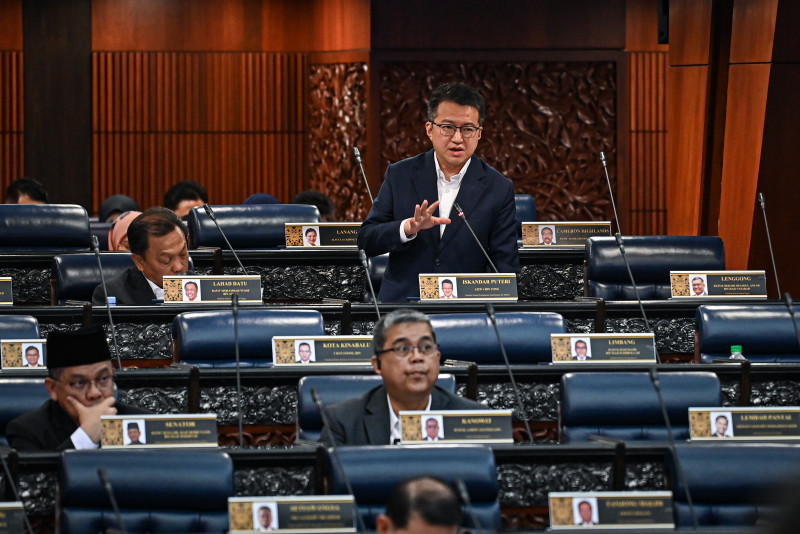
Deputy Minister of Investment, Trade and Industry Liew Chin Tong told the Dewan Rakyat on Monday the updated policy will prioritise electric vehicles (EV), advanced manufacturing, and enhanced global competitiveness, according to the Ministry of Investment, Trade and Industry (MITI).
In a parliamentary response to Kepala Batas MP Dr Siti Mastura Muhammad, Liew confirmed that the review is currently underway, led in collaboration with the Malaysia Automotive, Robotics and IoT Institute (MARii).
“MITI and MARii are conducting an in-depth mid-term review of NAP2020. This process involves close engagement with industry stakeholders, policymakers and related agencies to ensure alignment with current market demands and global technological trends,” he said.
The updated framework continues to prioritise the development of Energy Efficient Vehicles (EEV), electric mobility, autonomous driving capabilities and Industry 4.0 adoption. Local vendor empowerment remains central, with the aim of embedding Malaysian suppliers more deeply into international automotive supply chains.
In June 2025, MITI established the Council of Automotive Eminent Persons (CAEP), chaired by Investment Minister Tengku Datuk Seri Zafrul Tengku Abdul Aziz, to guide the reform process.
The council brings together senior leaders from government, finance and the automotive and energy sectors, including top-level representation from Perodua, DRB-HICOM, Sime Darby, PETRONAS and HSBC Malaysia.
According to MITI, the council has identified two primary areas of focus: reducing the national dependency on petrol as a dominant fuel source, with the broader ambition of restoring Malaysia’s position as a net oil exporter; and accelerating the role of the semiconductor sector within the automotive industry to raise Malaysia’s value-added export capabilities.
The CAEP has convened twice, on 13 June and 5 August. Its recommendations will be tabled to the Cabinet and will inform the revised NAP, which MITI says will serve as Malaysia’s long-term automotive blueprint, in line with global transitions toward electrification, smart mobility and automation.
Record-Breaking Domestic Sales and Growing EV Market
Malaysia’s vehicle sales reached an all-time high in 2024, with 816,747 new units sold. It marks the first time the country has crossed the 800,000 mark, placing it second in ASEAN’s passenger car market rankings.
Electrified vehicle (xEV) sales, which include hybrids and Battery Electric Vehicles (BEVs), climbed to 46,403 units last year, compared to 35,723 in 2023. The continued rollout of national charging infrastructure was a key driver of the uptick.
Meanwhile, while boosting local sales remains a priority, MITI stressed that NAP2020 also aims to enhance Malaysia’s global presence in automotive exports.
This includes increasing the export volume of Completely Built-Up (CBU) and Completely Knocked Down (CKD) vehicles, alongside high-value components.
The government is pursuing several avenues to achieve this, including tailored tax incentives tied to investment levels, localisation initiatives and export performance. The MARii-led Supplier Competitiveness Level (SCL) programme is being used to raise the performance of local vendors.
Other strategies include the development of internationally aligned standards and certifications, promoting sustained R\&D investment, expanding Free Trade Agreement (FTA) negotiations to unlock new markets, and conducting trade missions to showcase Malaysian-made automotive products abroad.
“These measures are designed to keep Malaysia’s automotive industry competitive, forward-looking and globally integrated, while reinforcing its contribution to national economic development,” Liew added. - August 18, 2025






_Datuk_Rusdi_Mohd_Isa._Facebook_pic..png)

.jpeg)
