THE nation is entering the final phase of drafting a comprehensive Artificial Intelligence Governance Bill as part of a wide-ranging effort to regulate AI technologies, strengthen ethical safeguards and curb the misuse of advanced systems such as chatbots, automated decision-making tools and deepfake generators.
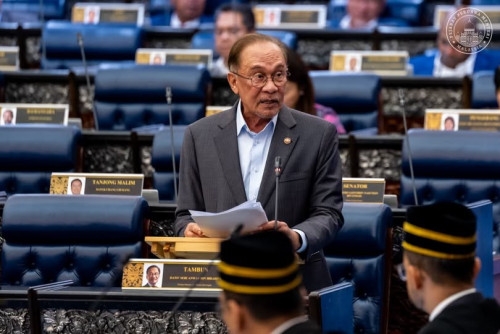
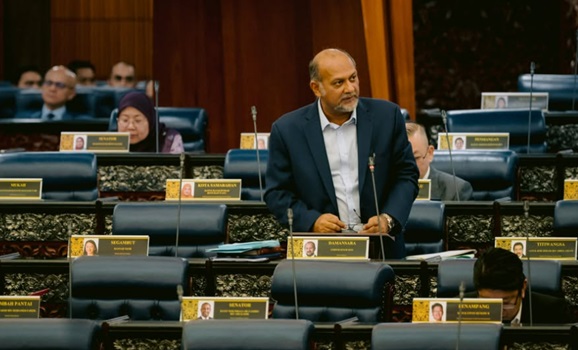
Digital Minister Gobind Singh Deo told the Dewan Rakyat today that the forthcoming legislation aims to address AI-related risks holistically while ensuring a safe, responsible and innovation-friendly ecosystem.
He said the National Artificial Intelligence Office (NAIO) is simultaneously developing a regulatory framework that will underpin the Bill, covering risk classification, harm mitigation, incident reporting and ethical principles.
“At the same time, several existing laws are also being strengthened, including amendments to the Personal Data Protection Act (PDPA) 2024 and the development of guidelines on Automated Decision-Making and profiling,” he said.
He added that reinforcement of the legal landscape also involves safeguarding digital infrastructure and addressing harmful content through the Cybersecurity Act 2024 and the Online Safety Act 2024, alongside a review of the Evidence Act 1950 and Contracts Act 1950 “to examine amendments appropriate to the evolving AI landscape, including its implications on contract formation, enforcement and evidentiary integrity.”
Gobind was responding to Roy Angau Gingkoi (GRS–Lubok Antu), who asked how the government intends to regulate AI policies and ethical considerations—particularly around chatbots and AI-generated video—to prevent misuse and protect users.
He revealed that the National Cyber Security Agency (NACSA) is currently formulating a new Cybercrime Bill to replace the Computer Crimes Act 1997, with provisions specifically addressing the rising threat of deepfakes.
Meanwhile, CyberSecurity Malaysia, in partnership with Universiti Kebangsaan Malaysia, is developing authenticity-verification technology for images and videos to support cybercrime investigations.
The minister said the Malaysian Communications and Multimedia Commission (MCMC) is also working closely with social media platforms to detect and block deepfake content touching on racial, religious or royal sensitivities.
“With this comprehensive approach, the Digital Ministry aims to build an AI ecosystem that is innovative yet safe, where the full potential of the technology can be harnessed while misuse is tightly controlled, in line with international best practice,” he added.
Gobind highlighted key reference documents introduced to reinforce AI governance, including the AI Governance and Ethics Guidelines launched in September 2024, which outline seven core principles such as fairness, safety, inclusivity, transparency and accountability.
“Additionally, the Public Sector AI Adaptation Guidelines launched in February emphasise a Human-in-the-Loop approach to ensure that critical decisions involving AI remain under human oversight and are not fully delegated to automated systems.”
On communications and online safety, he said the Communications Ministry, through MCMC, monitors the use of AI on social media, including issues linked to public interest, fraud, abuse, threats and provocation.
Collaboration with platforms and enforcement agencies has been intensified to combat increasingly complex online fraud schemes.
He also noted that under the new legislative framework, responsibility for content control would be shifted to platforms themselves rather than relying on direct government takedown directives.
At the same time, MCMC is studying whether to mandate labelling of AI-generated content, including videos and images “that may cause confusion,” to help users identify manipulated or inauthentic material and curb the spread of misinformation.
Responding to a supplementary question from Ahmad Fadhli Shaari (PN–Pasir Mas) on whether the government is defining a specific regulatory scope for AI, Gobind said Malaysia is developing an overarching legal framework.
“This framework is divided into four categories: matters that do not require legislation, matters that can be addressed through regulations or standards, and those that require statutory law,” he said. - November 24, 2025




.jpeg)