THE Government has announced that it will table a Constitution (Amendment) Bill during the second parliamentary session next year, paving the way to formally separate the offices of the Attorney-General (AG) and the public prosecutor.
The move is part of a broader legal and institutional reform agenda aimed at strengthening the independence and transparency of the country’s prosecutorial system.
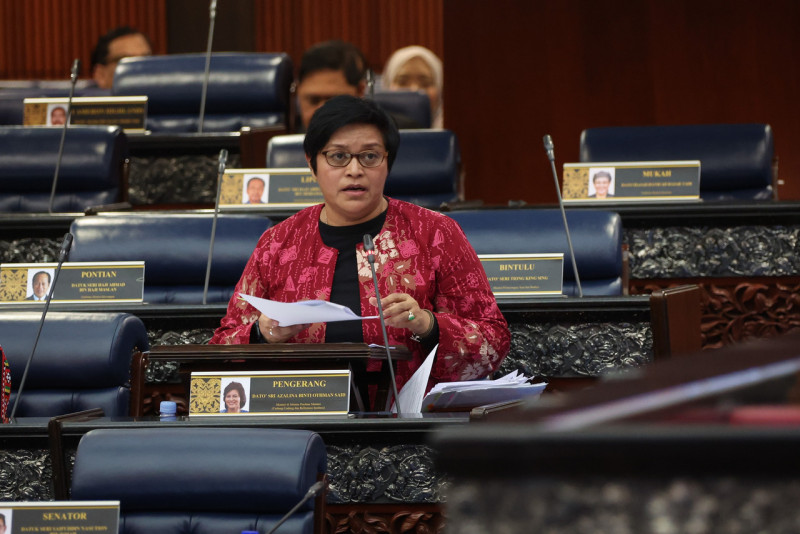
Minister in the Prime Minister’s Department (Law and Institutional Reform) Datuk Seri Azalina Othman Said confirmed that following the constitutional amendment, the government will present a Remuneration Bill alongside an omnibus Law Reform (Public Prosecutor) Bill.
These measures will amend several laws affected by the separation of the AG’s advisory responsibilities from the prosecutorial functions.
Azalina was responding to Bukit Gelugor MP Ramkarpal Singh, who had inquired about the government’s progress in creating distinct offices for the AG and the public prosecutor, and whether both roles would be made accountable to Parliament.
In her written reply, she said the cabinet had on 10 September agreed to a model that fully separates the two offices, with each to be held by different individuals of equal standing.
This decision follows findings from a Special Task Force for Comparative Studies, which conducted empirical study visits to Canada, Australia, and the United Kingdom.
“As for whether the Attorney-General and the public prosecutor will be made directly accountable to Parliament to ensure transparency in prosecution processes, no final decision has been made.
However, the government remains open to views and suggestions from members of Parliament and relevant stakeholders so that any reforms introduced will strengthen transparency, accountability, and public confidence in the justice system,” she stated.
Separately, Azalina revealed that Putrajaya is conducting an evidence-based comparative study of judicial appointment models in the United Kingdom, Singapore, Australia, and India. She said the study aims to ensure that Malaysia’s appointment process is more transparent and independent, in line with the Federal Constitution.
“This study is being carried out inclusively through engagement sessions with the judiciary, the Malaysian Bar, members of Parliament from both government and opposition blocs, higher learning institutions, experts on the Federal Constitution, civil society organisations, as well as through public input.
“This approach is aimed at ensuring that the appointment process is conducted in a more transparent and independent manner, and in line with the principles of the Federal Constitution,” she said.
Azalina emphasised that the unity government remains committed to upholding the separation of powers between the legislative, executive, and judicial branches.
She added that reforms aim to guarantee that appointments to key national positions, including judges of the superior courts, are conducted in accordance with the Federal Constitution and existing laws.
The minister’s remarks came in response to Opposition Leader Datuk Seri Hamzah Zainudin, who questioned the government on steps taken to safeguard the integrity of the judicial appointment system, following recent public speculation about alleged executive interference.
In July, Prime Minister Datuk Seri Anwar Ibrahim denied any interference in the judiciary, including claims of proposing “compromises” to the King regarding the appointment of top judges.
Anwar also indicated that an announcement would be made shortly to clarify misconceptions surrounding the vacant chief justice position following the retirement of Tengku Tun Maimun Tuan Mat. - November 26, 2025




.jpeg)