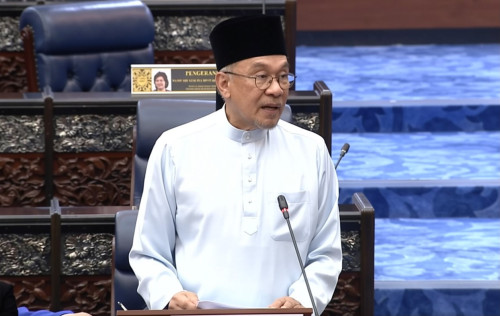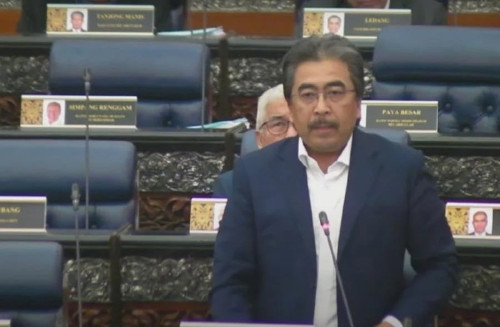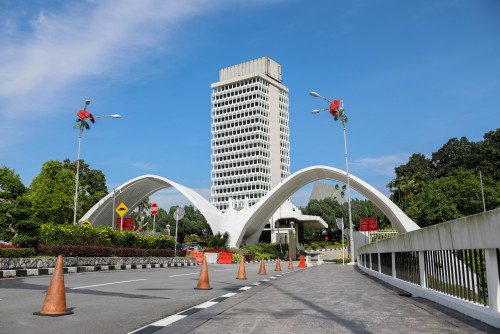
THE opposition has called on the government to defer the second reading of two key constitutional reform bills, arguing that both proposals require deeper scrutiny and amendment before proceeding in the Dewan Rakyat.
Perikatan Nasional (PN) chief whip Datuk Seri Takiyuddin Hassan said the bloc was urging the government not to proceed with the second reading of the Bill to separate the powers of the Attorney General and the Public Prosecutor, as well as the Bill to limit the Prime Minister’s tenure to 10 years. Instead, he proposed that both draft laws be referred to a Parliamentary Special Select Committee.
“The opposition hopes these Bills will be referred back to the Parliamentary Special Select Committee. If possible, they should be withdrawn from being tabled for second reading this Monday.
“Instead, refer them to the Parliamentary Special Select Committee and make the necessary amendments,” he told a press conference in Parliament.
On the proposed 10-year limit for the Prime Minister’s tenure, Takiyuddin argued that the amendment would be unconstitutional as it would, in his view, curtail the prerogative powers of the Yang di-Pertuan Agong in appointing a Prime Minister.
Citing Article 40 of the Federal Constitution, he said the King exercises discretion in certain matters, including the appointment of the Prime Minister, without being bound by advice. He also referred to Article 43(2)(a), which provides that the Yang di-Pertuan Agong shall appoint as Prime Minister a member of the Dewan Rakyat who, in His Majesty’s judgment, is likely to command the confidence of the majority of members.
“Article 43(2)(a) states that the Yang di-Pertuan Agong shall first appoint as Prime Minister to preside over the Cabinet a member of the Dewan Rakyat who in His Majesty’s judgment is likely to command the confidence of the majority of the Dewan Rakyat.
“There is no condition of 10 years, 20 years, five years… there is none. Therefore, by making this amendment, in our view it contradicts Article 40 regarding the prerogative of the Yang di-Pertuan Agong and also Article 43(2)(a), which is the discretionary right to appoint any Prime Minister as long as he is a member of the Dewan Rakyat,” he said.
The opposition has also criticised the proposed separation of powers between the Attorney General and the Public Prosecutor, contending that the reform falls short of introducing meaningful institutional safeguards.
Takiyuddin said longstanding concerns raised by the opposition and civil society centred on the breadth of powers vested in the Attorney General under Article 145(3) of the Federal Constitution, which grants discretion to institute, conduct or discontinue criminal proceedings, except in Syariah Courts, Native Courts and Courts-Martial.
“This power is absolute discretion, including to initiate, continue or withdraw a prosecution. This has long been a concern of civil society because the power is too extensive without sufficient checks and balances,” he said.
He argued that under the proposed amendments, the discretion currently exercised by the Attorney General would effectively be transferred wholesale to the Public Prosecutor.
“For example, Article 145B(1) provides that the Public Prosecutor shall have power, exercisable at his discretion, to institute, conduct or discontinue proceedings for an offence, with wording that is almost identical to the previous provision for the Attorney General.
“This means the absolute power is not abolished, but merely transferred from the Attorney General to the Public Prosecutor. The concern of the opposition is the absence of accountability and checks and balances over the Public Prosecutor.
“A minister is accountable to Parliament and the Cabinet, but the Public Prosecutor is not directly accountable to any institution within the constitutional framework,” he said.
The opposition’s stance sets the stage for a contentious debate when the Bills are scheduled to be tabled for their next stage in Parliament. - February 26, 2026