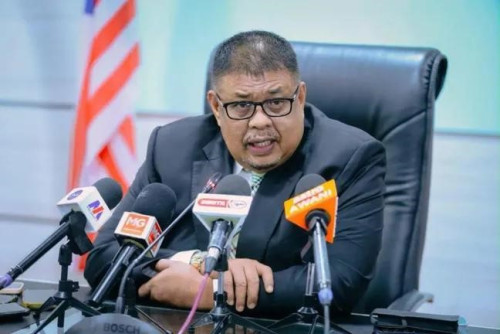
MALAYSIA has set out a robust defence of its labour and trade practices following the United States Trade Representative’s (USTR) Section 301 findings on forced labour, insisting that the country does not practise forced labour and emphasising that no final tariff has yet been imposed on Malaysian exports.
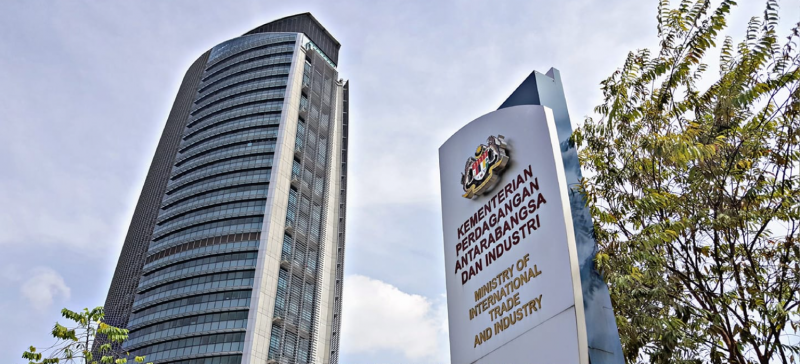
The Ministry of Investment, Trade and Industry (MITI), in a statement on Thursday, said the proposed 10% tariff announced by the United States remains part of an ongoing consultation process and will only take effect, if confirmed, after the conclusion of formal proceedings expected in late July 2026.
The latest developments come against the backdrop of significant shifts in United States trade policy affecting Malaysia. Following a ruling by the United States Supreme Court on 20 February 2026 that struck down the International Emergency Economic Powers Act (IEEPA)-based reciprocal tariff mechanism, the previously imposed 19% tariff on Malaysian goods was rendered null and void.
In its place, Washington introduced a temporary 10% tariff under Section 122 of the US Trade Act 1974, valid for 150 days and scheduled to expire on 24 July 2026.
Malaysia is now facing a potential new tariff structure under Section 301 of the Trade Act of 1974, following investigations initiated by the USTR into several trade-related concerns, including excess industrial capacity and the alleged importation of goods linked to forced labour in global supply chains.
The investigations were formally launched on 11 and 12 March 2026. Malaysia submitted its written representations on 15 April 2026 and subsequently appeared before the USTR on 12 May 2026.
On 2 June 2026, the USTR released its findings on forced labour-related concerns and proposed a 10% tariff on Malaysian goods, to take effect following the expiry of the current Section 122 measure.
Malaysia has been placed in the lower tariff category of 10%, compared with a higher proposed rate of 12.5% for other affected economies.
According to MITI, Malaysia’s inclusion in the lower tariff band reflects its commitments under the Agreement on Reciprocal Trade (ART) with the United States, including steps towards implementing a forced labour import prohibition framework.
However, the ministry stressed that the findings should not be interpreted as an assertion that Malaysia practices forced labour, nor do they reflect domestic labour conditions.
Rather, MITI said the USTR assessment highlights the absence of a dedicated import prohibition mechanism to screen goods and raw materials originating from third countries where forced labour may exist within supply chains.
The ministry reiterated that Malaysia already maintains a comprehensive domestic legal framework prohibiting forced labour, including the Anti-Trafficking in Persons and Anti-Smuggling of Migrants Act 2007, the Employment Act 1955, the Workers’ Minimum Standards of Housing and Amenities (Amendment) Act 2021, and the National Wages Consultative Council Act 2011, all of which are actively enforced.
MITI further clarified that no final tariff determination has been made at this stage, and that the 10% rate remains a proposal subject to due process under US trade law.
The USTR has opened a formal public consultation phase under its Section 301 procedure. Interested parties may request to participate in hearings by 22 June 2026, with written submissions due by 6 July 2026. Public hearings are scheduled for 7 July 2026.
A final determination is expected in late July 2026, coinciding with the expiry of the Section 122 temporary tariff, after which any Section 301 measures could potentially come into force.
Malaysia has indicated that it will continue active engagement with US authorities throughout the process, including participation in hearings and submission of additional evidence to defend its trade position.
On a parallel investigation into industrial overcapacity, MITI said Malaysia categorically rejects any suggestion that its manufacturing sector is structurally excessive or distortive to global markets.
The ministry said Malaysia’s industrial output reflects genuine market demand and confirmed that supporting evidence has been submitted to the USTR. It added that no findings or proposed actions have yet been issued in relation to this aspect of the investigation.
Reaffirming its broader trade stance, MITI said Malaysia remains a responsible trading nation committed to fair trade practices and adherence to the rules-based international trading system under bilateral, regional and multilateral frameworks.
The government said it will continue diplomatic and technical engagement with the United States at all levels and will provide further updates as the Section 301 process progresses. - June 4, 2026