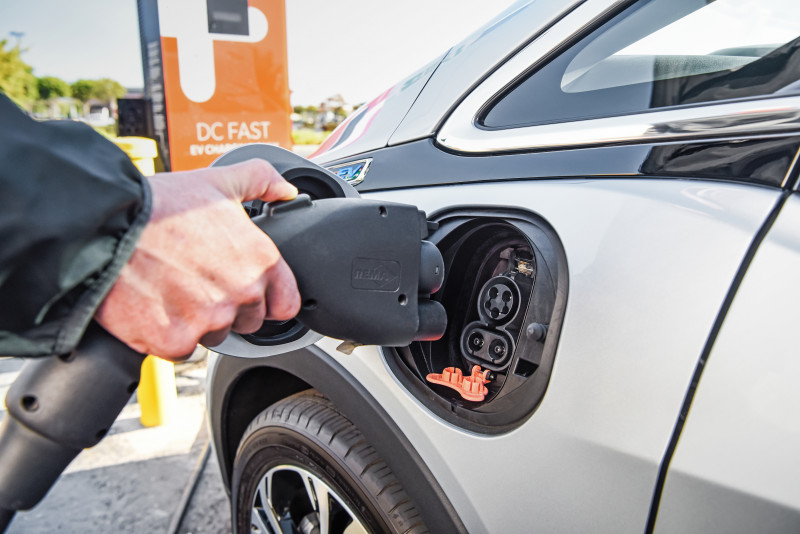
THE country is targeting the development of 30,000 electric vehicle (EV) charging stations nationwide by 2030 as the government intensifies efforts to build a more comprehensive and accessible EV ecosystem.
Deputy Investment, Trade and Industry (MITI) Minister Sim Tze Tzin said the government acknowledged that the current number of EV charging facilities remained insufficient and was working to accelerate infrastructure development to support the growing adoption of electric mobility.
He said one of the key measures being pursued was strengthening cooperation with Tenaga Nasional Berhad (TNB) to develop more electricity substations, which are essential requirements for establishing EV charging facilities.
“The government is also discussing incentives for charging point operators (CPOs) so that more charging facilities can be developed nationwide.
“Building charging stations requires sufficient power supply. Without substations, operators cannot build charging points because there is insufficient electricity capacity. That is why the government is discussing incentives for charging point operators,” he said.
Sim Tze Tzin was responding during a question-and-answer session in the Dewan Rakyat today to a supplementary question from Kubang Pasu Member of Parliament Datuk Ku Abd Rahman Ku Ismail on the government’s proactive measures to address the shortage of EV charging stations, including expanding facilities to smaller towns and rural areas.
He said Malaysia’s EV ecosystem remained in its early development phase, with the government continuing to refine policies and incentives to accelerate the rollout of supporting infrastructure.
“All of this requires incentives and the development of a complete ecosystem. It will take some time, but the government has taken note of the proposals put forward and will work to improve the availability of EV charging facilities,” he said.
The government’s 2030 target forms part of broader efforts to strengthen green mobility infrastructure, encourage EV adoption and support Malaysia’s transition towards a lower-carbon transport sector. - July 8, 2026