MALAYSIA has been granted two years by the United States to introduce and strengthen domestic legislation addressing forced labour under the terms of the Reciprocal Trade Agreement (ART) signed between the two countries.
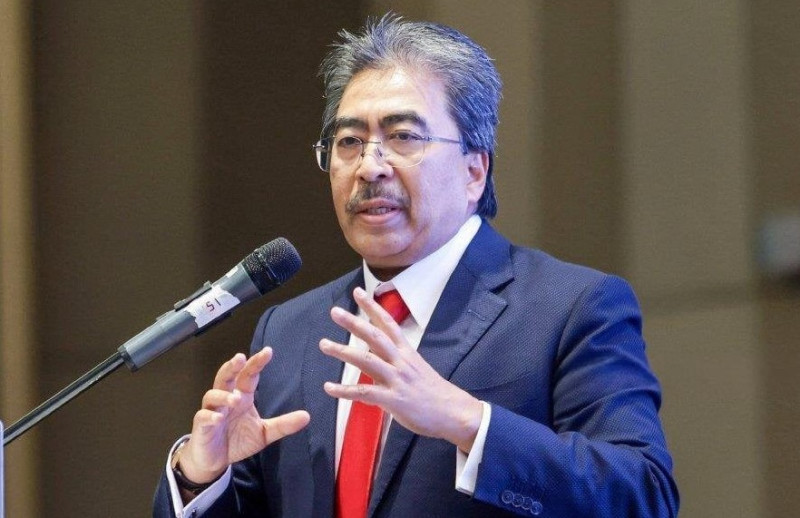
Investment, Trade and Industry Minister Datuk Seri Johari Abdul Ghani said the requirement forms part of the agreement, which is currently awaiting ratification by both parties.
He said the Ministry of Human Resources (KESUMA) had already been informed and would amend several legal provisions relating to forced labour to ensure Malaysian exports incorporating imported raw materials from third countries are not adversely affected.
"Two years (have been given), not immediate, because the agreement has already been signed. Once we ratify the relevant elements, they are giving us two years to rectify the laws that we currently do not have.
"If such laws exist in the country, it means anyone employing foreign workers without permits could face imprisonment and fines. If you employ undocumented migrants on plantations, you can be arrested and your products cannot be sold," he told reporters after officiating the 50th Annual General Meeting of the National Chamber of Commerce and Industry of Malaysia (NCCIM) 2026 today.
Johari said the United States had imposed a 10 per cent tariff on Malaysia following its investigation into forced labour issues, although he noted the rate remained lower than the approximately 12.5 per cent imposed on several other countries.
He explained that the tariff stemmed from the absence of specific Malaysian legislation governing forced labour risks within international supply chains.
However, he said Malaysia had committed under the ART to enact the necessary legislation once the agreement is ratified.
"They have already carried out an investigation into forced labour issues and we will be subjected to a 10 per cent tariff, compared with other countries facing around 12.5 per cent.
"So, any company or industry that employs workers in ways that do not comply with international labour standards, for example, and becomes involved in forced labour, can be prosecuted because we will have the law.
"But at present, we do not have legislation to address situations where goods produced using forced labour in another country are imported into Malaysia as inputs, processed here into Malaysian products and then exported.
"They found that some of those components involved forced labour. That is why we are affected, because we do not yet have the necessary laws and enforcement mechanisms. While we work to introduce those laws, they have imposed the 10 per cent tariff," he said. - July 25, 2026