By Murray Hunter
THE government’s decision to engage Alton Aviation Consultancy to assess AirAsia Group’s funding needs has sparked debate. Critics argue that AirAsia is a private company, not a government-linked corporation, and that using taxpayer funds to review its liquidity interferes with free-market outcomes.
Critics point to past controversies and insist private owners should resolve problems created by their own commercial choices. Yet a careful examination is not the same as an automatic bailout, and the case for it rests on AirAsia’s outsized role in the Malaysian economy.
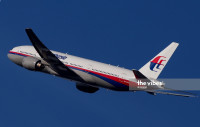
AirAsia is Southeast Asia’s largest low-cost carrier.
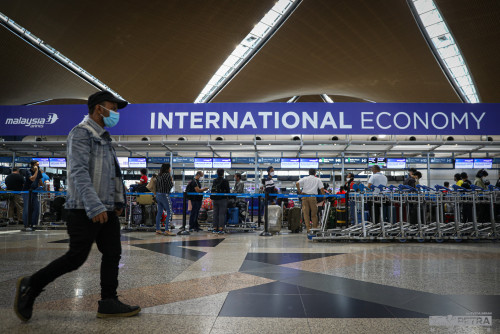
It provides affordable regional and domestic connectivity that underpins tourism, business travel, and labour mobility.
A sudden collapse or severe capacity reduction would disrupt routes, raise fares on remaining services, damage tourism receipts, and put thousands of direct and indirect jobs at risk.
The airline’s current liabilities significantly exceed its cash position, and it is seeking roughly US$1 billion in international debt markets plus local facilities primarily to refinance pandemic-era obligations. Understanding the precise scale and nature of those needs is a prerequisite for any rational policy response.
This move also serves as an early indicator of underlying economic stress that headline performance figures may not yet fully capture.
Much like the US government’s interventions to stabilise banks in 2008, before the full depth of the financial crisis was reflected in every official statistic.
As a consequence, authorities sometimes act when key private institutions face acute liquidity pressures that could cascade through the wider system.
Official growth numbers can remain resilient for a period while specific sectors, such as aviation, reveal mounting strains from higher fuel costs, debt overhangs and external shocks.
Examining AirAsia’s position allows policymakers to detect and address these vulnerabilities before they intensify.
Psychologically, the fall of a company the size of AirAsia could trigger economic ripples that undermine confidence more broadly.
In an economy already confronting multiple external threats that include sharp rises in aviation fuel prices, the visible distress or collapse of a major national carrier potentially risks amplifying uncertainty among investors, travellers, suppliers and consumers.
Such a loss of confidence can quickly compound into reduced spending, tighter credit conditions and further pressure on other firms, turning a sectoral problem into a wider crisis of sentiment, very much subscribing to the notion of “too big to fail”.
Governments routinely assess systemically important private firms when failure would generate high external costs.
The exercise allows officials to determine whether limited, conditional support, such as facilitation of refinancing or temporary guarantees that might prevent wider economic damage, is needed, or whether the company can restructure without public money.
Sources familiar with the review have indicated there are currently no plans for a full bailout or blanket guarantee.
The consultancy’s work is therefore a diagnostic step, not a commitment of funds.
At the same time, the decision risks sparking familiar claims of cronyism and favouritism towards certain entities and personalities in Malaysia, as has occurred in previous episodes of selective assistance.
Perceptions that well-connected figures or prominent business leaders receive preferential attention from the state can erode public trust, especially when ordinary taxpayers bear the cost of any eventual support.
Transparent processes, clear criteria based on economic impact rather than personal ties, and strict accountability measures are essential to counter such accusations.
Comparisons with Ansett’s collapse in Australia highlight that allowing a major carrier to fail is possible, but the consequences of disrupted schedules, higher costs for travellers, and regional economic pain are real.
In Malaysia’s context, where AirAsia carries substantial domestic and intra-ASEAN traffic, the potential spillover effects on tourism and employment justify informed scrutiny.
Taxpayers benefit from transparency, where an independent assessment reduces the risk of poorly designed interventions later and protects against both unnecessary subsidies and avoidable systemic shocks.
Critics are right to demand strict conditions if any support is eventually contemplated, including governance reforms, board representation, and prioritisation of operational viability over shareholder interests.
They are also right that private owners bear primary responsibility.
However, refusing even to examine the books would leave policymakers flying blind. A measured, evidence-based review of AirAsia’s liquidity is a prudent use of limited public resources precisely because the airline’s failure would impose costs far beyond its private shareholders. – September 7, 2026