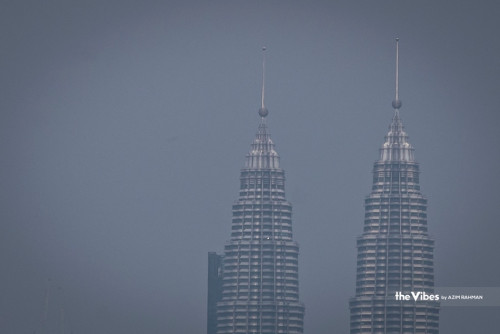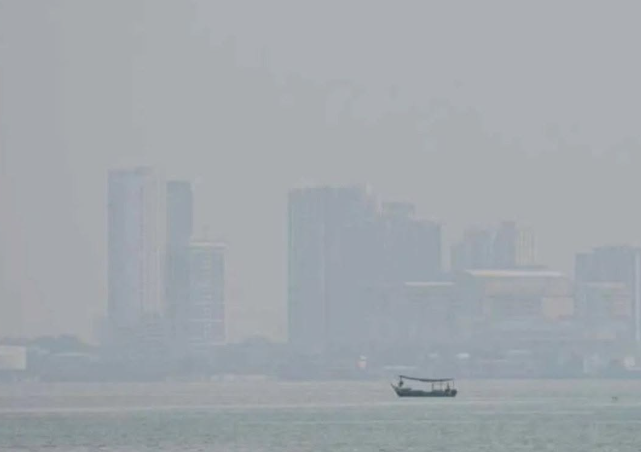
JOHOR remains the main haze hotspot in Malaysia, with nine monitoring stations recording air pollution index (API) readings above 150 as Pasir Gudang registered the country’s highest reading of 198 at 7am today.
Data from the Malaysian Air Pollutant Index Management System (APIMS) showed 24 locations nationwide recorded unhealthy air quality, with Johor accounting for the largest number of affected areas.
Besides Pasir Gudang, the affected locations in Johor were Larkin (179), Pengerang (175), Kota Tinggi (173), Batu Pahat (168), Tangkak (165), Segamat (159) and Kluang (158).
In Negeri Sembilan, Nilai recorded an API reading of 174, followed by Seremban (170) and Port Dickson (159).
Selangor also reported unhealthy air quality in Johan Setia (173), Klang (172), Petaling Jaya (167), Shah Alam (167) and Banting (151).
In Melaka, Bandaraya Melaka recorded a reading of 170, followed by Bukit Rambai (166) and Alor Gajah (165).
Putrajaya registered an API reading of 161, while Cheras and Batu Muda in Kuala Lumpur recorded 160 and 158 respectively.
In Sabah, Sandakan recorded 154, while Tawau was close to the unhealthy threshold at 149.
Meanwhile, 43 other locations recorded moderate air quality, with readings ranging from 52 to 93. These included Tanjung Malim (93), Kuala Selangor (88), Seri Manjung (87), Temerloh (83), Kuantan (83) and Kota Bharu (69).
Kapit in Sarawak was the only location with good air quality, recording an API reading of 46.
Under APIMS classifications, readings of zero to 50 indicate good air quality, 51 to 100 moderate, 101 to 200 unhealthy, 201 to 300 very unhealthy and above 300 hazardous.
Children, senior citizens and people with respiratory conditions are advised to reduce outdoor activities and take precautions to protect their health while the haze persists.
Indonesia Forest Fires Trigger Protests
Separately, in Jakarta, protests have erupted in several parts of Indonesia over the government’s handling of forest and land fires that have burned for nearly three months, blanketing parts of Kalimantan in thick haze and orange smoke.
The number of respiratory illness cases linked to the fires rose to 283,270 across seven provinces as of Oct 13, more than double the 113,336 cases recorded as of Sept 9, according to Health Ministry data cited by Reuters.
Protesters in two cities in Central Kalimantan, on the Indonesian side of Borneo, called for stronger government intervention, tougher action against companies responsible for illegal burning and better protection for affected communities.
In Pangkalan Bun, representatives from 15 villages and volunteer firefighting groups gathered at a roundabout to demand that the fires be declared a national disaster.
They also called for helicopters to be deployed to drop water on fire zones inaccessible to ground crews, local media reported.
Protesters also gathered during a visit by Forestry Minister Raja Juli Antoni, demanding improved healthcare facilities, clean water supplies and air purifiers for affected communities.
In Palangka Raya, the provincial capital, students and members of local civil society groups staged a protest outside the governor’s office, calling for greater transparency in the use of firefighting funds and tougher action against companies responsible for illegal burning.
The demonstrations have renewed scrutiny of Jakarta’s decision not to declare the fires a national disaster, despite repeated calls from affected communities.
Such a declaration could strengthen central government oversight, improve coordination among affected provinces and accelerate the deployment of firefighting resources and emergency assistance.
Cornelis, a representative of a local civil society group in Central Kalimantan, said criteria used to declare sudden-onset disasters such as earthquakes and tsunamis should also apply to forest fires because of their impact on public health.
“Smog may not cause immediate deaths when forest and land fires occur. However, those who inhale it will suffer from illness,” he was quoted as saying by national news agency Antara.
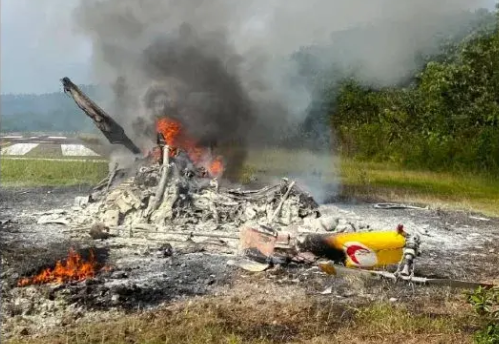
The fires have also taken a deadly toll elsewhere in Indonesia. Four people died while fighting forest fires on Java, with toxic smoke spreading across Southeast Asia, prompting school closures and a rise in respiratory complaints in the region, authorities said on Friday.
The prolonged fires have prompted Singapore’s leaders to pledge legal action against companies responsible for the blazes, which have contributed to some of the region’s worst air quality.
Singapore topped IQAir’s real-time ranking of the world’s most polluted major cities on Friday, followed by Kuala Lumpur in second place and Jakarta in sixth. - October 17, 2026