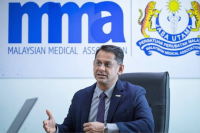
THE Health Ministry must urgently deploy more doctors to Hospital Ranau and other healthcare facilities in Sabah, including bringing in temporary medical personnel from Peninsular Malaysia if necessary, the Malaysian Medical Association (MMA) said.
Its president, Dr Sivanaesan Letchumanan, said the temporary deployment of three medical officers to Hospital Ranau was welcome, but stressed that the ministry must ensure sufficient manpower to keep essential services running.
He said staff transfers and new appointments must be coordinated to ensure replacement doctors report for duty before existing personnel leave.
The ministry must also assess the impact of staff movements on hospital services and put contingency measures in place to prevent disruptions to patient care.
Hospital Ranau has lost 11 of its 19 medical officers, but only one of the seven identified replacements has reported for duty.
The hospital is now operating with just nine medical officers, including its director, he said.
“Reports of doctors working consecutive shifts lasting 48 to 72 hours without adequate rest are deeply alarming.
“This cannot continue, as such working conditions pose serious risks to patient safety and doctors’ well-being,” he said in a statement today.
Sivanaesan said the Sabah Health Department’s confirmation that 67% of replacement medical officers appointed from outside the state had failed to report for duty following the recent permanent appointment exercise was particularly worrying.
The resulting shortage of about 245 medical officers across Sabah showed that the problem at Hospital Ranau was part of a wider failure in workforce planning and efforts to retain doctors in the state, he said.
“Appointment letters do not fill vacancies in emergency departments and wards, nor do they relieve doctors who are already exhausted.
“The measure of success is not the number of permanent positions announced, but how many doctors actually report for duty, remain in service and are available to treat patients,” he added.
While welcoming the announcement of 750 permanent medical officer positions for Sabah and Sarawak, Sivanaesan said the ministry must address existing shortages immediately rather than wait for the successful applicants to report for duty in February 2027.
He urged the ministry to spell out the employment terms and incentives before applications open on November 9, so doctors would have a clear picture of their postings, the support available and their career prospects.
The package should include competitive remuneration, improvements to the Regional Incentive Payment (BIW), appropriate hardship allowances and relocation assistance paid in advance.
Doctors should also be provided with suitable accommodation, predictable posting and transfer arrangements, and clear opportunities for specialist training and career advancement.
Those serving in areas with limited access to healthcare should receive meaningful recognition for their contribution, he said.
Sivanaesan said concerns over family commitments, financial obligations and career development were legitimate considerations that the government must address if it wanted to attract and retain doctors in Sabah and Sarawak.
“Permanent appointments are important, but employment status alone will not solve the problem if the barriers to recruiting and retaining doctors remain.
“We cannot keep repeating the same recruitment approach, allow the problems to persist and expect a different outcome,” he stressed further.
He also called on the ministry to publish actual staffing figures, vacancy numbers, the rate at which replacement doctors report for duty and progress in restoring services, particularly at facilities facing critical shortages.
The MMA also wants minimum safe staffing levels established, with immediate intervention whenever hospitals fall below the required numbers.
“Doctors who remain on duty must not be left to shoulder the consequences of inadequate workforce planning. Safe working hours, sufficient rest and continuity of patient care must take priority.
“Patients deserve safe and timely treatment, while doctors deserve reasonable working conditions and the support they need to provide that care,” he said. – November 1, 2026