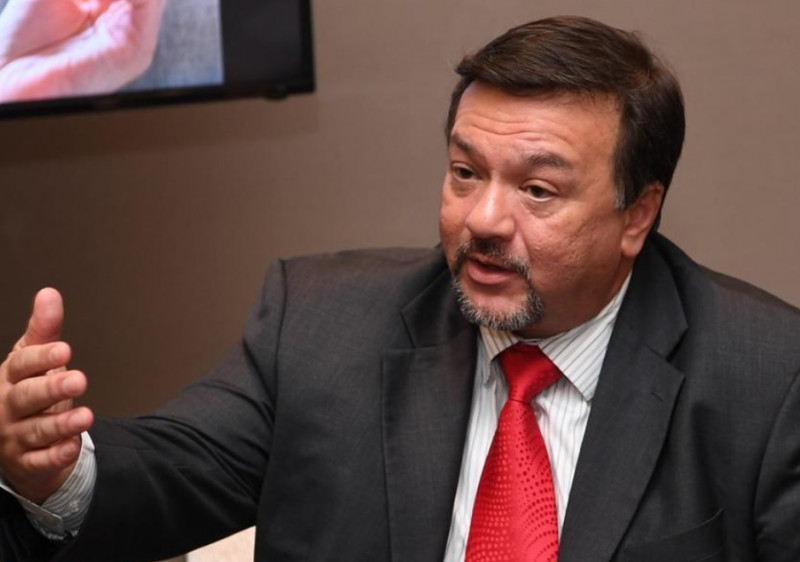
WIDENING income inequality could develop into a serious threat to Malaysia's social stability if left unchecked, Finance Minister II Datuk Seri Amir Hamzah Azizan has warned, stressing the need for economic policies that balance growth with equitable wealth distribution.
He said the government's economic strategy was built around two priorities: ensuring long-term economic sustainability and preserving social cohesion.
"If the gap between the highest-income earners and the lowest-income earners continues to widen, we are not merely facing an economic problem, but creating a social problem," he said in a LinkedIn post following views he shared on a financial podcast.
He cautioned that the consequences of unchecked inequality could be considerably harder to address than through direct financial assistance.
"Inequality, if left unaddressed, will create consequences far more difficult to tackle than simply providing cash assistance. Just look at the devastation inequality has brought to many other countries. We cannot allow Malaysia to follow the same path," he added.
Amir said the government was therefore adopting a broader approach that linked wage improvements with targeted assistance, subsidy rationalisation and affordable healthcare protection.
Under Budget 2027, the minimum wage will increase from RM1,700 to RM2,000 monthly from June next year, benefiting more than four million workers.
The government will also expand Sumbangan Asas Rahmah (SARA) to nearly 13 million Malaysians, including the M40 group, while increasing the combined allocation for Sumbangan Tunai Rahmah (STR) and SARA to RM16 billion in 2027.
Monthly SARA assistance will rise to RM150, equivalent to RM1,800 annually.
He said the minimum wage policy could not be considered independently of other measures, including the rationalisation of RON95 fuel subsidies and the introduction of MediAsas, an affordable medical insurance and takaful scheme scheduled for launch by the end of January 2027.
"None of these measures is a standalone achievement. Each plays a role in balancing other considerations," he said.
On fiscal sustainability, Amir Hamzah warned that postponing difficult decisions on subsidies, fiscal discipline and revenue adequacy would shift the burden to future generations.
"Every time we avoid making difficult decisions on subsidies, fiscal discipline and revenue adequacy, we are actually burdening the future of our children. I am not prepared to do that," he said.
The government has also allocated RM200 million to strengthen outsourced outpatient treatment programmes to reduce waiting times.
Amir added decisions on targeted subsidies, widening the tax base and wage improvements must be assessed collectively according to how they balance competing economic and social priorities.
He likened economic management to conducting an orchestra, with different policy measures needing to work in harmony and at the right time to maintain stability. - November 5, 2026