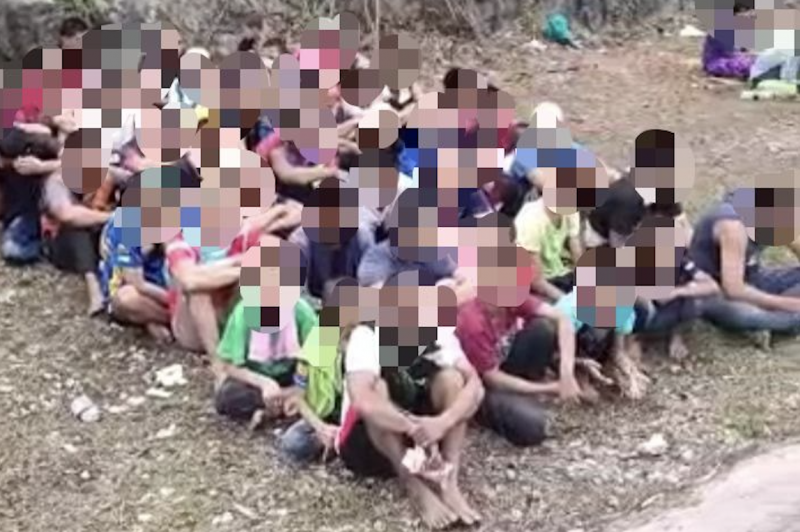
TURKIYE has rejected claims that it agreed to accept 10,000 Rohingya refugees from Malaysia, contradicting Deputy Prime Minister Datuk Seri Ahmad Zahid Hamidi’s announcement that the two countries had agreed on the proposed relocation.
In a statement posted on X last night, Turkiye’s Directorate of Communications Centre for Combating Disinformation (DMM) described reports of the arrangement circulating in international media and on social media as baseless.
“Claims that 10,000 Rohingya would be relocated to Turkiye are unfounded. The public is urged not to believe false information,” it said.
The denial raises fresh questions over what was agreed between Kuala Lumpur and Ankara, particularly after Zahid’s announcement was deleted from his social media accounts shortly after it was published.
On Nov 20, Zahid said the Cabinet had approved a proposal to relocate 10,000 Rohingya refugees to Turkiye under a technical and vocational education and training (TVET) programme lasting between three and six months.
He said the initiative followed his recent official working visit to Turkiye, with the training aimed at equipping participants with skills suited to the country’s industrial needs.
Zahid, who chairs the Cabinet committee overseeing migrant worker and refugee affairs, also said Turkiye had agreed to receive the refugees.
However, the post was removed about an hour later without explanation, prompting calls for the government to clarify whether Ankara had formally agreed to the arrangement.
Zahid’s press secretary, Shuhaimi Mohamed, subsequently maintained that the initiative was still being pursued, although further clarification and coordination with the relevant parties were needed.
“The earlier statement was issued because we are indeed working on this initiative, which is ultimately in the best interests of our country and its people,” he said.
He added that the government remained committed to the proposed arrangement and would make a further announcement once the necessary processes had been completed.
The conflicting accounts have drawn scrutiny over the status of the proposal, including whether a formal agreement exists, who would finance the programme and what legal protections would be afforded to the refugees.
Migration expert Mahi Ramakrishnan said the government must provide a full account of the arrangement, particularly to the Rohingya who could be affected.
“The Malaysian government has a responsibility to provide a full explanation to the public and, more importantly, to the Rohingya refugees involved,” she said.
Mahi also called on Putrajaya to disclose the terms of any agreement and clarify the refugees’ legal status and the protections they would receive in Turkiye.
“If the announcement was made prematurely, the government needs to say so. If there is an agreement, publish its terms and explain the safeguards,” she said.
The Turkish-language service of Euronews had also questioned whether the proposed arrangement had been finalised, highlighting unanswered issues including the funding of the programme.
Turkiye’s Foreign Ministry was also reported to have taken note of the deletion of Zahid’s announcement.
Reuters reported that it was unable to reach Zahid’s office for comment, while AFP said several Malaysian media outlets appeared to have removed their initial reports on the proposed relocation.
The controversy comes amid renewed international scrutiny of Myanmar following the ICJ proceedings.
The Gambia filed the case against Myanmar on Nov 11, 2019, with the backing of 57 member states of the Organisation of Islamic Cooperation, including Malaysia, according to the United Nations’ Independent Investigative Mechanism for Myanmar.
The ICJ found Myanmar responsible for violations of the Genocide Convention and ordered it to provide reparations to victims and take measures to prevent further violations.
Myanmar rejected the ruling as unfair and non-unanimous.
Presidential spokesperson Khaing Khaing Soe maintained that the 2017 military operations had targeted insurgents rather than civilians, adding that the military-backed government would study the judgment. – November 22, 2026